

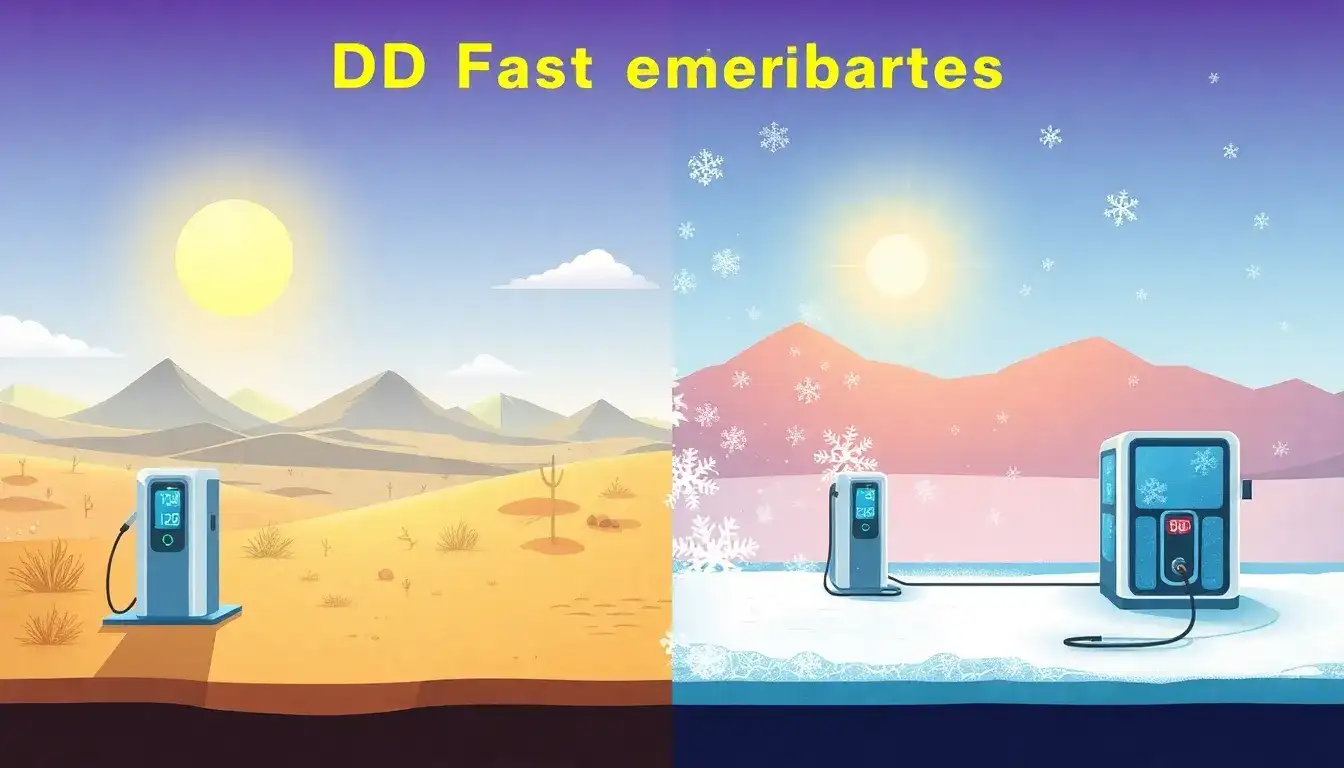
DC fast charging’s impact on battery lifespan is significantly influenced by climate conditions, primarily through temperature extremes and thermal management challenges:
Temperature Extremes
- Cold climates reduce charging efficiency (as low as 40% below -13°F/-25°C) due to energy diverted to battery warming, forcing longer charging sessions and stressing battery chemistry.
- Hot climates exacerbate heat generation during DC fast charging, accelerating degradation if thermal management systems fail to maintain optimal operating temperatures.
Thermal Management Stress
DC fast chargers (50–350 kW) generate more heat than Level 2 chargers, demanding robust cooling systems. Inadequate management in extreme temperatures can lead to:
- Reduced battery lifespan from accelerated lithium plating or electrode cracking.
- Higher energy waste as cooling systems consume additional power, further straining efficiency.
Efficiency vs. Longevity Trade-offs
While DC fast charging minimizes energy losses compared to AC in moderate climates, its effectiveness deteriorates in temperature extremes, requiring:
- Preconditioning (warming batteries in cold climates) to improve charging efficiency.
- Smart charging algorithms to throttle power during peak thermal stress.
Climate-induced inefficiencies and thermal challenges highlight the need for advanced battery management systems to balance charging speed with long-term battery health.
Original article by NenPower, If reposted, please credit the source: https://nenpower.com/blog/how-does-the-climate-impact-the-effectiveness-of-dc-fast-charging-on-battery-lifespan/

