

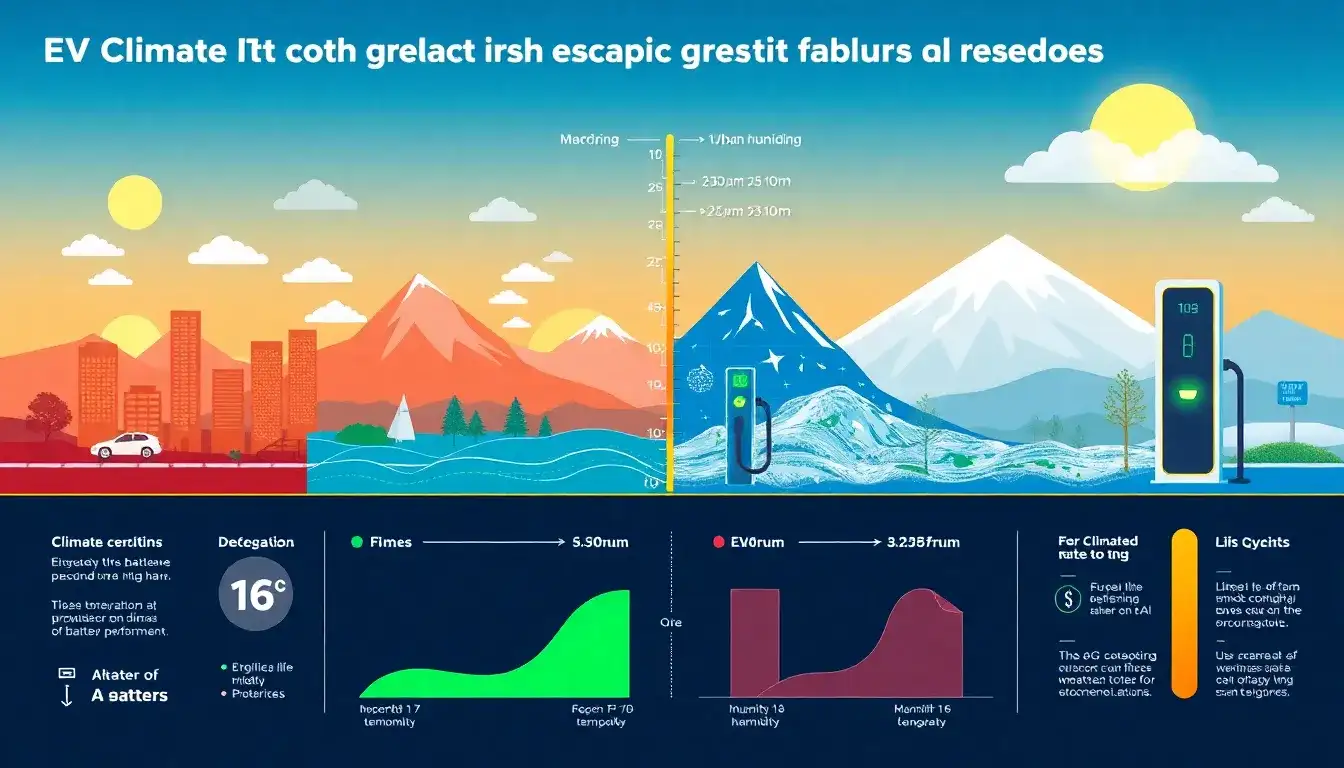
EV battery degradation rates are significantly influenced by climate conditions, particularly when combined with DC fast charging (though specific charging impact isn’t explicitly detailed in the sources). Here’s the breakdown:
Temperature effects
Extreme heat (~40°C/104°F) accelerates degradation by stressing battery chemistry and increasing thermal wear. Batteries in hot climates (5+ days/year >80°F/27°C) degrade faster than those in temperate zones. Cold weather reduces range temporarily but causes less permanent damage, though battery heating systems consume extra energy.
DC fast charging considerations
While the sources don’t directly address climate interaction with DC charging, fast charging inherently generates more heat than AC charging. Combined with high ambient temperatures, this could potentially exacerbate degradation through:
- Thermal stress: Hot climates limit the battery’s ability to dissipate heat during fast charging.
- Accelerated aging: Repeated fast charging cycles in high temperatures may compound chemical breakdown.
Mitigation strategies
Modern EVs employ active thermal management systems to cool batteries during fast charging, which becomes critical in hot climates. However, frequent DC fast charging without adequate cooling (e.g., in extreme heat) could still accelerate capacity loss.
Note: The sources provide strong evidence about climate impacts but lack specific data on DC fast charging interactions. Thermal management systems likely offset some risks, but extreme heat remains a primary degradation driver regardless of charging method.
Original article by NenPower, If reposted, please credit the source: https://nenpower.com/blog/how-does-the-climate-affect-the-degradation-rate-of-ev-batteries-charged-with-dc-fast-chargers/

