

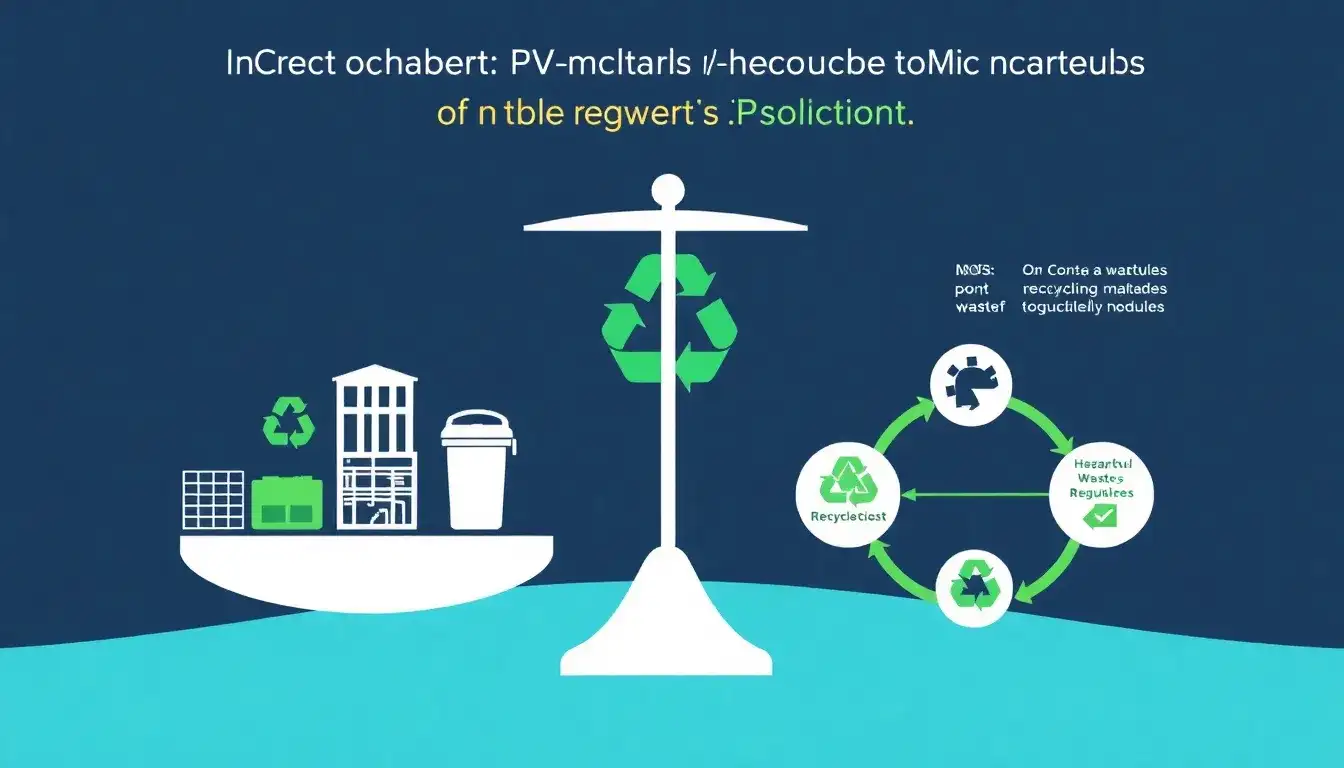
Hazardous vs. Non-Hazardous Classification
PV modules may contain heavy metals such as lead, cadmium, arsenic, selenium, silver, and copper, which can render some modules hazardous waste depending on their concentration levels and whether they fail the Toxicity Characteristic Leaching Procedure (TCLP) test. If a module passes TCLP, it is considered non-hazardous solid waste; if it fails, it is classified as hazardous waste.
Impact on Recycling Costs
- Increased Handling and Disposal Costs: Hazardous waste classification demands stricter handling, transportation, and disposal protocols governed by the Resource Conservation and Recovery Act (RCRA). These protocols require specialized facilities, trained personnel, and robust documentation to prevent environmental contamination, all of which raise recycling expenses compared to non-hazardous waste.
- Regulatory Compliance Costs: Recycling facilities must comply with stringent federal and sometimes state hazardous waste regulations, including permits and reporting requirements. This regulatory burden increases operating costs for recyclers and, consequently, the price of recycling hazardous PV modules.
- Limited Recycling Options: Fewer recycling facilities are equipped or permitted to process hazardous waste solar panels, potentially reducing market competition and increasing processing costs. Modules classified as universal waste might benefit from simplified rules, but full hazardous waste classification imposes greater logistical and financial challenges.
- Potential for Higher Liability and Risk Management: Handling hazardous materials elevates legal and financial risks, leading to increased insurance costs and the need for risk mitigation strategies within recycling operations, which again raises overall costs.
In summary, when PV modules are classified as hazardous waste, recycling them becomes more expensive due to the need for specialized management, compliance with stricter regulations, limited processing options, and increased operational risks. This contrasts with non-hazardous PV modules, which are subject to less costly and less complex recycling protocols.
Original article by NenPower, If reposted, please credit the source: https://nenpower.com/blog/how-does-the-classification-of-pv-modules-as-hazardous-waste-affect-recycling-costs/

