

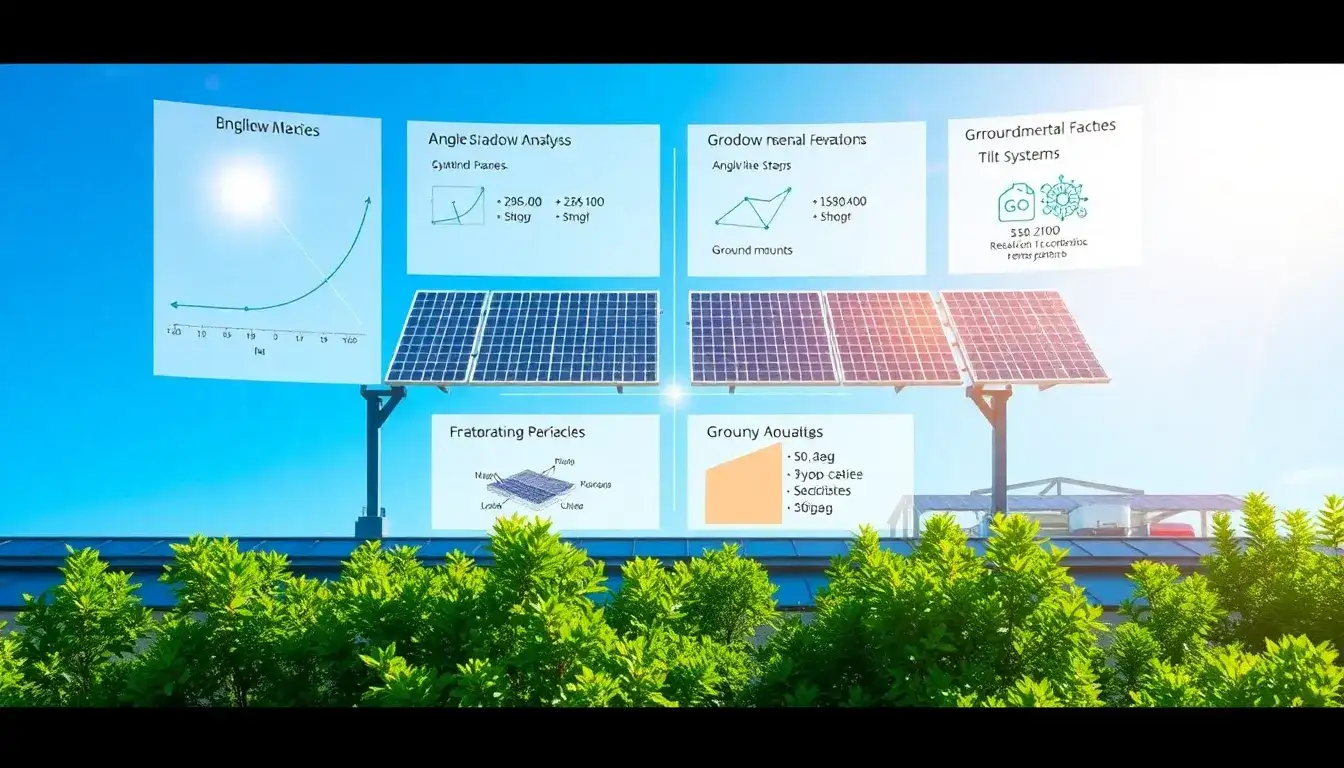
Height and Ground Clearance
Elevated installations (typically 1+ meters above ground) allow more reflected light to reach the rear cells, especially on high-albedo surfaces like sand or snow. For example, a 1.10-meter clearance enhances bifacial gains by reducing ground shading.
Tilt Angle and Orientation
- Optimal Tilt: 20–30° tilt balances front illumination and rear reflection capture.
- Vertical Mounting: Captures low-angle sunlight (sunrise/sunset) and reduces snow/debris accumulation, though it reduces midday output.
Tracking Systems
- Single-Axis Trackers: Boost energy yield by 12–16% compared to fixed-tilt systems while maintaining bifacial gains of 3–11% over monofacial panels.
- Dual-Axis Trackers: Provide minimal LCOE benefits due to higher costs, despite 35–40% energy gains.
Shading Mitigation
Mounting systems with narrow rails and corner-only supports minimize rear-side shading. Poorly designed racks can block reflected light, negating bifacial advantages.
Key Comparative Data
| Mounting Type | Bifacial Gain | Energy Yield (vs. Monofacial) | Cost Impact |
|---|---|---|---|
| Fixed-Tilt | 4–16% | Moderate | Lower upfront costs |
| Single-Axis Tracker | 3–11% | 12–16% higher | Moderate cost increase |
| Dual-Axis Tracker | N/A | 35–40% higher | High cost |
Albedo Synergy
Mounting height and tilt must align with ground albedo. For instance, a 0.68 albedo (snow) can yield 16% bifacial gain in fixed-tilt systems, while low albedo (0.2–0.5) reduces gains to 5–15%. Models like SAM and PVSyst optimize these parameters.
Original article by NenPower, If reposted, please credit the source: https://nenpower.com/blog/how-does-the-choice-of-mounting-system-impact-the-efficiency-of-bifacial-solar-panels/

