

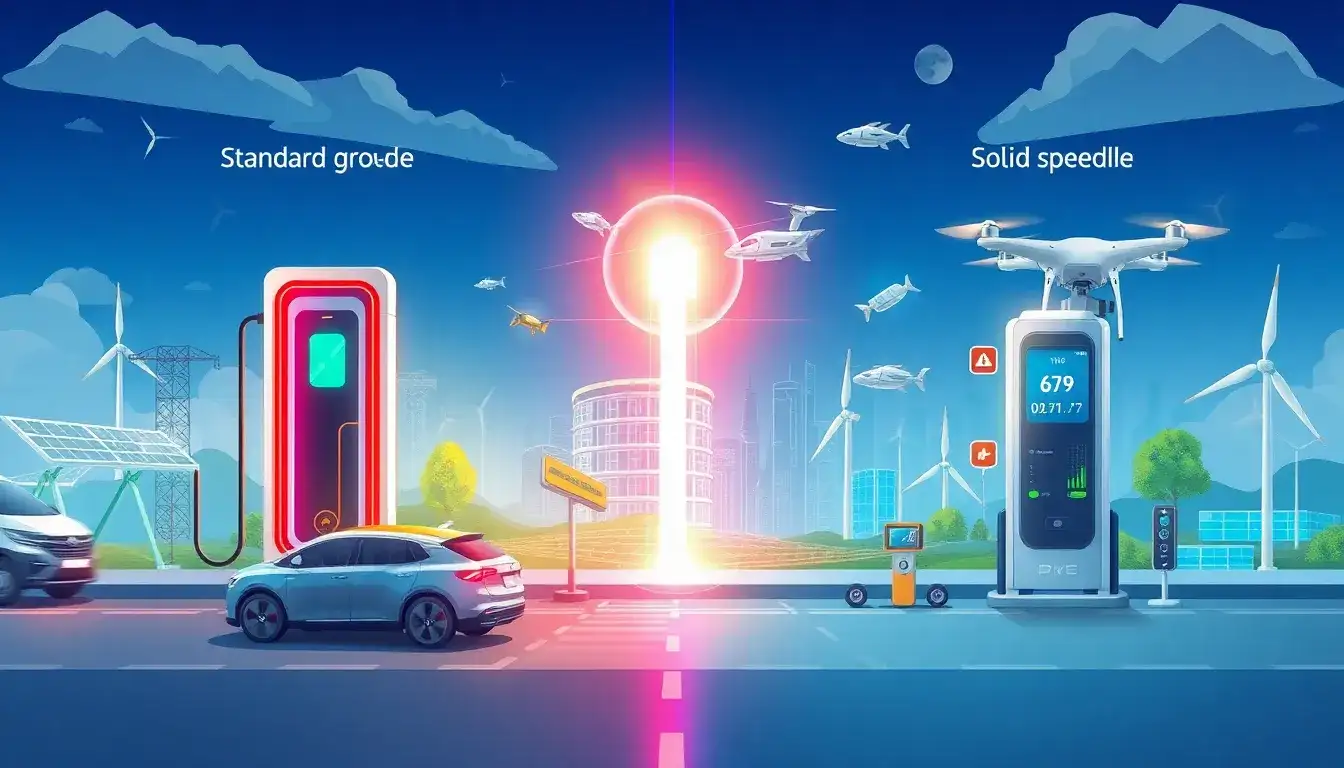
The charging speed of solid-state batteries significantly impacts their practical applications, particularly in electric vehicles (EVs) and consumer electronics. This enhanced performance stems from their unique construction and chemistry, which enable faster electron transfer and efficient ion movement.
Faster Charging Capabilities
Solid-state batteries can achieve remarkably quick charging times, potentially charging from 0 to 80% in as little as 9 to 15 minutes, compared to 30 to 40 minutes for conventional lithium-ion batteries. This drastic reduction in charging duration is crucial for the adoption of EVs as it fundamentally addresses the issue of range anxiety—one of the largest barriers to EV uptake. With such rapid charging capabilities, users can recharge their vehicles in the time it takes to have a coffee or run a quick errand, making EVs more convenient for everyday use.
Increased Energy Density
These batteries not only charge faster but also have a higher energy density, which means they can store more energy in a smaller space. For example, an 80-kWh solid-state battery could be significantly lighter than a comparable lithium-ion battery, contributing to overall vehicle efficiency and performance. This efficiency allows manufacturers to design lighter and more effective vehicles, further enhancing their market competitiveness.
Safety Advantages
The solid electrolyte used in these batteries eliminates the flammable liquid found in traditional lithium-ion batteries, therefore reducing the risk of fires—an ongoing concern with current battery technologies. This safety improvement is particularly attractive to consumers and manufacturers alike, as it enhances confidence in EV technology.
Impact on Vehicle Design and Production
The implications of faster charging extend to vehicle design and manufacturing processes as well. With the potential for solid-state batteries to be integrated into vehicles that can be charged rapidly, automakers are likely to rethink vehicle architecture and performance specifications. Moreover, the production of solid-state batteries may require new manufacturing facilities, which poses initial challenges but also opens opportunities for innovation and job creation in the manufacturing sector.
Challenges and Future Prospects
Despite their advantages, solid-state batteries face challenges, including the availability of raw materials required for their production and the need for new manufacturing processes. However, as research progresses and companies invest in this technology, these barriers may be overcome. The expectation is that within the next several years, particularly by 2030, solid-state batteries will become more commonplace in the EV market, propelled by their rapid charging capabilities and enhanced safety features.
In conclusion, the charging speed of solid-state batteries is a transformative characteristic that not only enhances their practicality and appeal in the automotive sector but also supports broader adoption of electric vehicles. As technology matures, solid-state batteries are poised to revolutionize how we think about energy storage and electric mobility.
Original article by NenPower, If reposted, please credit the source: https://nenpower.com/blog/how-does-the-charging-speed-of-solid-state-batteries-impact-their-practical-applications-2/

