

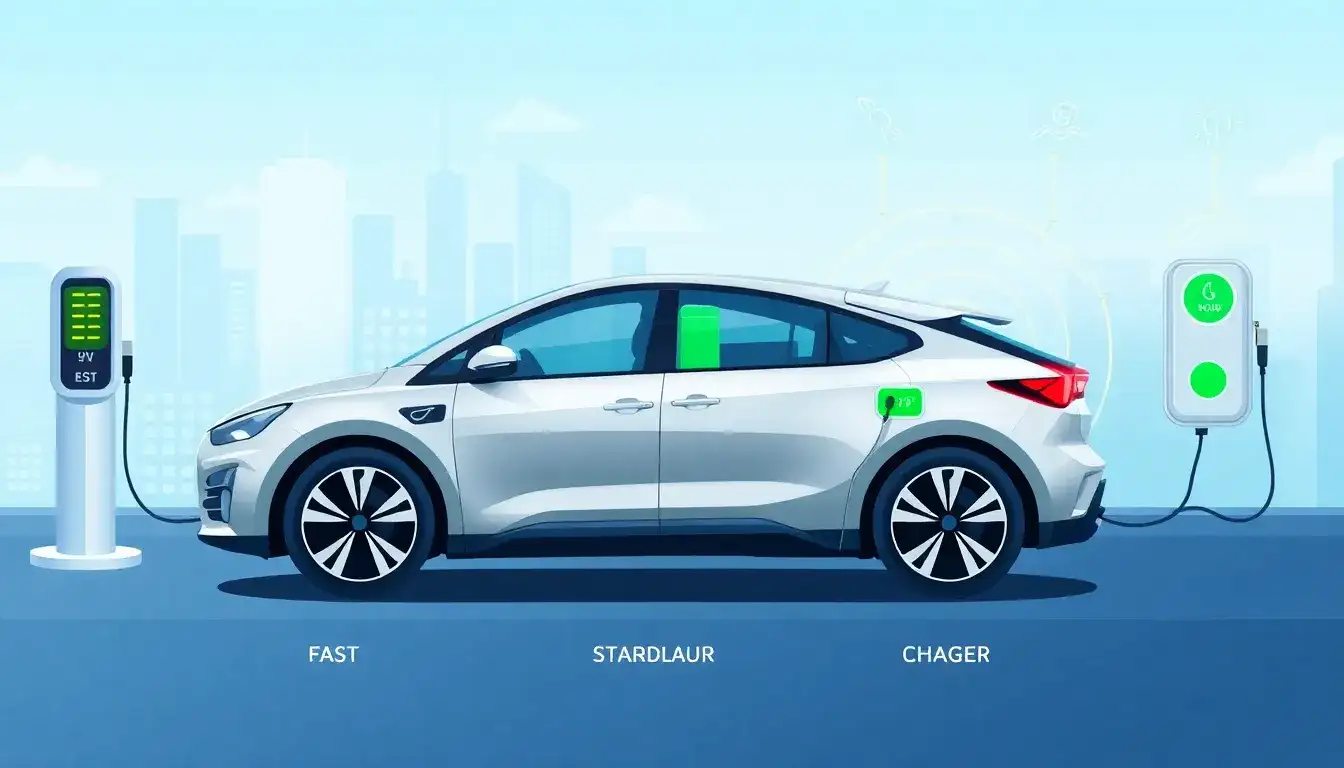
The charging speed of an electric vehicle (EV) has a notable impact on its overall range, primarily through its effects on battery health and thermal management.
Impact of Fast Charging on Battery Degradation and Range
- Frequent use of high-voltage fast charging can accelerate battery degradation, which in turn reduces the effective range of an EV over time. Scientific studies confirm that fast charging speeds, especially rapid and ultra-rapid charging, lead to more significant battery wear compared to slower charging methods.
- For example, rapid and ultra-rapid charging can reduce the lifespan of common EV batteries such as NMC types by about 10% within 300 charge cycles, as opposed to slower home or fast charging, which causes less degradation. This degradation manifests as loss in battery capacity and thus diminished range.
Thermal Management Challenges
- Fast charging generates substantial heat in the battery cells. Elevated battery temperatures can damage the cells and lead to faster degradation, further impacting the vehicle’s range.
- Effective thermal management systems are crucial to maintain the battery within an optimal temperature range to maximize efficiency and lifespan. If the battery overheats during fast charging, it limits the potential range and reduces long-term battery health.
Slow vs. Fast Charging on Range
- Slow charging (Level 1 and Level 2 chargers) typically poses minimal risk to battery health and does not significantly affect long-term range. These chargers operate at lower power and keep the battery within safe temperature limits.
- Fast chargers (Level 3 or DC fast chargers) deliver power more quickly but must carefully manage battery temperature to avoid damage. While fast charging is convenient, its repeated use contributes to quicker range loss over the lifespan of the battery.
Summary
| Charging Speed | Effect on Battery & Range |
|---|---|
| Level 1 & Level 2 (Slow) | Minimal degradation; preserves battery lifespan and range |
| Level 3 (Fast) | Faster charging but increased heat generation and mild to moderate degradation, reducing range over time |
| Ultra-rapid charging | Highest degradation rates; can reduce battery life and range noticeably after repeated cycles |
In conclusion, while faster charging speeds offer convenience and reduced downtime, they tend to accelerate battery degradation due to heat and stress on battery cells, which decreases the EV’s overall range over time. Slower charging methods maintain battery health more effectively, preserving range but requiring longer charging sessions. Advanced thermal management is essential in mitigating these effects and optimizing EV range and battery lifespan.
Original article by NenPower, If reposted, please credit the source: https://nenpower.com/blog/how-does-the-charging-speed-of-an-ev-impact-its-overall-range/

