

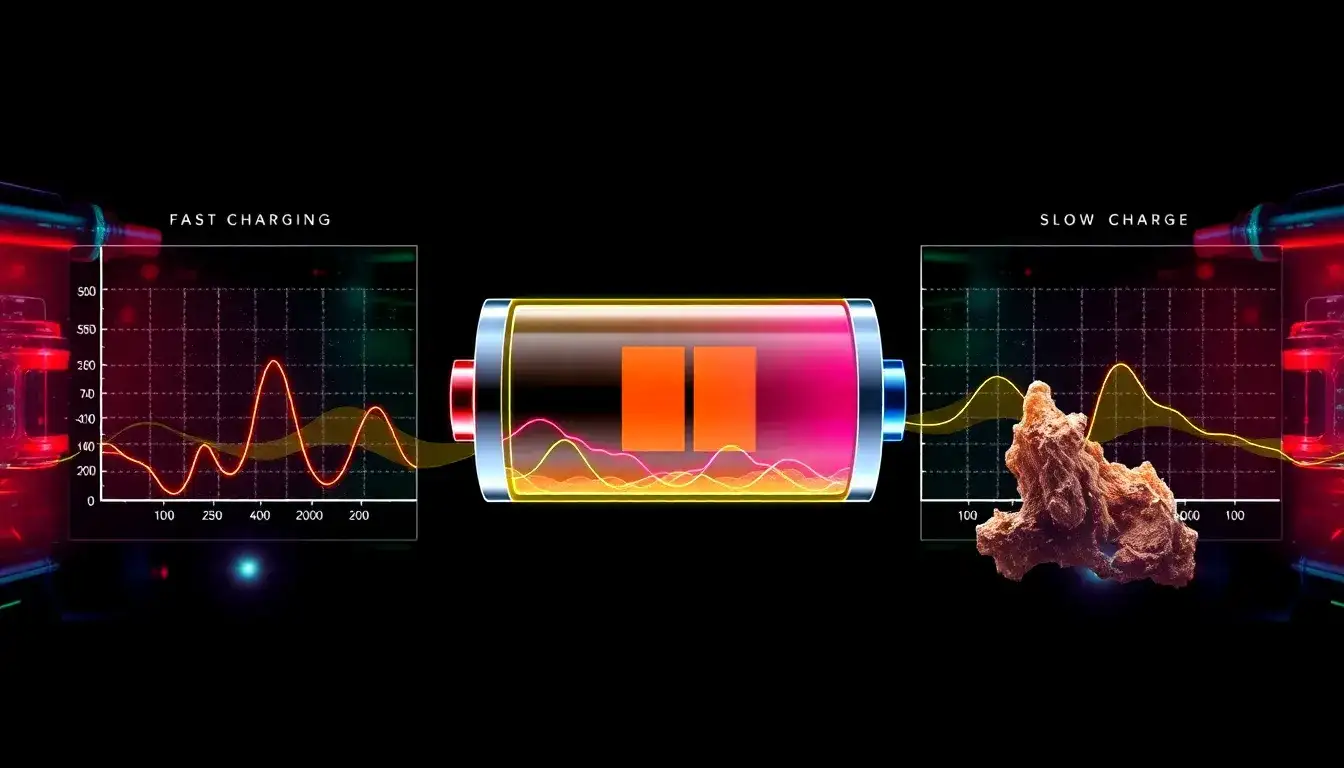
The charging speed has a significant impact on the overall lifespan of lithium-ion batteries, influencing how long the battery maintains capacity and performance over many charge cycles.
Impact of Charging Speed on Lithium-Ion Battery Lifespan
Fast Charging Effects:
- Fast charging uses higher currents and voltages to rapidly replenish battery charge, often achieving 80% capacity in about 30 minutes. This involves high-power DC charging and rapid voltage ramp-up.
- However, consistently fast charging generates more stress on the battery cells, accelerating chemical degradation and reducing the total number of full charge-discharge cycles the battery can endure.
- This fast charging strain typically results in a shorter cycle life compared to slow charging, meaning the battery’s overall lifespan is decreased.
Slow Charging Benefits:
- Slow charging, often AC charging over 6-8 hours with lower current and voltage, is gentler on the battery chemistry.
- Batteries charged slowly tend to last longer, with cycle life typically extending beyond 3,000 cycles versus fewer cycles under frequent fast charging.
- The reduced stress from slow, steady charging helps preserve battery capacity and delays aging processes.
Additional Insights on Charging and Lifespan:
- The very first charge of lithium-ion batteries, if done at unusually high currents under controlled conditions, can actually increase battery lifespan by 50% and reduce charging time dramatically. This suggests that controlled high-current charging during manufacturing can be beneficial, but regular fast charging during everyday use usually accelerates aging.
- Charging lithium-ion cells to lower peak voltages (rather than the standard 4.20V per cell) can significantly prolong cycle life—up to 4,000 cycles at 3.90V, compared to 300-500 cycles at 4.20V—but at the cost of reduced capacity. This highlights that both voltage and current rates during charging affect battery stress and longevity.
- Partial charging cycles and avoiding full charge-discharge cycles also help minimize wear and extend battery life, indicating that charging practices influence lifespan beyond just speed.
Summary Table of Charging Speed Impact
| Charging Speed | Charging Current/Voltage | Battery Stress | Typical Cycle Life | Lifespan Impact |
|---|---|---|---|---|
| Slow Charging | Low current, low voltage | Low | >3,000 cycles | Prolonged lifespan |
| Fast Charging | High current, high voltage | High | Fewer cycles | Reduced lifespan |
| Controlled First High-Current Charge (Factory) | High current but optimized | Low | +50% lifespan gain | Beneficial if controlled |
| Lower Peak Voltage Charging | Reduced voltage (~3.90V) | Low | ~2,400-4,000 cycles | Increased lifespan but less capacity |
In conclusion, while slow charging extends the overall lifespan of lithium-ion batteries by minimizing stress, fast charging accelerates battery wear and reduces the total number of effective charge cycles. Careful control of charging voltage and avoiding frequent full charge cycles also support longer battery life. Optimal battery longevity is achieved by balancing charging speed, voltage limits, and usage patterns.
Original article by NenPower, If reposted, please credit the source: https://nenpower.com/blog/how-does-the-charging-speed-impact-the-overall-lifespan-of-lithium-ion-batteries/

