

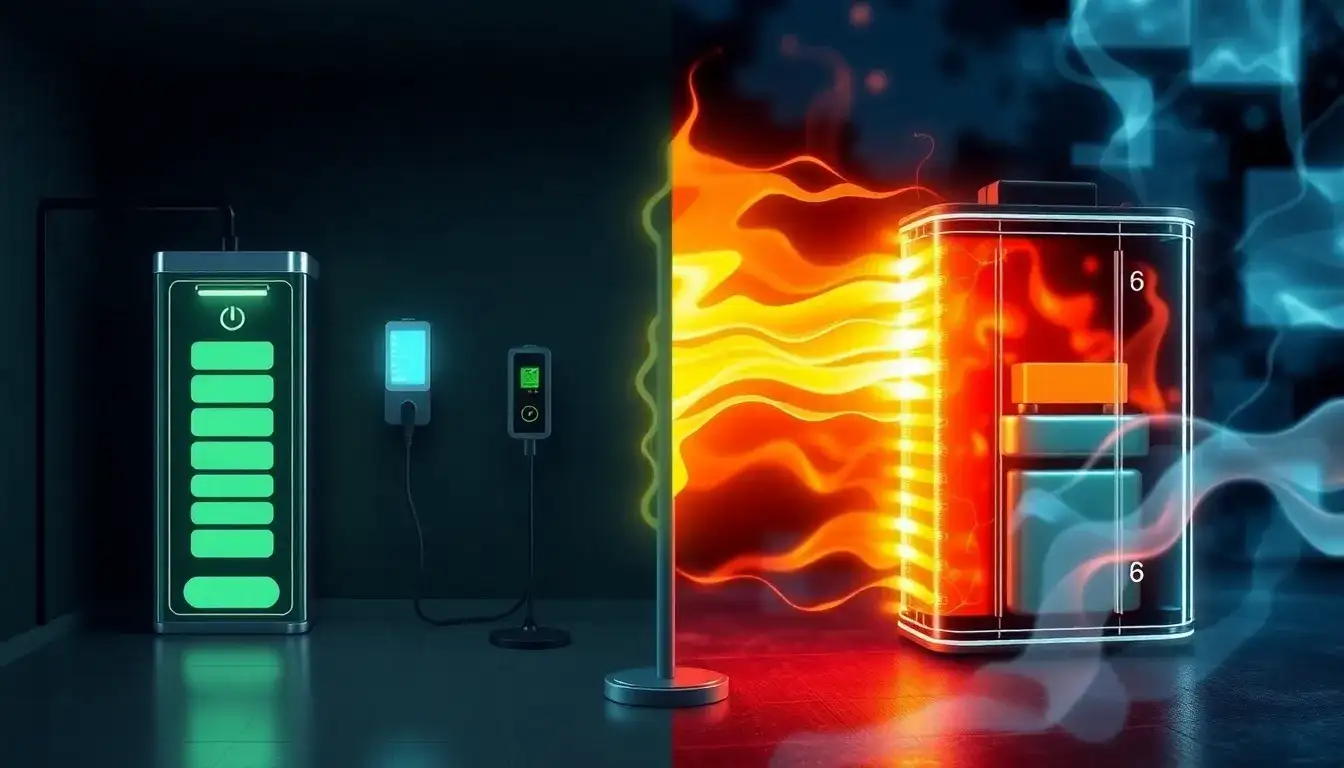
The charging process for batteries in high-temperature environments is significantly different due to the effects of heat on battery performance and longevity. Here’s a breakdown of these differences:
Effects of High Temperatures on Charging
- Charging Efficiency and Capacity: While high temperatures can increase a battery’s available capacity, they also lead to increased self-discharge and faster chemical reactions within the battery. This results in a quicker loss of charge and reduced overall lifespan.
- Risk of Overcharging: High temperatures can interfere with charging systems, such as vehicle voltage regulators, leading to inaccurate charging control and potential overcharging. Overcharging can cause irreversible damage, reducing the battery’s lifespan.
- Reduced Charging Accuracy: Heat disrupts charging accuracy by affecting the battery’s internal chemistry. This can result in inefficient charging cycles and a shorter battery life.
- Chemical Reactions and Internal Damage: The electrolyte inside batteries can evaporate more quickly at high temperatures, damaging the battery’s internal structure and corroding its components, such as lead plates. This leads to premature aging.
Best Practices for Charging in High Temperatures
- Avoid Extreme Temps: For optimal performance, charge batteries between 10°C and 30°C (50°F to 86°F). Avoid temperatures above this range as they can lead to inefficiencies and damage.
- Use Temperature-Adaptive Chargers: Some chargers can adjust charging rates based on temperature, which is beneficial in high-temperature environments. However, these are more common in industrial settings.
- Maintenance: Regularly check and maintain batteries, ensuring proper ventilation and cooling to mitigate heat effects.
By understanding these challenges and implementing appropriate strategies, the negative impacts of high temperatures on battery charging can be minimized.
Original article by NenPower, If reposted, please credit the source: https://nenpower.com/blog/how-does-the-charging-process-differ-for-batteries-in-high-temperature-environments/

