

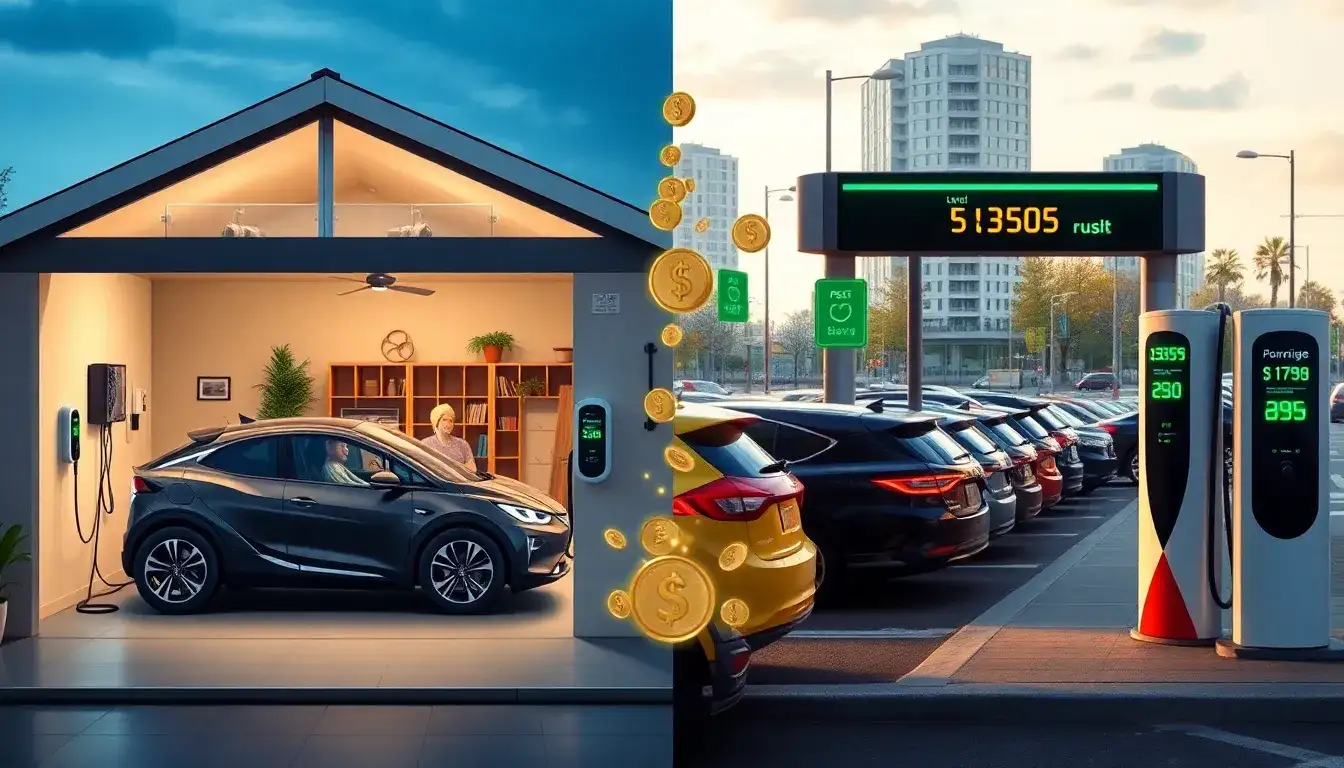
The charging method significantly impacts the overall cost of owning an electric vehicle (EV), primarily due to differences in electricity rates, charging speeds, and pricing models.
Home Charging vs. Public Charging Costs
Home Charging
Charging an EV at home is generally the most cost-effective option. As of early 2025, the average U.S. residential electricity rate is around $0.16 per kWh, though it varies by state (e.g., as low as $0.11/kWh in Washington and as high as $0.41/kWh in Hawaii). Given an average battery size around 40 kWh, a full home charge might cost between about $6.00 and $6.40 in most states. Because roughly 80% of EV owners charge at home, using residential rates translates to lower charging expenses over time.
Public Charging
Public charging costs tend to be higher, especially with fast chargers. Level 2 public chargers can cost between $0.39 and $0.79 per kWh, or alternatively charge by time (e.g., $0.04 to $0.06 per minute). DC fast charging (Level 3), which is faster, usually costs between $0.49 and $0.69 per kWh. These higher rates are due to infrastructure costs and demand charges associated with delivering high-power electricity.
Impact of Charging Speed and Pricing Models
- AC Charging (Level 1 and Level 2) is typically cheaper and used for home or workplace charging, benefiting from lower residential or commercial electricity rates.
- DC Fast Charging incurs higher costs due to expensive infrastructure and demand charges, making it less economical for frequent use.
There are different pricing models that affect cost:
- Per kWh Pricing: Most common and transparent, charging EV owners based on actual electricity consumed.
- Time-Based Pricing: Charges based on charging duration, often cheaper during off-peak hours, encouraging cost savings and grid stability.
- Subscription or Flat Rate Models: Sometimes offered by networks to save money for frequent users.
Overall Financial Impact
Choosing home charging whenever possible significantly lowers the cost of EV ownership because electricity is cheaper and there’s no additional infrastructure markup. Relying heavily on public charging, especially DC fast chargers, raises operational costs and thus the total cost of ownership. Charging method thereby plays a critical role in the affordability of owning and operating an EV.
Original article by NenPower, If reposted, please credit the source: https://nenpower.com/blog/how-does-the-charging-method-impact-the-overall-cost-of-owning-an-ev/

