

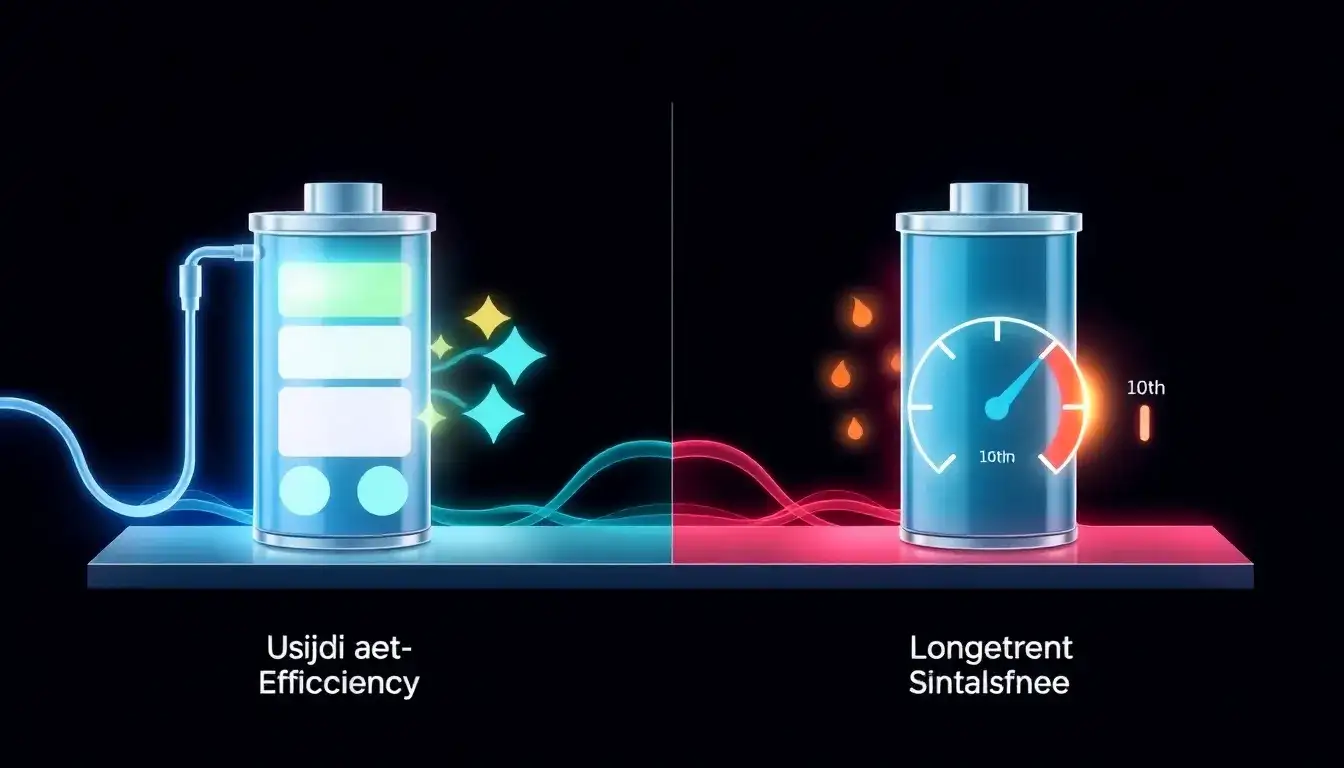
The charging efficiency of lithium-ion batteries significantly affects their overall lifespan. Several factors related to charging can impact how long these batteries last:
Factors Influencing Lifespan
- Charge Voltage: Lithium-ion cells typically charge to 4.20V/cell, but reducing this peak charge voltage can increase lifespan. For example, charging to 4.10V/cell can double the cycle life compared to charging to 4.20V/cell, though it also reduces capacity by about 10% for every 70mV reduction.
- State of Charge (SOC): Maintaining batteries at a mid-state-of-charge (around 50% SOC) can minimize stress and prolong life. Batteries subjected to frequent high or low SOC show reduced longevity due to increased stress.
- Charging Temperature: Higher temperatures during charging increase the rate of chemical reactions, which can accelerate aging. Optimal charging temperatures are typically between 20°C and 30°C.
- Initial Charging Conditions: Research shows that a high initial charging current can increase the lifespan of lithium-ion batteries by up to 50% and significantly reduce charging time.
- Charging/Discharging Patterns: Lithium-ion batteries perform best with partial cycles (e.g., discharging to 80% and then recharging). Deep cycles (fully discharging to 0%) may reduce lifespan over time.
Overall Impact on Lifespan
- Longevity: Proper charging practices can extend the lifespan of lithium-ion batteries from an average of 3 to 10 years, potentially up to 20 years under optimal conditions.
- Cycle Life: Lithium-ion batteries typically offer between 3,000 to 5,000 partial charge cycles, significantly outlasting other battery types like lead-acid.
In summary, optimized charging practices can enhance the efficiency and extend the lifespan of lithium-ion batteries, making them more durable and reliable across various applications.
Original article by NenPower, If reposted, please credit the source: https://nenpower.com/blog/how-does-the-charging-efficiency-of-lithium-ion-batteries-affect-their-overall-lifespan/

