

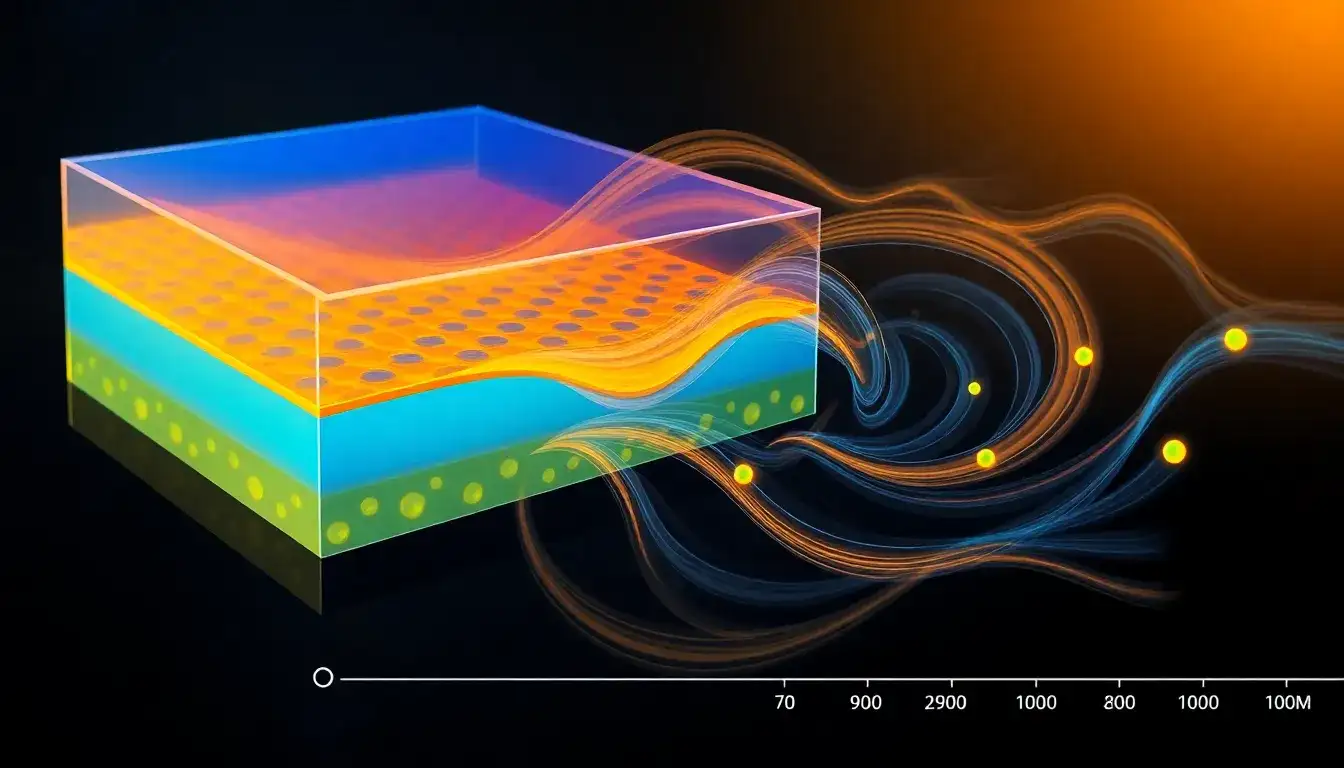
The charge recombination mechanism in perovskite solar cells (PSCs) changes and evolves over time due to several factors, primarily influenced by trap-assisted recombination at material interfaces and within the bulk. Here’s how it changes over time:
1. Initial Dominance of Trap-Assisted Recombination
- Trap-assisted recombination is the dominant loss mechanism, particularly at interfaces between the perovskite and charge transport layers (e.g., HTL and ETL) and at grain boundaries (GBs).
- Initially, photogenerated charges can be trapped at defects, leading to nonradiative recombination and reducing the overall efficiency of the solar cells.
2. Stabilization of Grain Boundaries
- Over time, traps at GBs can become filled with photogenerated charges and become neutral, reducing their role as recombination centers under solar illumination.
- This means that while GBs are initially problematic, their impact diminishes as they become charge-neutral.
3. Evolution of Recombination Pathways
- First-order nonradiative recombination often competes with second-order free charge recombination, which is mostly radiative.
- As the cells age or undergo environmental stress, the balance between these recombination pathways can shift, affecting the overall performance and stability of the solar cells.
4. Impact of Photon Recycling
- Over time, if perovskite solar cells achieve high photoluminescence quantum yields, photon recycling can become significant, effectively increasing the apparent carrier lifetime by re-emitting photons that would otherwise be lost to nonradiative recombination.
- This process can improve the efficiency by allowing photogenerated charges to be recycled rather than lost.
5. Stability Improvements
- Improving charge carrier lifetimes to over 3 microseconds can transition perovskite devices into a regime where radiative recombination (and thus photon recycling) becomes more significant, enhancing performance.
In summary, the recombination mechanism in perovskite solar cells evolves from being largely dominated by trap-assisted recombination towards a more stable state where radiative pathways and photon recycling play a larger role, especially if the cells are well-engineered to minimize defects.
Original article by NenPower, If reposted, please credit the source: https://nenpower.com/blog/how-does-the-charge-recombination-mechanism-change-over-time-in-perovskite-solar-cells/

