

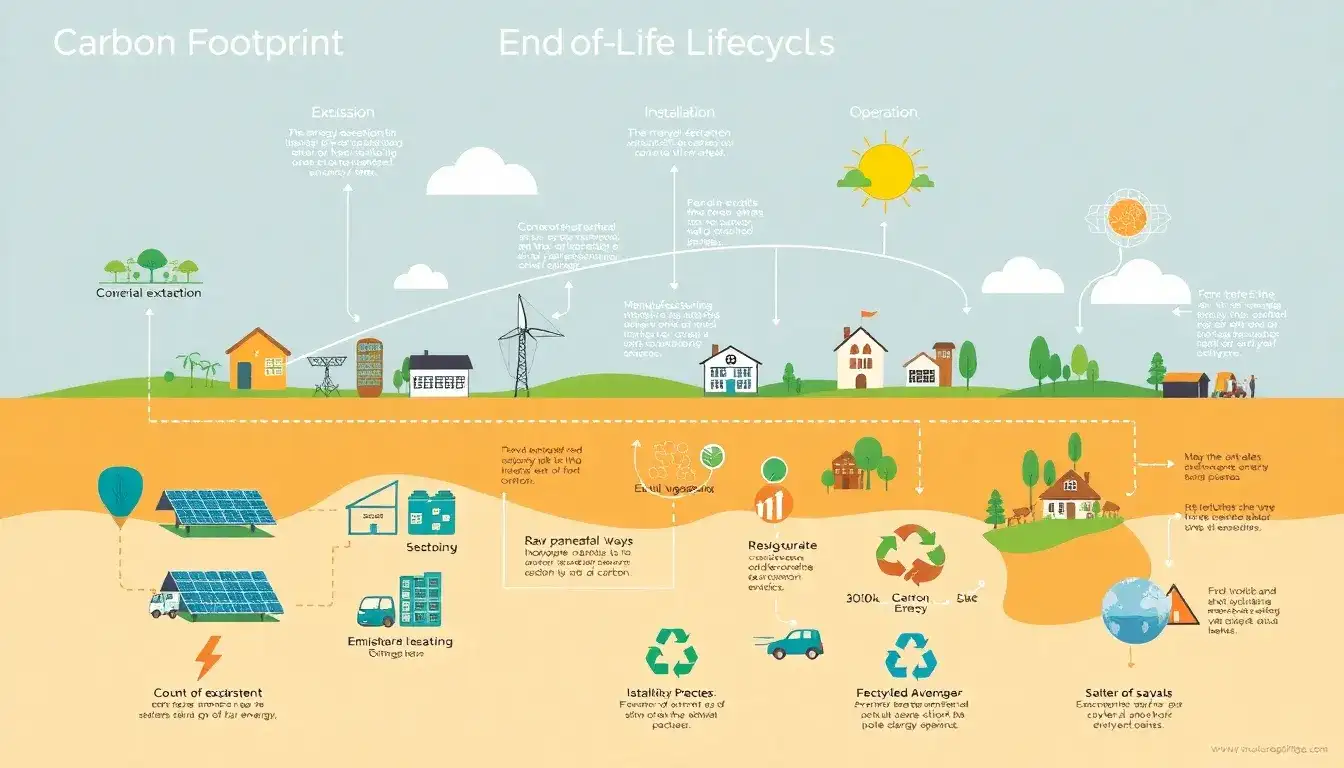
The carbon footprint of solar panels varies significantly across their different lifecycle stages, with the majority of emissions concentrated in the early phases of production and considerably lower emissions during operation and end-of-life.
Lifecycle Stages and Carbon Footprint
1. Raw Material Extraction and Processing
The lifecycle begins with the extraction and processing of raw materials such as polysilicon, glass, and metals. This stage is energy-intensive and contributes substantially to the total carbon footprint. For example, producing one square meter of PV modules demands significant energy input, causing emissions typically ranging between 37.3 to 72.2 g CO2 equivalent per kWh generated, depending on the manufacturing location’s energy mix and production efficiency.
2. Manufacturing
Manufacturing the solar panels involves transforming raw materials into the final product. This phase also accounts for a significant portion of the total greenhouse gas emissions. Estimates suggest that manufacturing can result in approximately 50 g CO2 emissions per kWh of electricity produced over the panel’s lifetime.
3. Transportation and Installation
Transportation of components to the installation site and the installation process itself add to the carbon footprint, though these contributions are relatively small compared to manufacturing.
4. Operation and Maintenance
During the operational life, typically 25-30 years, solar panels generate electricity without direct carbon emissions. Maintenance activities such as cleaning and inspection have minimal associated emissions but are necessary to ensure performance over the lifespan.
5. End-of-Life: Decommissioning and Recycling
End-of-life processes are evolving, with recycling becoming more common. While the environmental impact of disposal and recycling is not fully quantified yet, effective recycling can help reduce the overall carbon footprint by recovering valuable materials and reducing the need for raw material extraction in new modules.
Carbon Footprint Summary Across Lifecycle
| Lifecycle Stage | Carbon Footprint Contribution |
|---|---|
| Raw Material Extraction | Significant; energy-intensive extraction and processing |
| Manufacturing | High; main contributor to emissions |
| Transportation & Installation | Low to moderate |
| Operation & Maintenance | Very low; near zero direct emissions |
| End-of-Life (Disposal/Recycling) | Currently evolving; potential to reduce footprint |
Comparison to Fossil Fuels
Solar PV systems have a lifecycle greenhouse gas emission of about 33-50 g CO2e/kWh, which is substantially lower than coal-fired power plants (about 820 g CO2e/kWh) and natural gas combined cycle plants (490 g CO2e/kWh). Solar panels typically “pay back” their carbon emissions within around three years of operation through clean electricity generation, and their total operational life (25-40 years) yields a substantial net reduction in carbon emissions compared to fossil fuels.
In summary, the carbon footprint of solar panels is front-loaded, with most emissions arising from raw material extraction and manufacturing. During their long operational life, they produce electricity with virtually no direct emissions, making their overall lifecycle carbon footprint much lower than fossil fuel energy sources. Advances in manufacturing processes and recycling are expected to further reduce this footprint in the future.
Original article by NenPower, If reposted, please credit the source: https://nenpower.com/blog/how-does-the-carbon-footprint-of-solar-panels-change-over-their-different-lifecycle-stages/

