

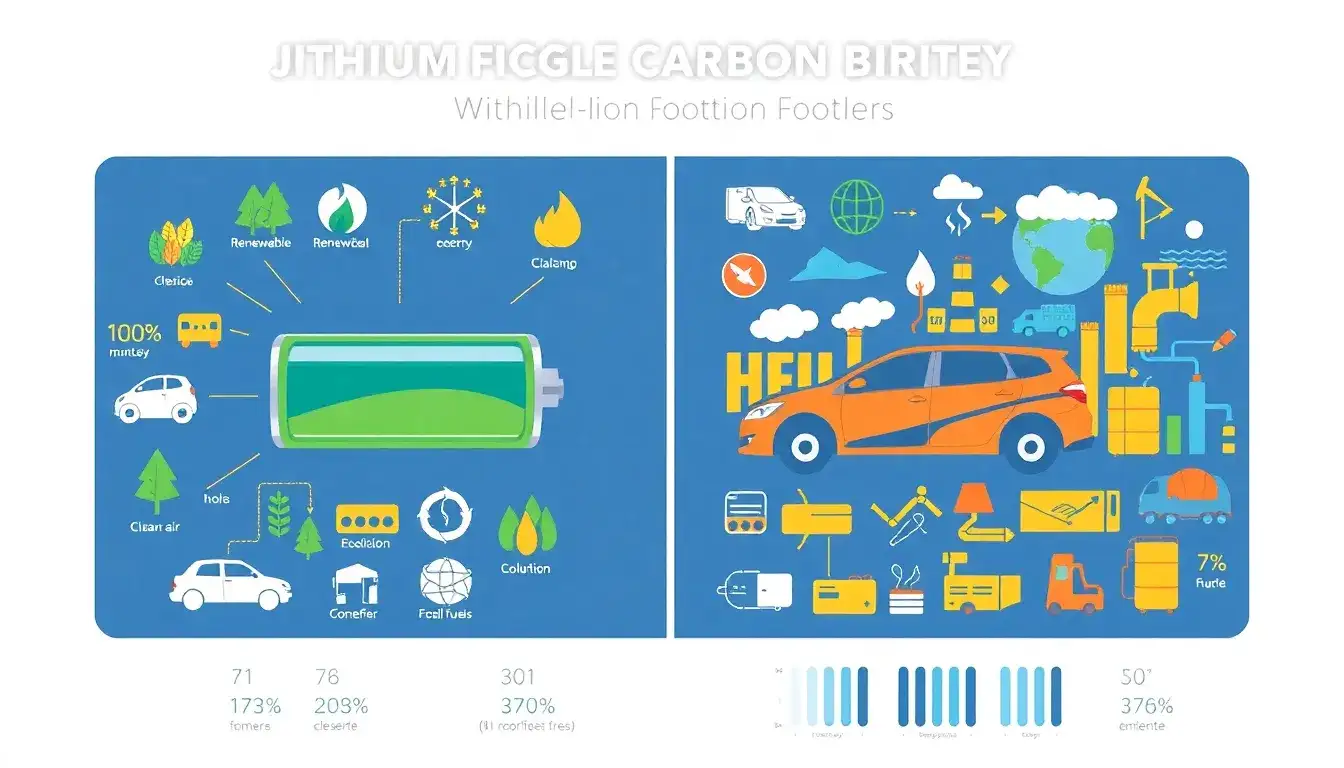
The carbon footprint of lithium-ion batteries used in electric vehicles (EVs) compared to traditional fossil fuel-based vehicles is complex and varies depending on several factors. Here’s a summary to help understand the comparison:
Key Points of Comparison
- Manufacturing Emissions:
- The production of lithium-ion batteries for EVs emits a significant amount of CO₂, ranging from about 2.5 to 16 metric tons for a typical 80 kWh battery used in vehicles like the Tesla Model 3.
- In contrast, the production of traditional Internal Combustant Engine (ICE) vehicles emits less during manufacturing, but EV manufacturing is more energy-intensive.
- Operational Emissions:
- EVs produce no tailpipe emissions but generate emissions indirectly from electricity used for charging. The carbon footprint of EVs varies greatly depending on the source of electricity (e.g., coal, solar, wind).
- Traditional fossil fuel-based vehicles emit greenhouse gases directly from their tailpipes, producing more CO₂ per mile driven than EVs under most scenarios.
- Life Cycle Emissions:
- Over their lifetimes, EVs generally emit less CO₂ than ICE vehicles, especially if powered by renewable energy sources. Studies indicate EVs can be 25% to 61% less carbon-intensive than hybrids and significantly better than gasoline cars.
- However, an EV must be used for several years to offset the initial manufacturing emissions, typically around 8 years to break even.
- Sustainability and Future Potential:
- Lithium-ion batteries play a crucial role in the transition to renewable energy by enabling efficient storage and use of intermittent power sources like solar and wind.
- Improvements in battery production efficiency and cleaner energy sources are expected to further reduce the carbon footprint of EVs and their batteries.
In summary, while the production of lithium-ion batteries is carbon-intensive, EVs ultimately tend to have a lower carbon footprint than traditional fossil fuel vehicles over their life cycles, especially when powered by renewable energy sources. The future of electric mobility and energy storage will depend on improving the sustainability of battery production and promoting renewable energy integration.
Original article by NenPower, If reposted, please credit the source: https://nenpower.com/blog/how-does-the-carbon-footprint-of-lithium-ion-batteries-compare-to-traditional-fossil-fuel-based-vehicles/

