

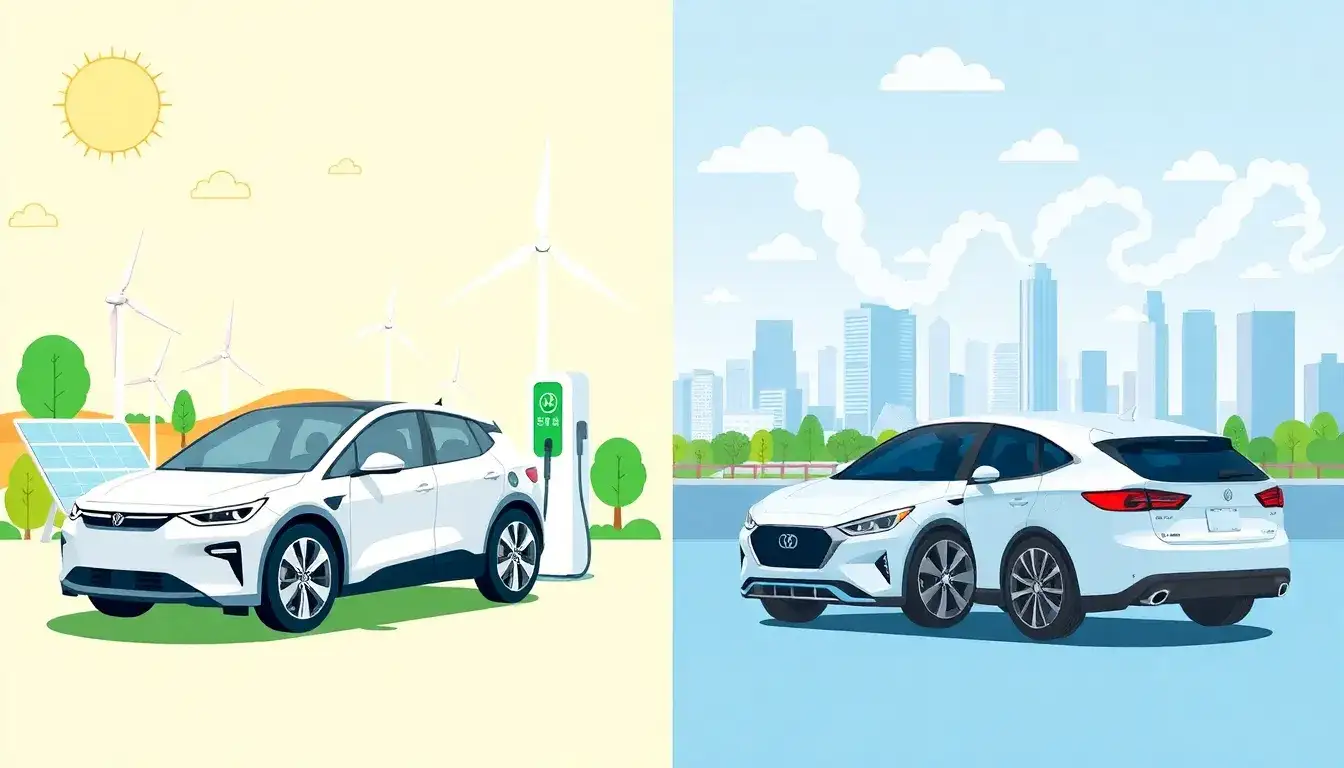
The carbon footprint of electric vehicles (EVs) is generally lower than that of hybrid cars, considering their entire lifecycle from manufacturing through use.
Comparing Carbon Emissions:
- Fully battery electric vehicles (BEVs) emit significantly less carbon dioxide per mile compared to hybrids. For example, studies show BEVs emit about 200 grams of CO2 per mile, while hybrids and plug-in hybrids emit around 260 grams per mile, and gasoline vehicles emit over 350 grams per mile on average over their lifetimes.
- In terms of annual CO2 equivalent emissions, the U.S. Department of Energy data indicates EVs produce about 3,932 lbs. per year, compared to 5,772 lbs. for plug-in hybrids and 6,258 lbs. for typical hybrids, with gasoline cars emitting the most at 11,435 lbs.
Energy Efficiency:
- EVs use approximately 87%–91% of the energy from the battery and regenerative braking to propel the vehicle, a much higher efficiency than gasoline vehicles which convert about 16–25% of the energy from fuel into movement. This efficiency advantage contributes to the lower carbon footprint of EVs.
Battery Manufacturing Considerations:
- EVs have a higher initial carbon footprint due to battery production, which does increase the upfront emissions compared to hybrids. However, this initial carbon “debt” is typically offset within one to two years of driving as EVs produce much lower emissions in use due to their cleaner energy consumption relative to combustion engines.
- The payback period for the manufacturing impact shortens as the electricity grid becomes cleaner and battery manufacturing improves, further enhancing the environmental benefits of EVs over hybrids.
Electricity Source Impact:
- The carbon footprint of EVs depends on the energy mix used for charging. Regions that rely more on renewable energy sources for electricity generation have lower EV emissions. Even when charged with electricity from coal-heavy grids, EVs tend to have lower lifetime emissions than hybrids or gasoline cars, though the benefits are greater with cleaner power sources.
Summary:
| Vehicle Type | Approx. CO2 Emissions (grams/mile) | Annual CO2 Equivalent (lbs) | Notes |
|---|---|---|---|
| Battery Electric Vehicle (EV) | ~200 | ~3,932 | Zero tailpipe emissions; high efficiency |
| Plug-in Hybrid (PHEV) | ~260 | ~5,772 | Combines electric and gasoline use |
| Hybrid Vehicle | ~260 | ~6,258 | Lower emissions than gasoline but higher than EVs |
| Gasoline Vehicle | >350 | ~11,435 | Highest emissions |
Overall, electric vehicles have a smaller carbon footprint than hybrids due to higher energy efficiency and zero tailpipe emissions, despite the higher initial emissions from battery production. Hybrids, while cleaner than gasoline cars, typically produce more greenhouse gases than fully electric cars over their lifetimes.
Original article by NenPower, If reposted, please credit the source: https://nenpower.com/blog/how-does-the-carbon-footprint-of-evs-compare-to-hybrid-cars/

