

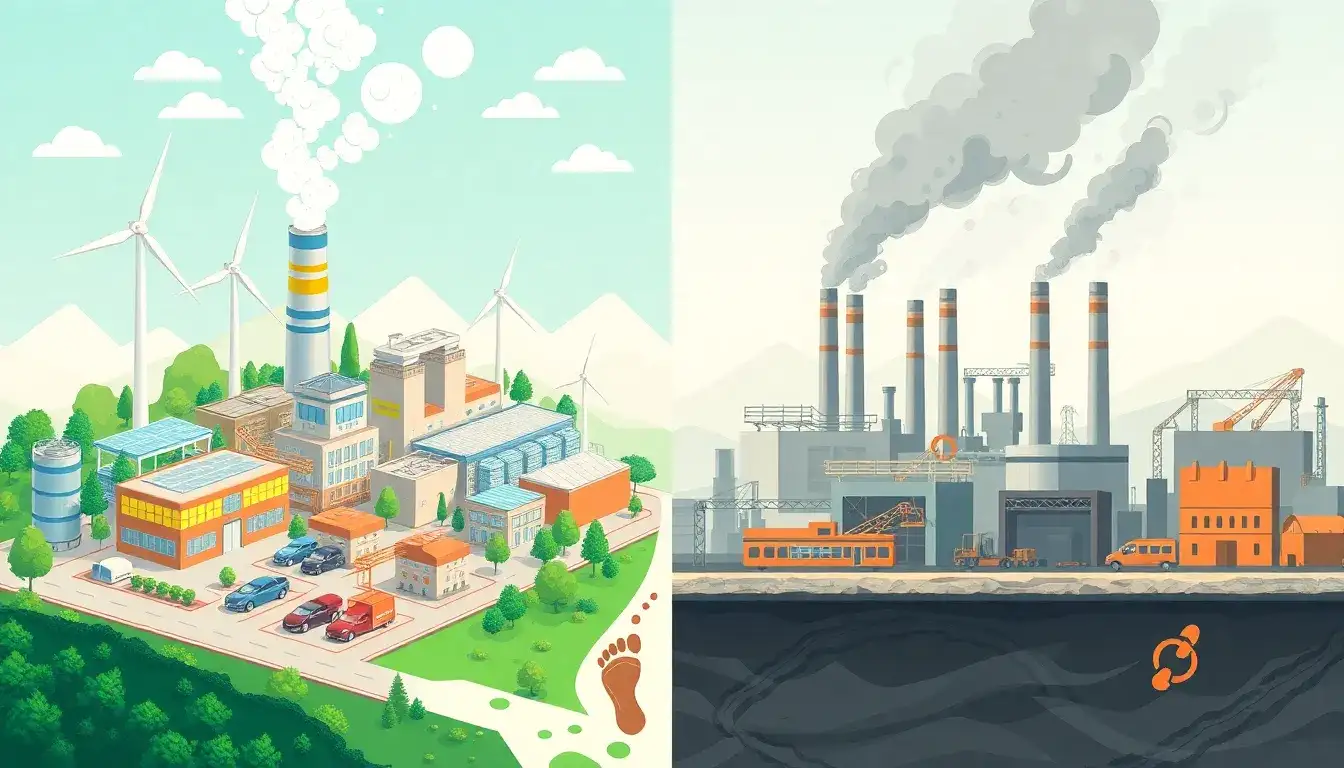
The carbon footprint of electric vehicle (EV) battery production and traditional gasoline cars are complex and involve multiple factors. Here’s a comparison based on available data:
Key Points for Comparison
- Production Emissions:
- Electric Vehicles (EVs): Producing an EV, particularly its battery, emits a significant amount of CO2. For a typical EV with a 75 kWh battery pack, the battery alone can account for more than 7 tons of CO2 equivalent emissions. The range for EV battery production emissions varies widely, from about 56 kg to 494 kg of CO2 per kilowatt-hour of battery capacity. McKinsey estimates that producing the average EV battery emits up to 100 kg of CO2 equivalent per kilowatt-hour.
- Gasoline Cars: The production emissions for gasoline cars are generally lower than those for EVs, particularly when excluding the battery production for EVs. However, the overall production emissions for both types can be significant.
- Use-Phase Emissions:
- Electric Vehicles (EVs): EVs have zero tailpipe emissions, which means they don’t emit CO2 directly during operation. Their carbon footprint primarily depends on how the electricity used for charging is generated. If the energy mix is largely based on renewable sources, the overall emissions from EVs can be much lower than those of gasoline cars.
- Gasoline Cars: Gasoline cars emit CO2 directly during operation due to combustion. They are less energy-efficient compared to EVs, converting only about 20% of the energy from gasoline into motion, whereas EVs utilize approximately 87-91% of the energy from their batteries.
- Life-Cycle Emissions:
- Electric Vehicles (EVs): Despite the high production emissions, EVs typically have a lower overall life-cycle carbon footprint compared to gasoline cars, especially as the electricity grid becomes more reliant on renewable energy sources.
- Gasoline Cars: The emissions from gasoline cars accumulate over their lifespan, primarily during the use phase, making them more carbon-intensive over time compared to EVs, which benefit from reduced emissions during operation.
Conclusion
While EV battery production has a significant carbon footprint, the life-cycle emissions of EVs are generally lower than those of gasoline cars due to the absence of tailpipe emissions and efficiency advantages during operation. As renewable energy becomes more prevalent in the electricity mix, the carbon footprint of EVs will decrease further, enhancing their environmental benefits over traditional gasoline vehicles.
Original article by NenPower, If reposted, please credit the source: https://nenpower.com/blog/how-does-the-carbon-footprint-of-ev-battery-production-compare-to-traditional-gasoline-cars/

