

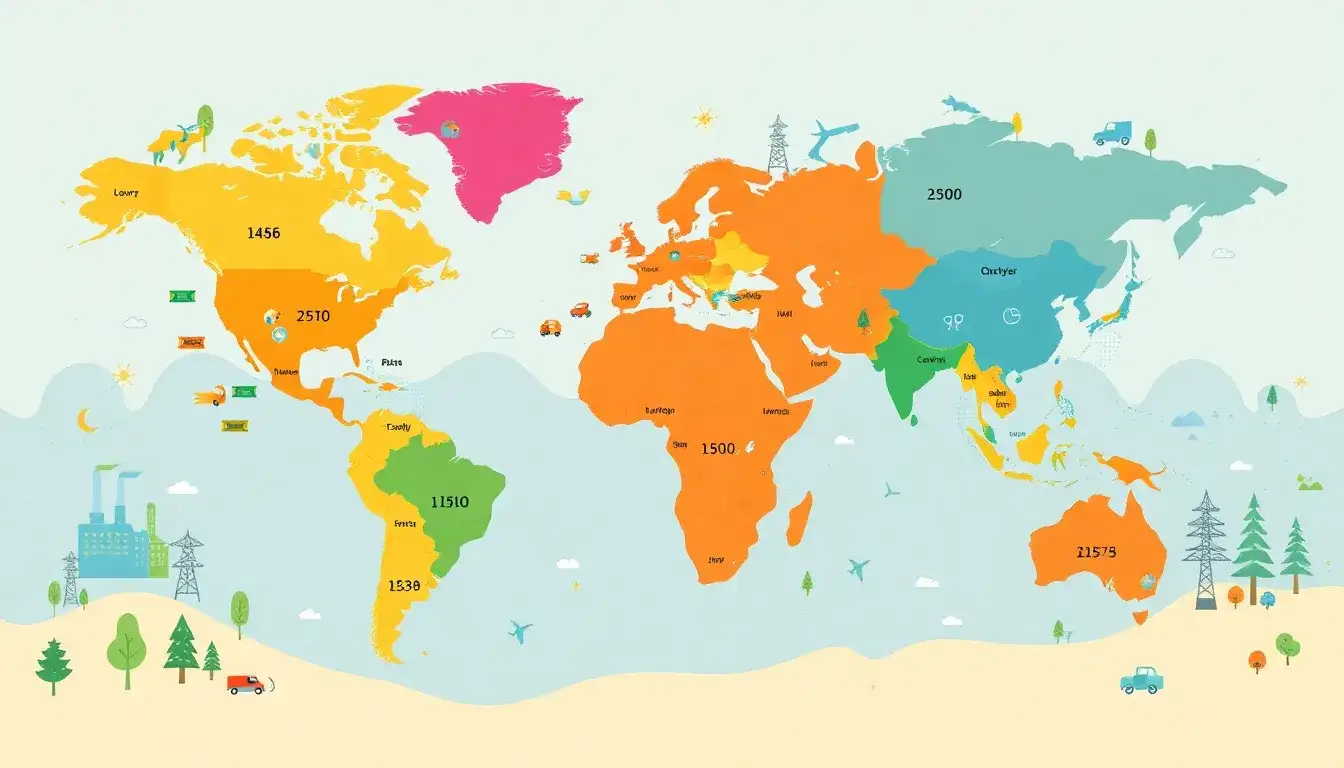
The carbon footprint of batteries
varying significantly between different countries, primarily due to differences in energy sources used during manufacturing. Here’s a breakdown of how the carbon footprint can differ based on the country of production:
Factors Influencing Carbon Footprint
- Energy Source: The type of energy used during manufacturing has the most significant impact on a battery’s carbon footprint. Countries relying heavily on fossil fuels, especially coal, like China, have higher carbon footprints compared to those using cleaner energy sources.
- Location and Energy Grid: The average carbon intensity of the electricity grid varies greatly between regions. For example, grids in Sweden are significantly cleaner than those in China.
Carbon Footprints by Country
- China: Using the average Chinese grid, battery carbon footprints are around 105 kgCO2e/kWh, largely due to the reliance on coal for energy production.
- Europe: The carbon footprint in Europe varies. For instance, using the EU average grid, the footprint is about 77 to 78 kgCO2e/kWh. Locations with cleaner grids, like Sweden, can have footprints as low as 64 kgCO2e/kWh.
- United States: While specific data is less detailed, U.S. battery manufacturing generally aligns with European levels due to similar energy mixes and technological standards.
Implications and Trends
- Decarbonization Efforts: Shifting production to regions with cleaner energy sources can significantly reduce battery carbon footprints, as seen with high-nickel batteries produced in Sweden compared to China.
- Policy Impact: Future policies aiming to incentivize low-carbon battery production could further enhance these differences, favoring regions with access to renewable energy.
Original article by NenPower, If reposted, please credit the source: https://nenpower.com/blog/how-does-the-carbon-footprint-of-batteries-vary-between-different-countries/

