

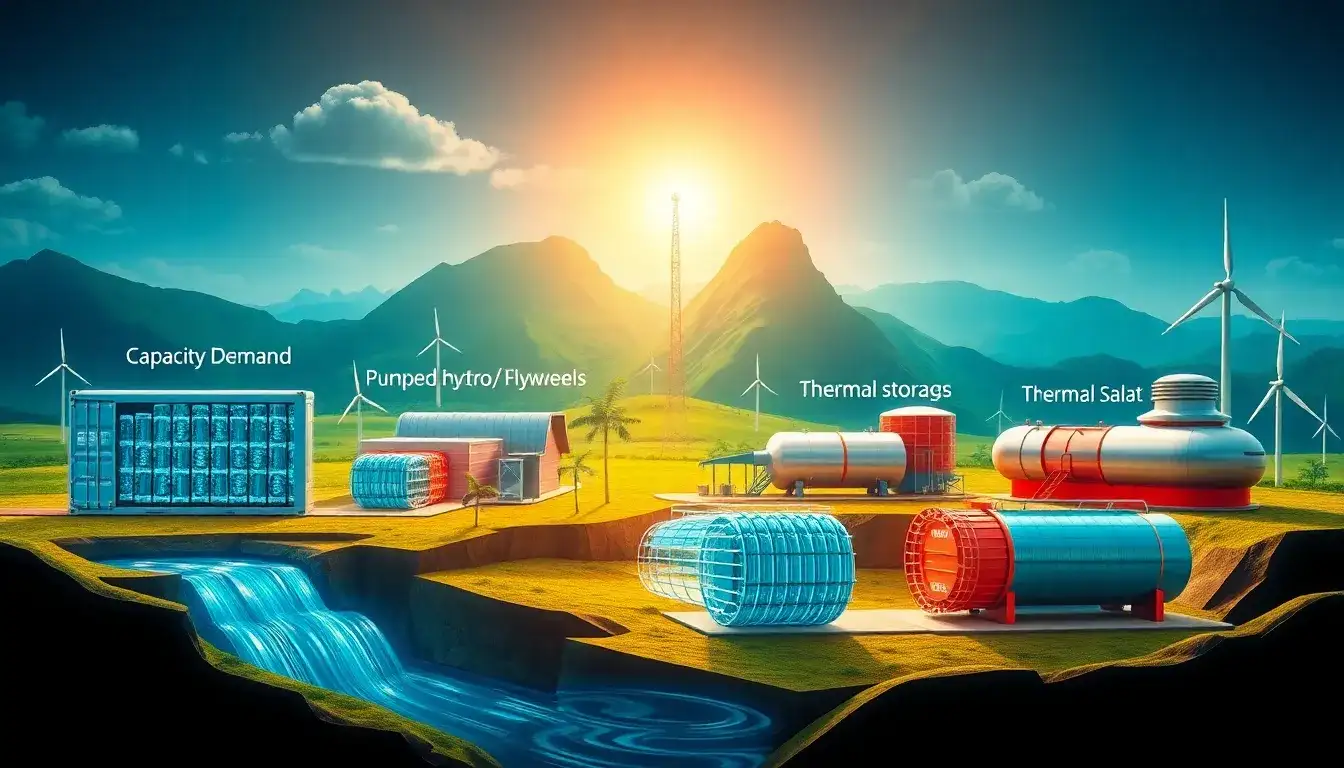
Battery storage technology is a vital component of modern energy systems, particularly as renewable energy sources like wind and solar become more prevalent. Understanding how its capacity requirements compare to other energy storage solutions is crucial for assessing its role in energy management and grid stability.
Capacity Requirements for Battery Storage
Battery storage systems generally have a minimum capacity requirement, with typical residential units needing at least 3 kilowatt-hours (kWh) to qualify for certain tax incentives like the Residential Clean Energy Credit. Most battery installations, however, often exceed this minimum capacity, with common systems ranging from 10 to 15 kWh or more to meet household energy needs effectively.
Key Characteristics:
- Rated Power Capacity: This refers to the instantaneous output capability of the battery (measured in kilowatts, kW).
- Energy Capacity: This is the total amount of energy the battery can store, typically expressed in kilowatt-hours (kWh) or megawatt-hours (MWh).
- Storage Duration: This is how long the battery can provide its rated power capacity before depleting its energy capacity. For example, a battery rated at 1 MW power capacity with 4 MWh of energy capacity can deliver power for 4 hours.
Comparison with Other Energy Storage Solutions
Other energy storage solutions, such as pumped hydro storage, compressed air energy storage (CAES), and flywheels, have different capacity characteristics and operational benefits:
| Energy Storage Type | Typical Capacity Range | Duration | Advantages |
|---|---|---|---|
| Battery Storage | 3 kWh – 10+ MWh | 1 – 8 hours | Fast response time, modular, suitable for residences and small-scale applications. |
| Pumped Hydro Storage | 10s – 100s+ MWh | Hours to days | High capacity and long discharge duration; suitable for large-scale applications. |
| Compressed Air Energy Storage | 10s – 100+ MWh | Hours | Can provide bulk energy storage and long duration discharges; less site-specific than pumped hydro. |
| Flywheels | 2 – 100 kWh | Seconds to minutes | High power output, rapid response, good for frequency regulation, but limited energy duration. |
Key Differences:
- Duration: Battery systems typically discharge energy over shorter periods (from minutes to several hours), whereas pumped hydro and CAES can sustain energy output for much longer durations, making them suitable for balancing longer-term supply and demand fluctuations.
- Response Time: Battery storage can respond almost instantaneously, which is beneficial for grid stability and helping to balance supply-demand mismatches in real-time. This rapid discharge capability is crucial during peak demand times or sudden outages.
- Capacity Limitation: Battery storage systems are often constrained by their physical size and technology limits, which can restrict the total energy they can store and deliver, unlike pumped hydro systems that can leverage natural elevation changes.
Conclusion
Battery storage technology, with its specific capacity requirements and rapid response capabilities, plays an integral role in the energy landscape, particularly in conjunction with renewable sources. While it serves different needs compared to other energy storage solutions like pumped hydro or CAES, its flexibility and efficiency make it a key player in modern energy systems, adapting well to the increasing demand for sustainable energy management.
Original article by NenPower, If reposted, please credit the source: https://nenpower.com/blog/how-does-the-capacity-requirement-for-battery-storage-technology-compare-to-other-energy-storage-solutions/

