

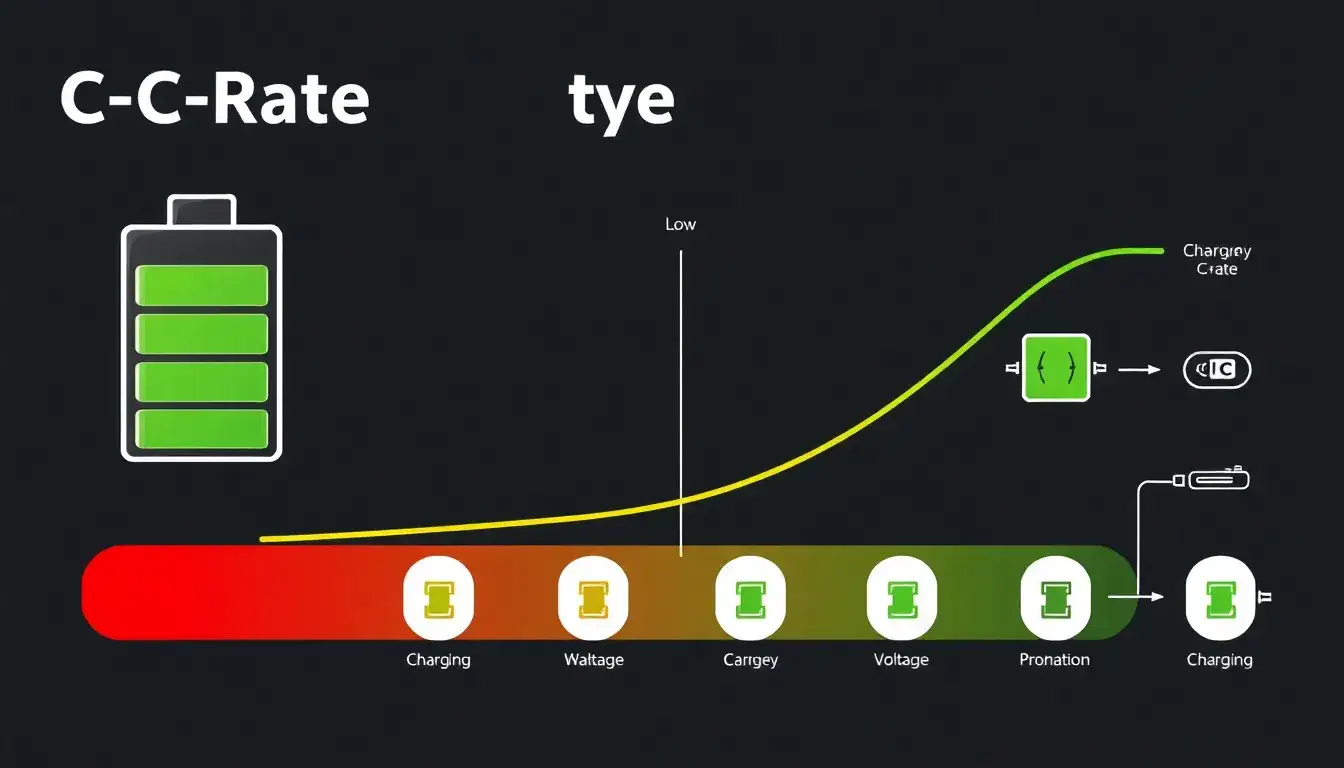
The C-rate directly influences the speed at which a battery charges or discharges. It is a measure of the rate relative to the battery’s capacity. For example, a 1C rate means the battery is charged or discharged at a current equal to its total capacity, resulting in a full charge or discharge in one hour. At 0.5C, the process takes two hours, and at 2C, it takes just 30 minutes.
Higher C-rates enable faster charging speeds. For instance, a 3C rate can charge a battery three times faster than at 1C, potentially completing a full charge in about 20 minutes. However, increasing the C-rate also increases heat generation within the battery, which can negatively impact battery life and safety. Moreover, very high C-rates accelerate battery degradation, reduce overall lifespan, and may lead to hazardous issues like dendrite formation that could cause battery failure or fires, especially if sustained for long periods.
Because of these risks, practical charging systems, such as those used in electric vehicles (EVs), often limit charging rates to around 2C or lower to balance charging speed with battery health and safety. Thus, while the C-rate is a key factor in determining charging speed, it must be managed carefully to avoid detrimental effects on battery performance and longevity.
In summary:
- Higher C-rate = faster charging speed (e.g., 1C = 1 hour, 2C = 30 minutes)
- Excessively high C-rate causes increased heat and faster battery degradation
- Safety concerns, such as dendrite formation, limit sustainable high C-rate charging
- EV chargers typically restrict charging to 2C or below to protect battery life
Therefore, the C-rate governs the charging speed but must be optimized to balance speed with battery durability and safety.
Original article by NenPower, If reposted, please credit the source: https://nenpower.com/blog/how-does-the-c-rate-affect-battery-charging-speed/

