

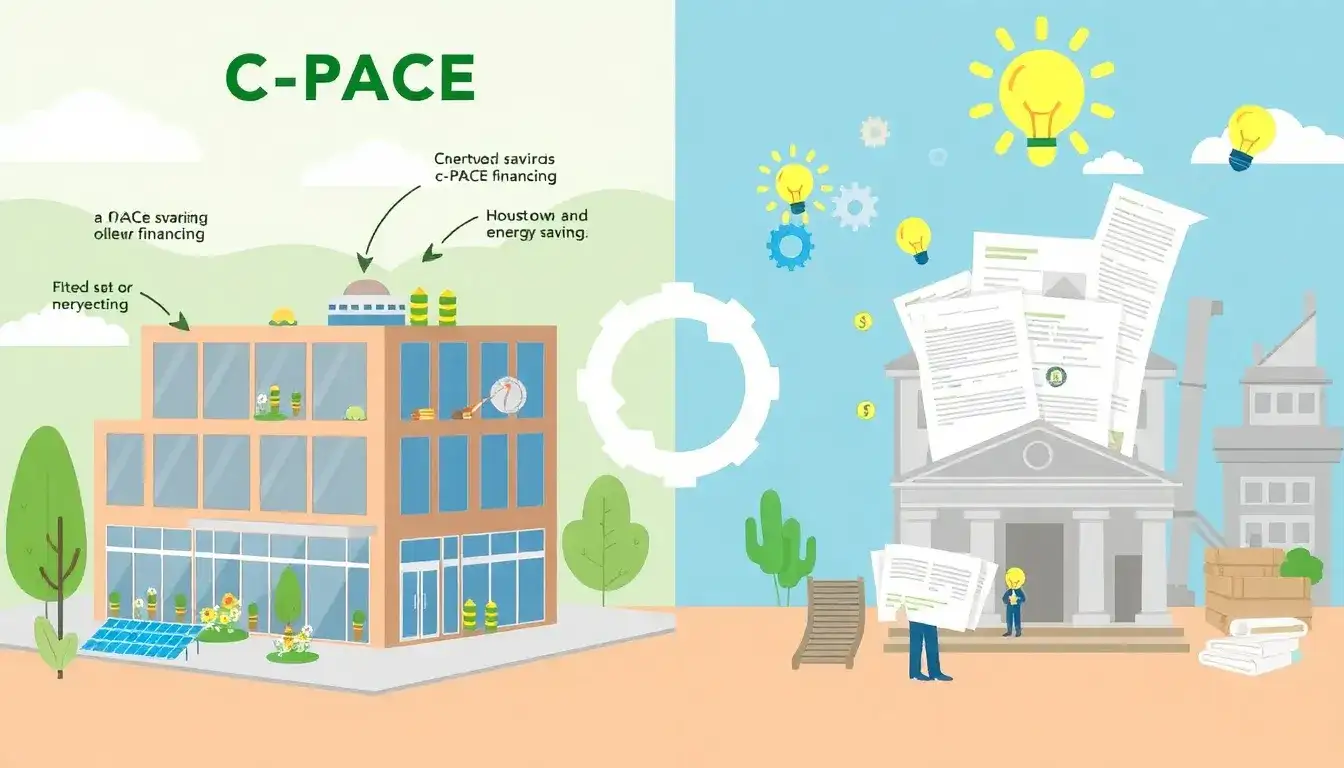
Nature of the Loan
- C-PACE Financing: This is a non-recourse loan, meaning the repayment obligation is tied to the property, not the borrower. If the property is sold, the financing obligation automatically transfers to the new owner.
- Traditional Financing: Typically involves recourse loans, where the borrower is personally responsible for repayment. This means the borrower’s assets and credit score are at risk if payments are missed.
Repayment Structure
- C-PACE Financing: Repayment is made through a special property tax assessment over a long period, typically 20 to 30 years. This assessment has a senior lien position and is transferable to new property owners.
- Traditional Financing: Repayment often involves fixed monthly payments based on the loan’s interest rate and term, with no direct association with property taxes.
Upfront Costs
- C-PACE Financing: Allows property owners to finance up to 100% of eligible project costs with no down payment required. This reduces the immediate financial burden.
- Traditional Financing: Frequently requires a significant down payment to secure the loan.
Eligibility and Focus
- C-PACE Financing: Primarily used for energy-efficient upgrades, renewable energy installations, and other environmental improvements. It encourages sustainable building practices by providing cost-effective financing for these projects.
- Traditional Financing: More flexible in the types of projects it can fund but may not offer the same incentives for energy-efficient improvements.
Interest Rates and Terms
- C-PACE Financing: Offers competitive interest rates and longer repayment terms, which can result in lower annual payments. This aligns with the long-term benefits of energy-efficient improvements.
- Traditional Financing: Can have more variable interest rates and shorter repayment terms, depending on the type of loan.
Overall, C-PACE financing is designed to facilitate environmentally friendly upgrades while reducing the upfront financial burden on property owners, making it an attractive option for those interested in sustainable development without the immediate capital outlay.
Original article by NenPower, If reposted, please credit the source: https://nenpower.com/blog/how-does-the-c-pace-financing-process-differ-from-traditional-financing-methods/

