

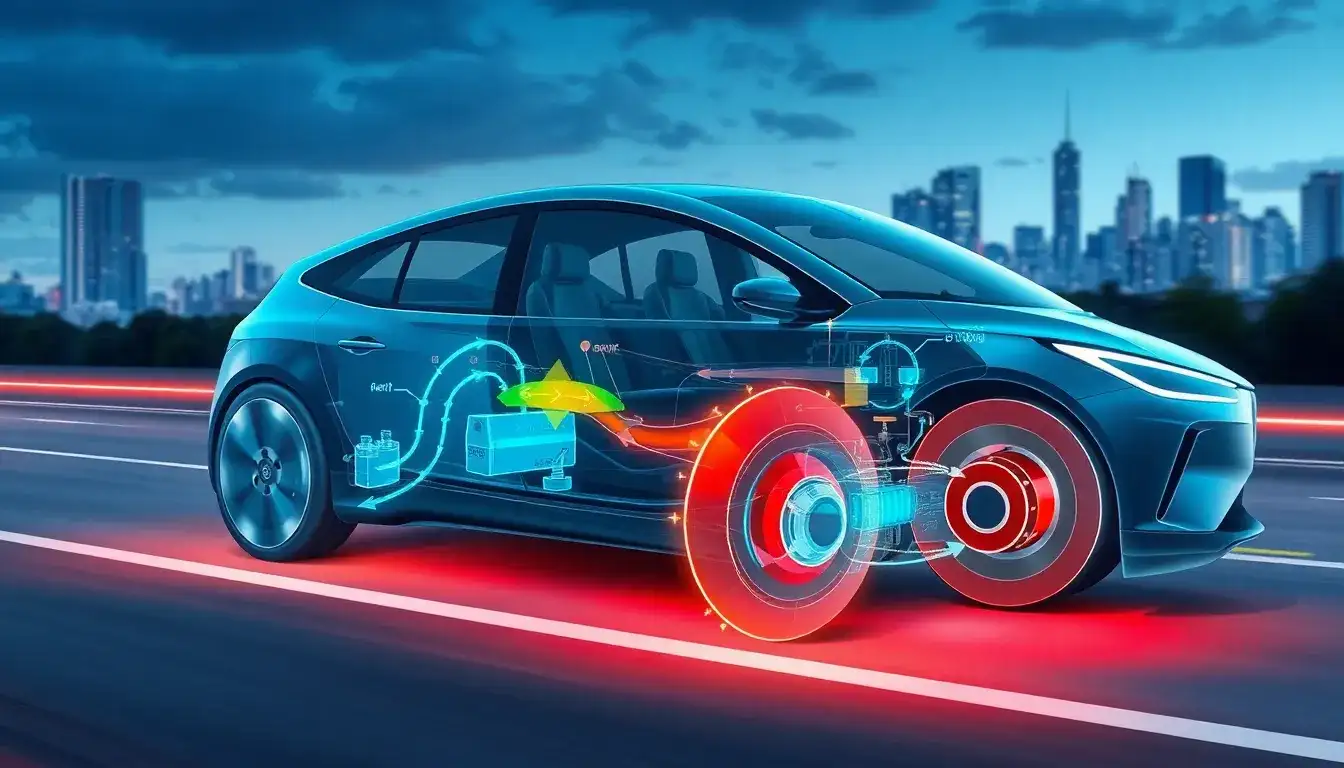
A brake controller in a vehicle with regenerative braking capabilities decides when to use regenerative brakes versus traditional brakes based on various factors, including the required braking force, vehicle speed, and the energy available for regeneration. Here’s how the decision-making process works:
- Braking Force and Vehicle Speed: The controller assesses the braking force needed to safely slow down or stop the vehicle. At higher speeds or when more significant deceleration is required, regenerative braking is often insufficient, so the controller engages traditional friction brakes to ensure safety. Regenerative brakes are most effective at lower speeds, particularly in stop-and-go traffic.
- Energy Capture and Storage: The controller determines how much kinetic energy can be converted into electrical energy and stored in batteries or capacitors. If the energy storage systems are full or unable to accept more energy, the controller may rely more heavily on traditional braking.
- Electronic Monitoring and Control: Modern vehicles use sophisticated electronic systems to monitor wheel speed, vehicle acceleration, and battery state-of-charge. These systems continuously adjust the balance between regenerative and traditional braking to optimize energy recovery while ensuring safe and efficient vehicle operation.
- Driver Settings: Some vehicles allow drivers to select regenerative braking modes or levels, giving them control over how aggressively regenerative braking is applied. This can further influence the controller’s decision-making process.
Overall, the brake controller’s role is crucial in balancing efficiency, safety, and the longevity of the braking components by wisely allocating tasks between regenerative and traditional braking systems.
Original article by NenPower, If reposted, please credit the source: https://nenpower.com/blog/how-does-the-brake-controller-decide-when-to-use-regenerative-brakes-versus-traditional-brakes/

