

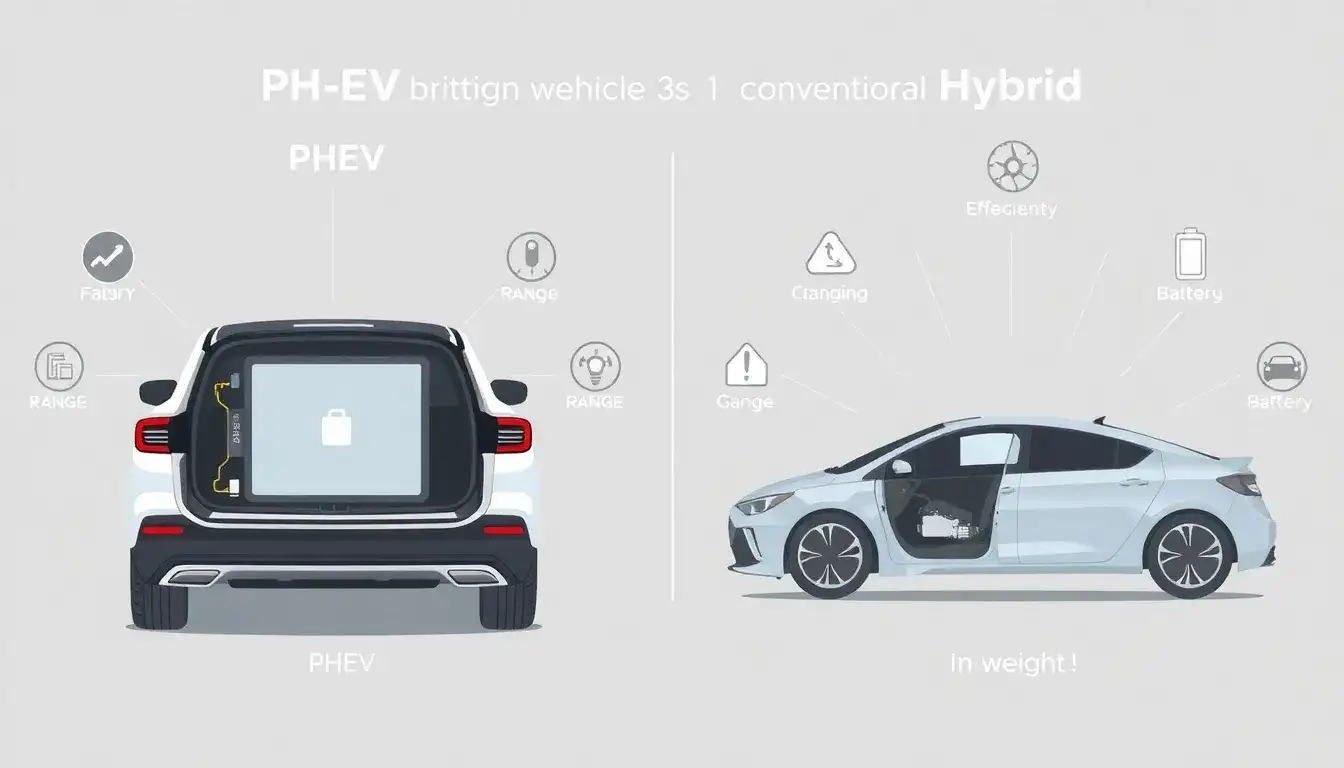
Battery Weight Comparison: PHEVs vs. Conventional Hybrids
Conventional hybrid batteries (e.g., Toyota Prius) weigh approximately 118 pounds (54 kg), as they are designed primarily to assist gasoline engines and recover energy through regenerative braking.
Plug-in hybrid (PHEV) batteries, such as the Toyota Prius Prime, are significantly heavier at 284 pounds (129 kg) due to their larger capacity, which enables extended electric-only driving (e.g., 44 miles for the Prius Prime). Research indicates PHEV battery packs can range from 220–1,320 pounds (100–600 kg), depending on capacity.
Key Differences
- Weight vs. Range: PHEV batteries weigh 2–10 times more than conventional hybrid batteries, enabling greater electric range but reducing fuel efficiency in hybrid (gasoline) mode due to added mass.
- Structural Impact: PHEVs require reinforced chassis to support heavier batteries, increasing overall vehicle weight and energy consumption.
By comparison, EV batteries average 1,000 pounds (454 kg), emphasizing the trade-off between energy density and weight across electrified powertrains.
Original article by NenPower, If reposted, please credit the source: https://nenpower.com/blog/how-does-the-battery-weight-in-phevs-compare-to-that-in-conventional-hybrid-vehicles/

