

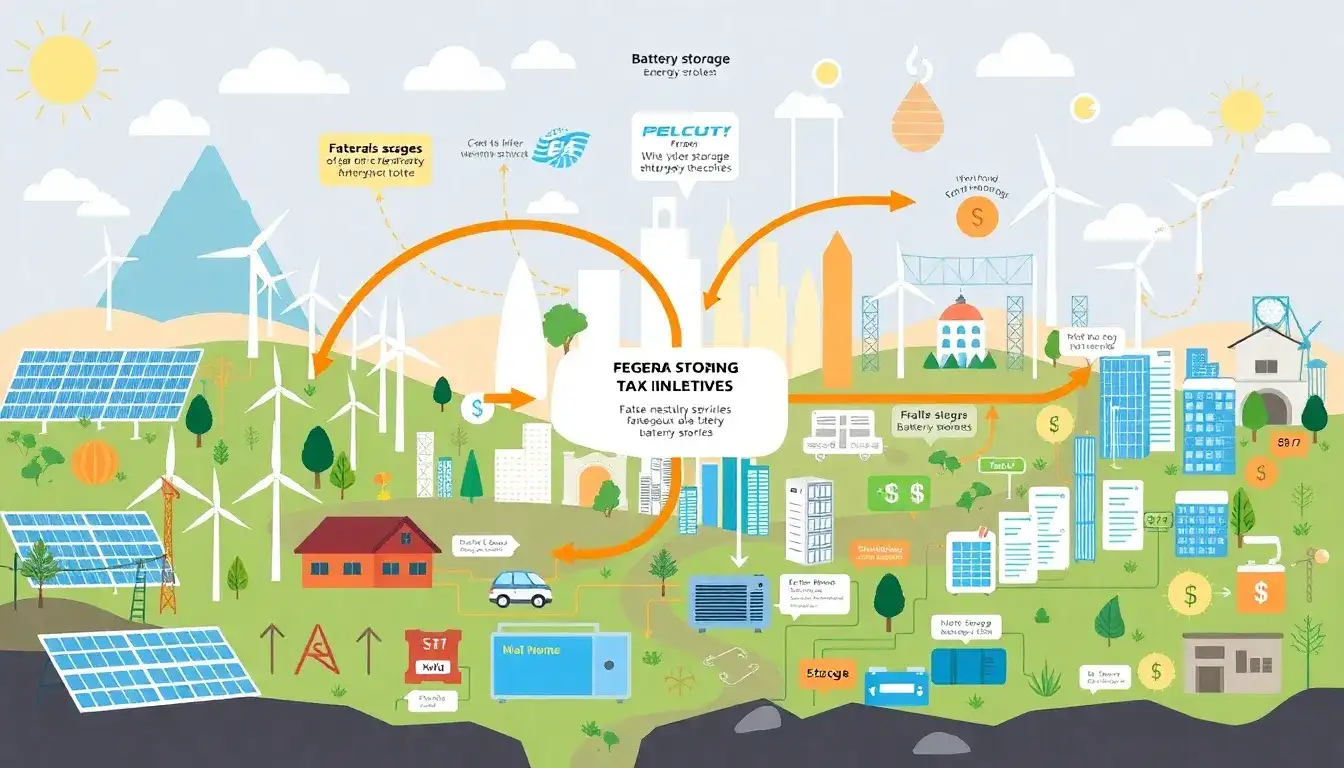
Federal Framework
The Investment Tax Credit (ITC) under the Inflation Reduction Act (IRA) provides a 30% federal tax credit for standalone battery storage installations. For commercial projects, the Clean Electricity Investment Credit (CEIC) now offers credits up to 50% of project costs if domestic content or energy community requirements are met. Tax-exempt entities (e.g., nonprofits) can utilize the Direct Pay provision to receive these credits as cash payments.
State-Level Incentives
State programs often stack with federal credits, including:
- Upfront rebates:
- California: SGIP offers $/kW rebates, prioritizing high-fire-risk and low-income areas.
- Connecticut: Up to $16,000 for residential storage.
- Performance payments:
- Massachusetts: Grid-service incentives via Connected Solutions.
- SMUD: Ongoing per-kWh compensation for battery dispatch.
- State tax credits:
- Colorado: 10% state tax credit for businesses.
Interaction Mechanisms
- Credit stacking: Federal ITC/CEIC often applies to the post-rebate project cost, maximizing total savings. For example, a $10,000 battery receiving a $2,000 state rebate could still qualify for a 30% federal credit on the remaining $8,000.
- Hybrid incentives: Utilities like SMUD combine upfront rebates with performance payments, while federal credits reduce the net installation cost.
- Domestic content bonuses: Projects using U.S.-made components may qualify for both federal (CEIC bonus) and state manufacturing incentives.
Compliance Considerations
- Tax-exempt entities: Must choose between state rebates and federal Direct Pay, as some state programs reduce eligible costs for federal credits.
- Documentation: Maintain separate records for federal and state incentive qualifications (e.g., labor standards, equipment sourcing).
Check specific state guidelines, as programs like New York’s Long Island incentive (remaining funds: ~4%) impose caps that may affect combined savings.
Original article by NenPower, If reposted, please credit the source: https://nenpower.com/blog/how-does-the-battery-storage-tax-credit-interact-with-state-specific-tax-incentives/

