

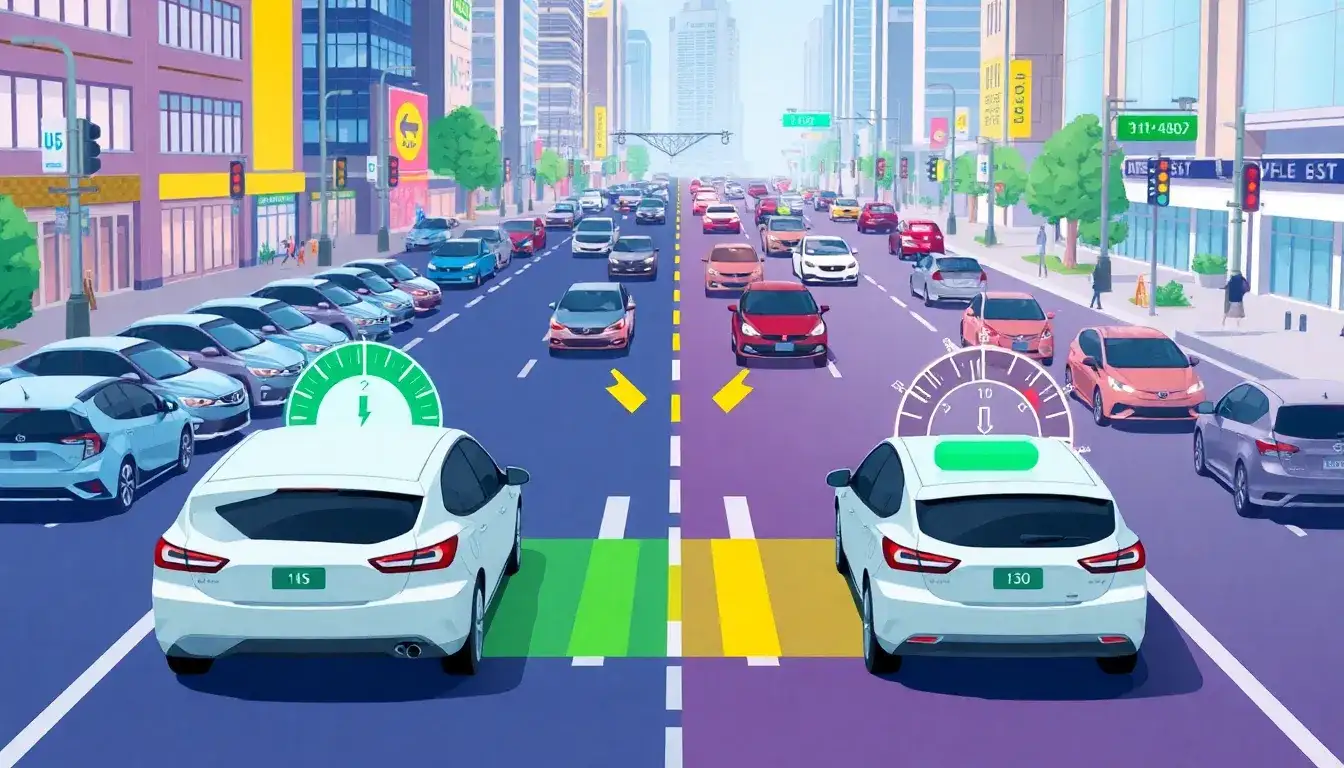
The battery size of plug-in hybrid electric vehicles (PHEVs) significantly impacts their fuel efficiency in city driving, primarily because it determines the range the vehicle can travel purely on electric power before switching to gasoline.
Impact of Battery Size on Fuel Efficiency in City Driving
- Larger Batteries Enable Greater Electric-Only Driving
PHEVs with bigger batteries have longer all-electric ranges (AER), typically enabling 20 to 50 miles (32 to 80 km) of electric-only driving depending on the battery size and vehicle configuration. This is crucial in city driving, where shorter trips are common and electric driving can replace most or all of the fuel consumption for those trips. - Fuel Savings from Battery Energy
Higher battery energy capacity directly correlates with lower fuel consumption on city driving cycles because more mileage can be covered without using the internal combustion engine. The battery displaces fuel by allowing electric propulsion; thus, bigger batteries save more fuel overall in city conditions where frequent stopping and starting favor electric operation. - Weight Penalty of Larger Batteries
However, there is a slight trade-off. Larger batteries add weight to the vehicle, which can marginally reduce efficiency especially if the driven distance is less than the AER. For very short trips (below the AER), heavier PHEVs may experience a slight penalty in fuel efficiency due to the extra mass. Yet, this is generally outweighed by the benefit of longer electric range. - Electric Range and Real-World Usage
Studies show that regular plug-in use—and thus maximizing electric-only miles—is key to realizing fuel efficiency benefits. PHEVs with around 35 km (22 miles) of electric range save a significant amount of gasoline when plugged in and driven within that range daily. Longer electric ranges correspond to even greater annual electric miles and reduced fuel consumption. - City Driving Characteristics Favor PHEVs
The frequent stop-and-go nature of city driving allows PHEVs to leverage regenerative braking to recover energy, further improving electric efficiency. Both hybrids and PHEVs benefit from regen, but PHEVs’ larger batteries store more recovered energy and offer extended electric driving.
In summary, larger batteries in PHEVs improve fuel efficiency in city driving by enabling more miles of electric-only operation, which replaces fuel use. While increased battery size adds weight, this drawback is minor compared to the fuel saved through extended electric range. City driving, with its short trips and regenerative braking opportunities, is where bigger PHEV batteries deliver the greatest fuel economy gains.
Key Points
- Bigger battery → longer electric range → more fuel saved in city driving.
- Slight weight penalty from bigger batteries may slightly reduce efficiency on very short drives, but benefits generally outweigh costs.
- Regular plugging in is essential to maximize efficiency gains from larger batteries.
- City stop-and-go traffic boosts PHEVs’ electric and fuel efficiency via regenerative braking.
Original article by NenPower, If reposted, please credit the source: https://nenpower.com/blog/how-does-the-battery-size-of-phevs-impact-their-fuel-efficiency-in-city-driving/

