

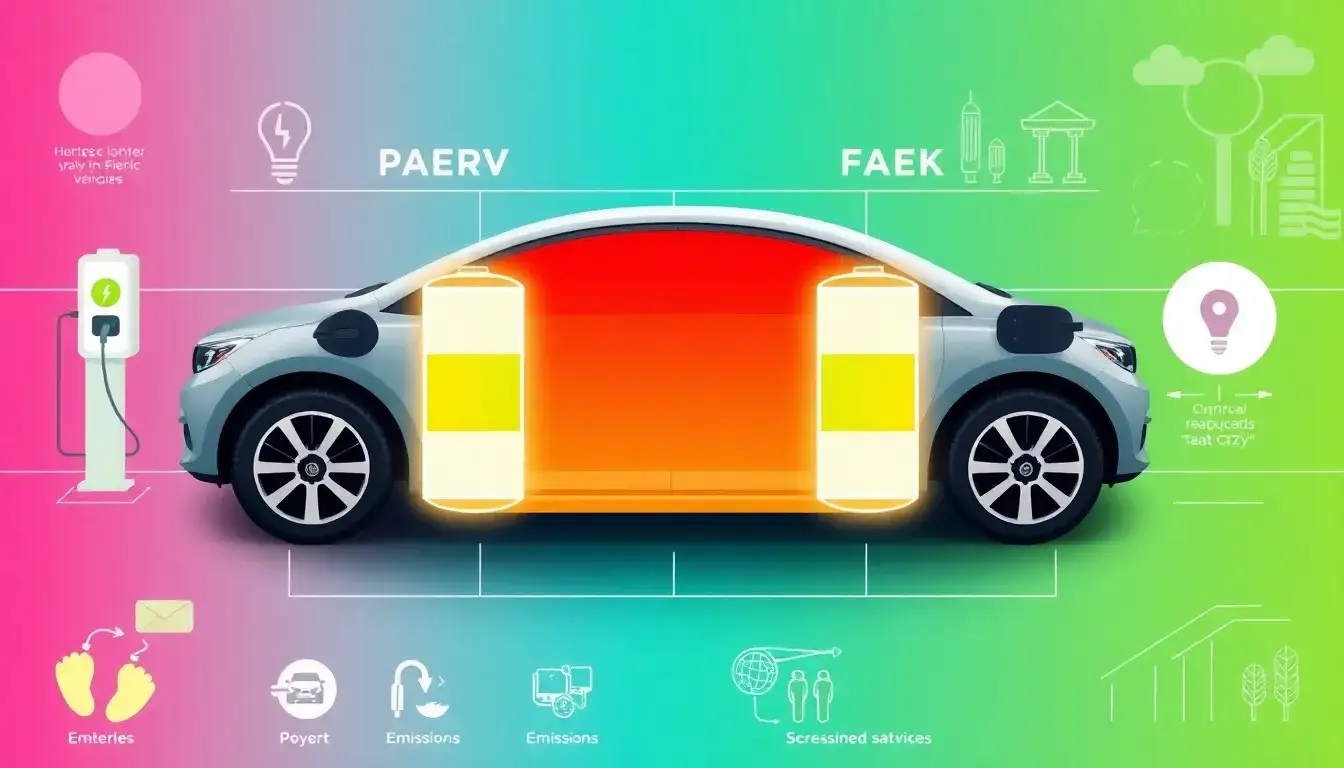
The battery size of plug-in hybrid electric vehicles (PHEVs) significantly influences their overall emissions due to a trade-off between battery production impacts and operational efficiency during use.
Effects of Battery Size on Emissions
1. Embodied Carbon in Battery Production:
Larger batteries require more raw materials and energy-intensive manufacturing processes, leading to higher embodied carbon emissions upfront. This “carbon debt” means vehicles with bigger batteries have greater initial emissions associated with their production, primarily due to mining and battery assembly powered by fossil fuels in current technologies.
2. Electric-Only Driving Range and Emissions Reduction:
Increasing battery size extends the electric-only driving range of a PHEV, allowing more miles driven on electricity rather than gasoline. Since electricity (especially when sourced from a cleaner grid) generates fewer emissions than burning gasoline, larger batteries can reduce lifetime tailpipe emissions if the vehicle is charged regularly and driven primarily in electric mode.
3. Weight Penalties and Efficiency:
However, larger batteries add significant weight to the vehicle, which can reduce fuel economy and electrical efficiency because the vehicle uses more energy to move the heavier mass. This weight penalty can offset some of the emissions benefits gained by the larger electric range, particularly if charging is infrequent.
4. Optimal Battery Size Depends on Driving and Charging Patterns:
Studies suggest small battery capacity PHEVs tend to have lower overall greenhouse gas (GHG) emissions than larger battery PHEVs when charging occurs frequently (e.g., every 25 miles or less). For longer distances between charges, larger batteries help reduce emissions, but the higher cost and weight might make conventional hybrids more cost-effective and potentially produce fewer emissions in certain scenarios.
5. Lifetime Emissions Comparison with BEVs and Hybrids:
Despite the potential for BEVs (battery electric vehicles) to have zero tailpipe emissions, their larger battery sizes lead to higher production emissions compared to PHEVs. Lifecycle analyses show that PHEVs with smaller batteries tend to achieve lower overall emissions than BEVs when considering the full lifecycle (manufacture through operation) up to about 125,000 miles. PHEVs outperform conventional hybrids and internal combustion engine vehicles (ICEVs) in reducing emissions, mainly due to their smaller batteries and hybrid technology.
Summary
- Larger batteries increase the embodied carbon and weight of PHEVs, potentially raising total emissions from production and reducing vehicle efficiency.
- Larger batteries enable longer electric-only driving, reducing tailpipe emissions during operation if charged regularly.
- Smaller battery PHEVs, charged frequently, often have lower overall GHG emissions due to lower battery production impacts and weight penalties.
- PHEVs generally produce fewer lifetime emissions than BEVs within typical mileage ranges, largely because of smaller battery sizes and hybrid operation.
Thus, the battery size in PHEVs affects their overall emissions by balancing the increased emissions from battery production and weight against the emissions saved during electric driving; the best emissions outcomes depend on vehicle use patterns and charging frequency.
Original article by NenPower, If reposted, please credit the source: https://nenpower.com/blog/how-does-the-battery-size-of-phevs-affect-their-overall-emissions/

