

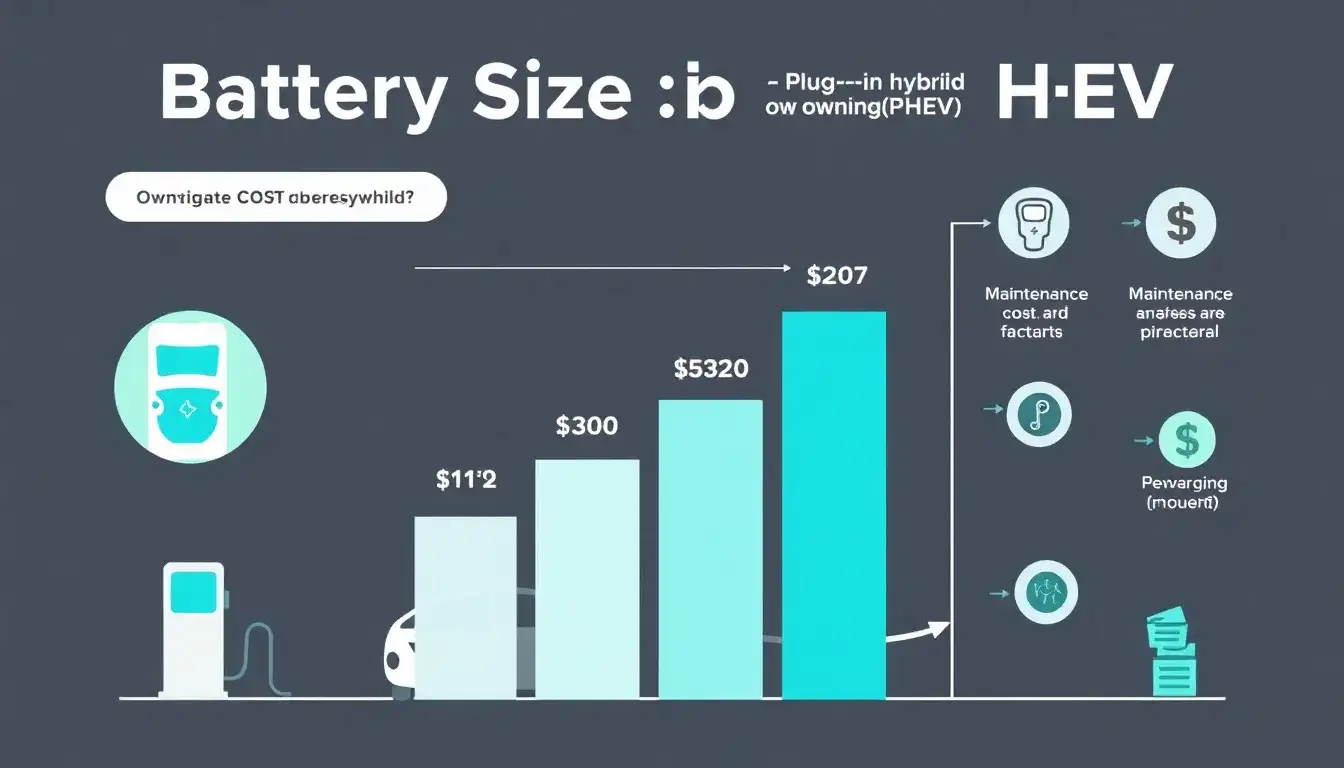
The battery size of a Plug-in Hybrid Electric Vehicle (PHEV) significantly impacts the overall cost of ownership. Here are key points to consider:
Battery Cost and Size
- Cost per kWh: Larger battery packs typically have lower costs per kWh compared to smaller packs. However, PHEV battery packs are generally smaller than those in Battery Electric Vehicles (BEVs), which means their cost per kWh is about 23% higher.
- Optimal Size: The optimal battery size for a PHEV depends on factors like daily driving distance and charging frequency. For many users, a battery capable of covering around 20 miles on electric power is often considered cost-effective and environmentally beneficial.
Impact on Fuel and Energy Costs
- Fuel Consumption: A larger battery can reduce fuel consumption if the vehicle is driven primarily in electric mode. However, if daily driving distances exceed the electric range, fuel costs may not decrease as expected.
- Energy Efficiency: Higher density batteries improve energy efficiency, reducing the energy loss associated with larger EV ranges.
Charging Patterns and Infrastructure
- Charging Behavior: Irregular charging can lead to longer intervals between charges, which may affect the efficiency and cost benefits of a larger battery. Conversely, widespread charging infrastructure can enable more frequent charging, optimizing battery use.
Manufacturing and Techno-Economic Considerations
- Manufacturing Costs: Improvements in manufacturing efficiency and the use of cost-effective battery materials (like lithium iron phosphate and nickel-rich NMC cathodes) are expected to reduce battery costs over time.
- Techno-Economic Factors: The optimal battery size also depends on techno-economic factors, including fuel and electricity prices, and the utilization of the nominal capacity.
Original article by NenPower, If reposted, please credit the source: https://nenpower.com/blog/how-does-the-battery-size-affect-the-overall-cost-of-owning-a-phev/

