

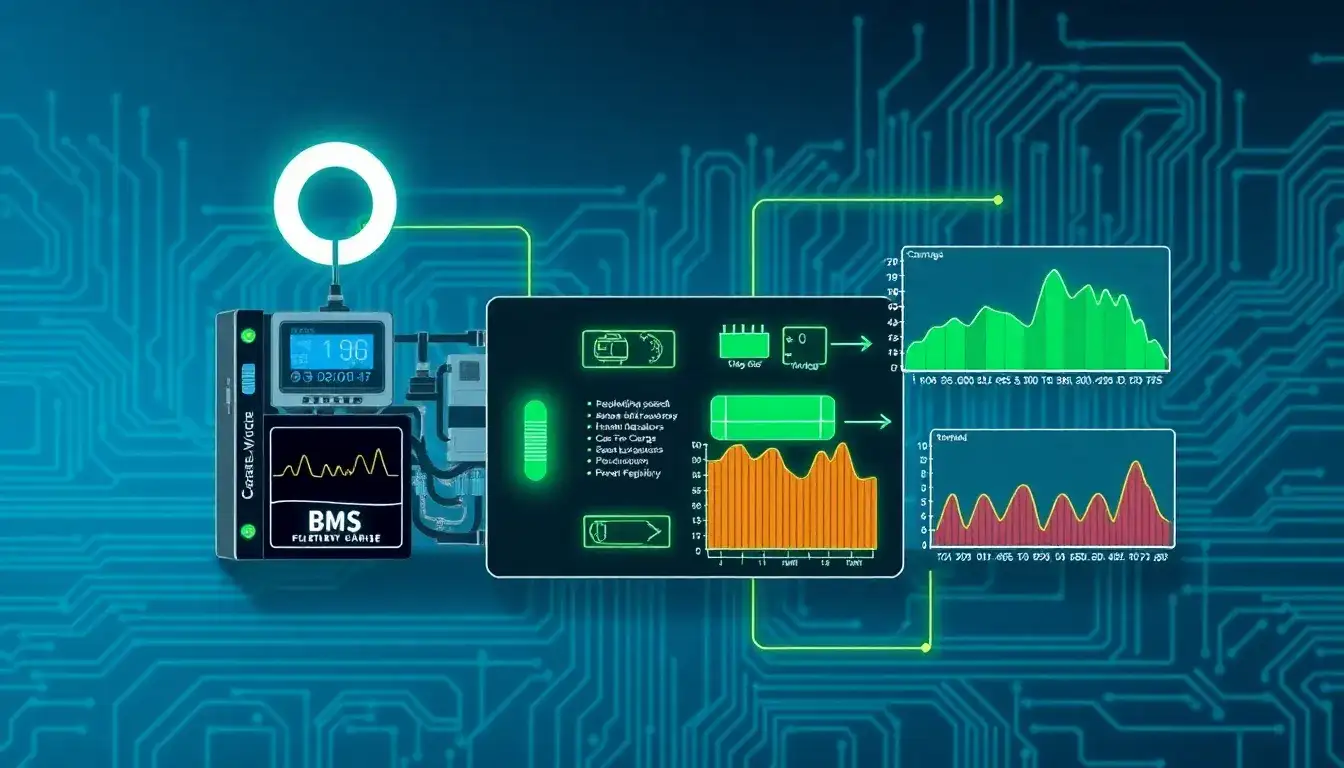
The Battery Management System (BMS) regulates charging speed through multiple interconnected mechanisms to prioritize safety and battery longevity:
- State-of-Charge (SOC) Optimization
The BMS adjusts charging rates based on the battery’s current charge level. For example, it permits faster charging at low SOC but reduces speed as the battery approaches full capacity to prevent overcharging. - Thermal Regulation
Charging speed is throttled when temperatures fall outside safe ranges. Lithium-ion batteries cannot be fast-charged below 5°C, and charging is completely blocked below 0°C to avoid permanent damage. During operation, the BMS monitors cell/pack temperatures and reduces current if overheating occurs. - C-Rate Management
The BMS enforces manufacturer-specified current limits for both continuous and peak charging. It dynamically optimizes the C-rate (charge/discharge rate relative to battery capacity) using a “Power Map” to balance speed with degradation risks. - Cell Balancing
During charging, the BMS equalizes voltage across cells by:
– Passive balancing: Dissipating excess energy from higher-charge cells via resistors
– Active balancing: Redirecting energy to lower-charge cells
This prevents localized overcharging, enabling faster safe charging for the entire pack. - Communication With Chargers
Advanced BMS architectures negotiate optimal charging parameters (voltage/current) with external chargers. They may abruptly reduce or cut off charging current during balancing phases or safety events. For example, electric vehicle BMS systems actively manage fast-charging sessions to maintain cell health.
By synthesizing real-time data from temperature probes, current sensors, and voltage monitors, the BMS creates an adaptive charging profile that maximizes speed within electrochemical safety margins.
Original article by NenPower, If reposted, please credit the source: https://nenpower.com/blog/how-does-the-battery-management-system-bms-specifically-regulate-charging-speed/

