

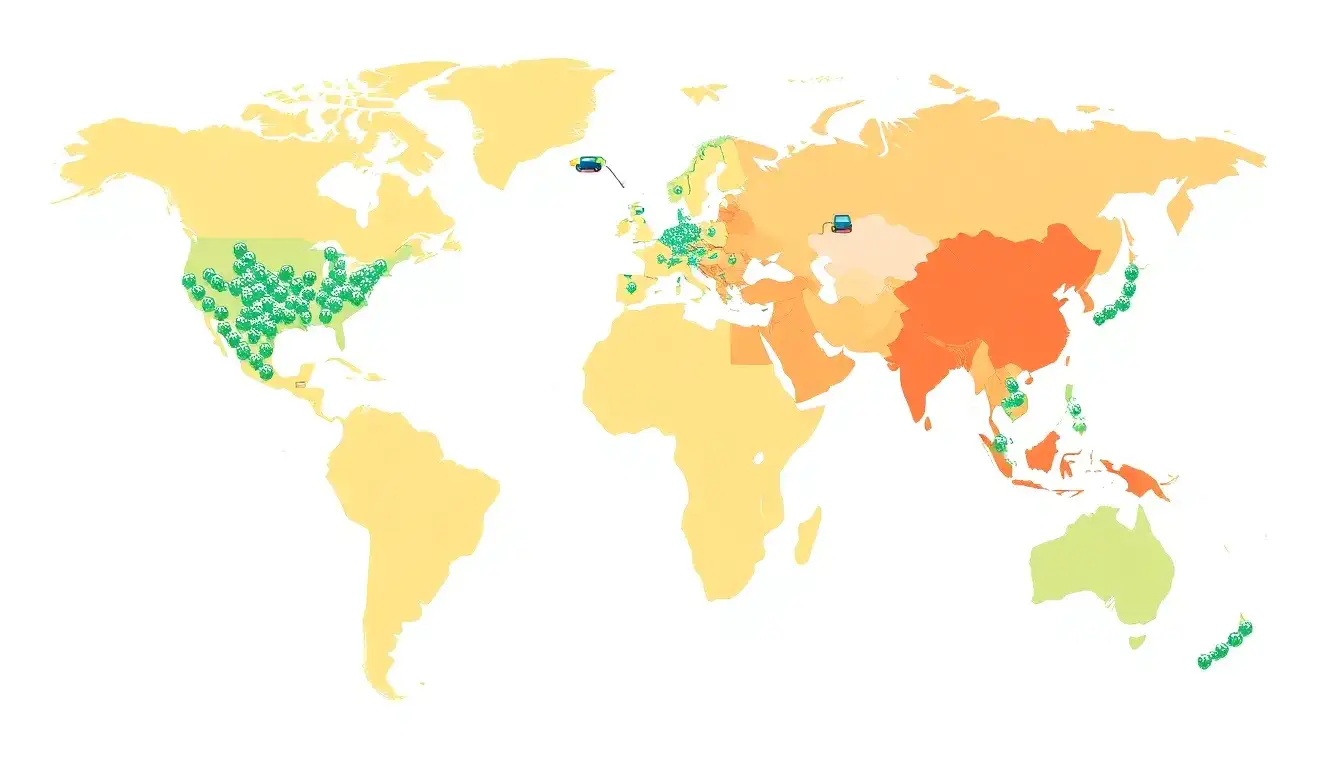
The availability of electric vehicle (EV) charging infrastructure varies significantly across different regions, influenced by factors such as population density, urbanization, and legislative incentives.
Regional Variations in the U.S.
- Urban vs. Rural Areas: Public EV charging infrastructure is heavily concentrated in urban areas, where nearly 60% of residents live within a mile of a charger. In contrast, only about 17% of rural residents have similar access.
- State-by-State Differences: California leads the nation in the number of public charging ports but has a relatively low ratio of ports to electric vehicles, which can lead to congestion. States like Wyoming and North Dakota have a much higher ratio of charging ports to EVs.
- Regional Growth: The Northeast region has shown significant growth in public charging infrastructure, with a 6.9% increase in Q1 2024. The Southeast experienced a high growth rate of 7.8% in Q4 2023.
Global Perspectives
- Home Charging Variability: Globally, home charging availability varies widely based on differences in urban and rural populations, as well as income levels.
Legislative Impact
- Infrastructure Growth in Rural Areas: The U.S. Inflation Reduction Act of 2022 has provided tax credits to encourage charging infrastructure development outside urban areas. Since its enactment, rural areas have seen a slightly faster growth rate in EV charging stations compared to urban zones.
Overall, while there is progress in expanding EV charging infrastructure, significant disparities remain across regions, with urban areas still holding a considerable advantage over rural ones.
Original article by NenPower, If reposted, please credit the source: https://nenpower.com/blog/how-does-the-availability-of-charging-infrastructure-vary-across-different-regions/

