

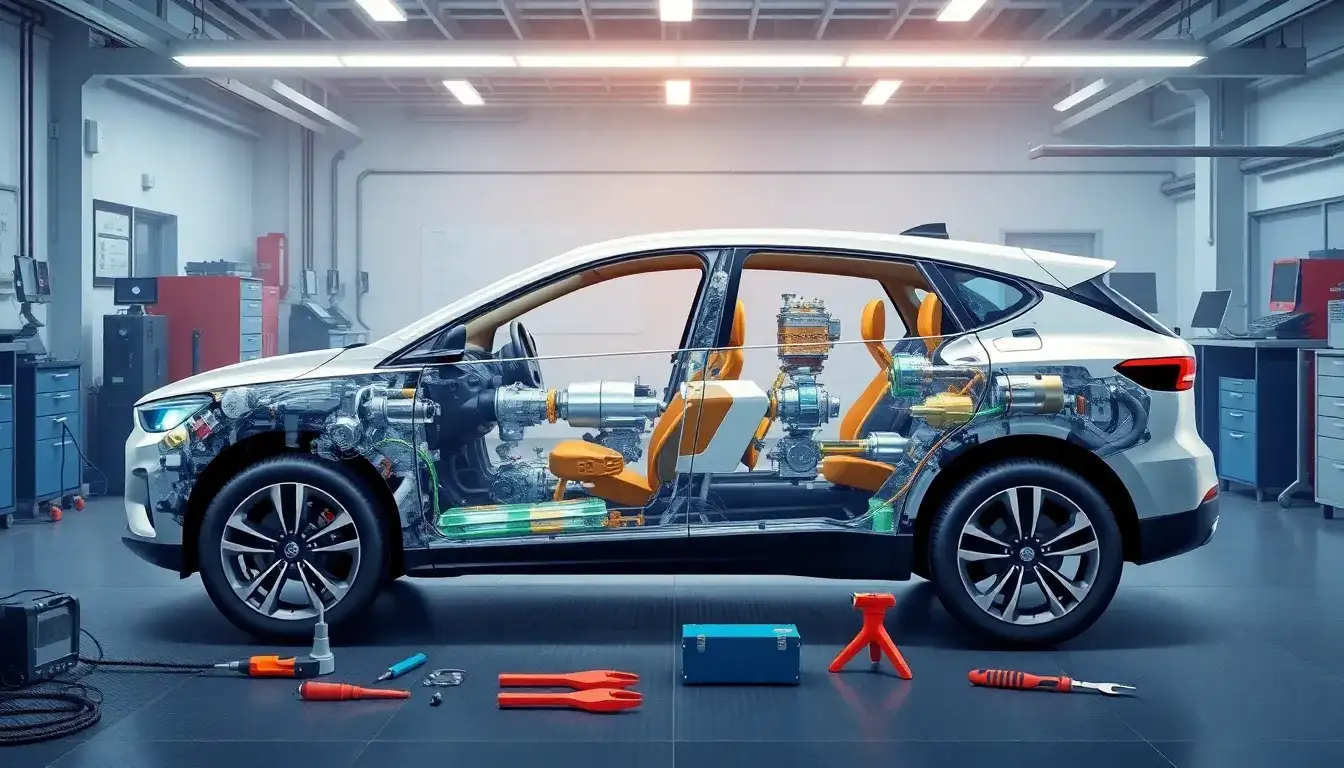
The architecture of Plug-in Hybrid Electric Vehicles (PHEVs) directly influences their maintenance requirements due to the combination of an internal combustion engine (ICE) and an electric drivetrain.
Key Architectural Features Affecting Maintenance
- Dual Powertrain System: PHEVs combine an ICE with an electric motor and battery system. This hybrid architecture means PHEVs require maintenance typical of both conventional vehicles and electric vehicles.
- Internal Combustion Engine Maintenance: Since PHEVs have an ICE, they require traditional maintenance tasks such as engine oil and filter changes, transmission fluid changes, and cooling system maintenance. These are similar to the maintenance needs of conventional gasoline vehicles.
- Electric System Maintenance: The electric components—battery, motor, and associated electronics—generally require minimal scheduled maintenance. However, the advanced battery has a limited number of charging cycles and may require temperature management via liquid coolants, which themselves need to be checked regularly. Battery health monitoring and adherence to manufacturer guidelines are important to maximize longevity.
- Brake System: PHEVs benefit from regenerative braking, which reduces mechanical brake wear and extends the lifespan of brake components compared to conventional vehicles. Despite this, brake maintenance is still necessary, but the interval between services tends to be longer.
- Fewer Moving Parts Than Conventional Vehicles: While PHEVs have more complex systems than pure electric vehicles (EVs), they still typically have fewer moving parts and fluids to change than traditional ICE vehicles alone. This can somewhat reduce maintenance complexity but not to the extent of all-electric vehicles.
Summary of Maintenance Implications of PHEV Architecture
| Component/System | Maintenance Requirement Impact |
|---|---|
| Internal Combustion Engine | Requires regular oil/filter changes, fluid checks |
| Electric Battery and Motor | Minimal routine maintenance but requires monitoring for battery health and cooling system upkeep |
| Brake System | Extended intervals due to regenerative braking |
| Overall Complexity | More maintenance than EVs; similar to conventional vehicles due to ICE presence |
In essence, the architecture of PHEVs leads to maintenance needs that are a hybrid blend: the ICE component demands conventional upkeep, while the electric system reduces some wear and maintenance frequency especially for brakes and transmission. This results in maintenance requirements that are generally similar to conventional vehicles but with some advantages such as longer brake life and fewer fluids to manage.
Original article by NenPower, If reposted, please credit the source: https://nenpower.com/blog/how-does-the-architecture-of-phevs-affect-their-maintenance-requirements/

