

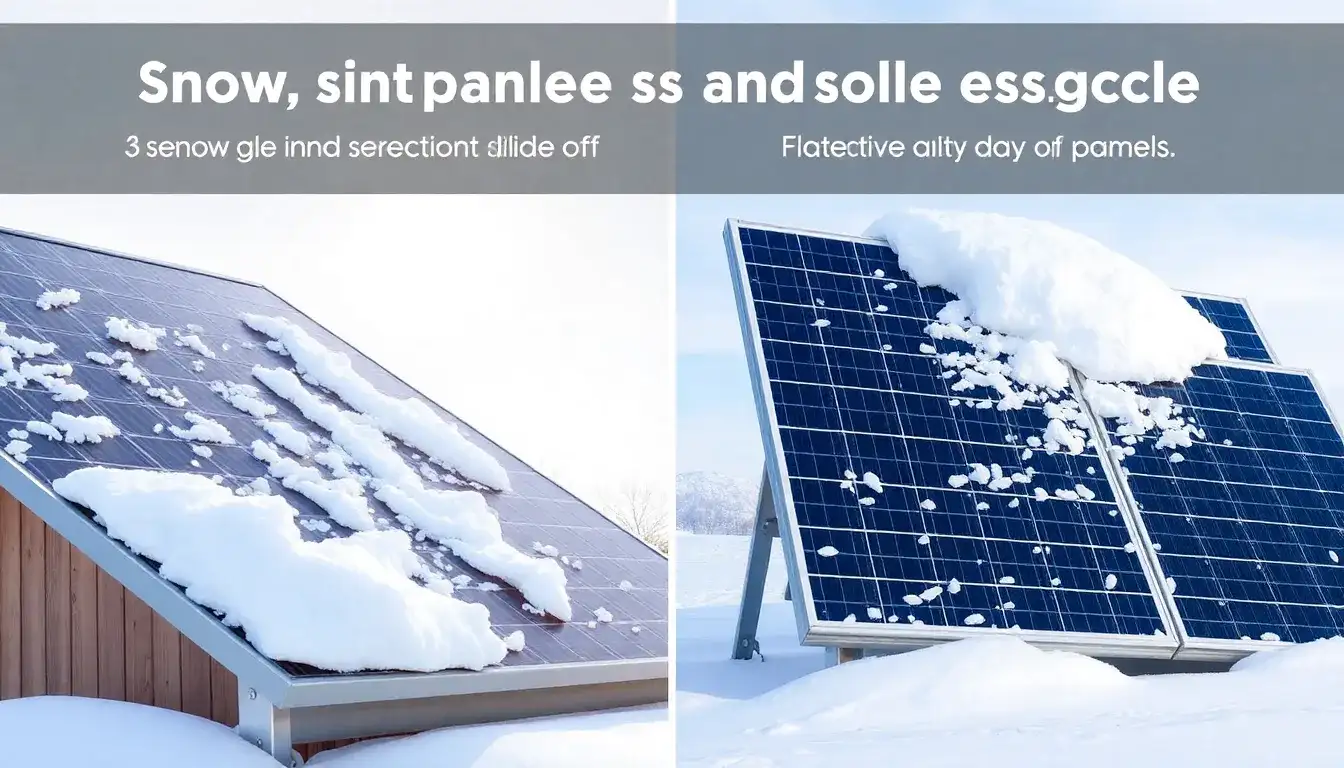
The angle at which solar panels are installed plays a crucial role in their ability to withstand snow and debris accumulation, impacting both durability and energy production.
Effect of Panel Angle on Snow and Debris Shedding
- Optimal Tilt Encourages Snow to Slide Off: Solar panels are typically installed at an angle—often around 45 degrees—to facilitate snow sliding off naturally. This tilt reduces the weight load on the panels and limits the duration snow covers their surface, which can block sunlight and reduce energy production. Angles that are too flat tend to allow snow and debris to accumulate more easily, while steeper angles promote faster snow shedding.
- Snow Slide Effect: When sunlight warms the tilted panels, melting occurs at the base where the panel contacts the snow, creating a slick surface that helps the rest of the snow sheet slide off. This natural clearing mechanism minimizes snow load and helps maintain energy output during snowy conditions.
- Debris Removal by Snow and Rain: The angle also aids in cleaning debris. When snow melts and slides off, it can carry dirt and debris with it, effectively cleaning the panel surface. Similarly, rainwater runoff on angled panels washes away dust and particles, preserving panel efficiency and reducing hot spots caused by soiling.
Durability Considerations
- Weight Load Distribution: Panels installed at an appropriate angle benefit from racking systems designed to distribute weight evenly, which helps solar panels withstand heavy snow loads without damage. Most modern solar panels are tested and rated to handle substantial snow load pressures (e.g., 5,000+ pascals, equating to multiple feet of snow depending on density) without risk of cracking or structural failure.
- Reduced Risk of Damage from Snow Accumulation: Panels installed flat or at shallow angles may accumulate snow and ice, which can increase weight and stress, potentially leading to mechanical damage or decreased durability over time. Adequate tilt reduces this risk by preventing long-term snow buildup.
Impact on Energy Production
- Reduced Snow Coverage Time: By allowing snow to slide off quickly, the angled installation reduces the time panels are covered and unable to produce electricity. Partial snow cover combined with microinverters or power optimizers can still allow the uncovered panels to generate power efficiently.
- Winter Efficiency Boost: Panels perform better in cooler temperatures, and the combination of tilted installation and the reflective quality of snow-covered ground (albedo effect) can even enhance solar energy capture in winter months.
Summary
| Aspect | Effect of Panel Angle |
|---|---|
| Snow Shedding | Steeper angles (~45°) facilitate snow sliding off, reducing load and downtime. |
| Debris Removal | Tilt helps natural cleaning by snow and rain runoff. |
| Structural Durability | Proper angle combined with racking supports heavy snow loads safely. |
| Energy Production | Minimizes snow coverage duration, sustaining higher output during winter. |
In summary, installing solar panels at an adequate tilt angle (usually around 45 degrees or according to local solar incidence angles) greatly enhances their ability to shed snow and debris, preserving both their structural integrity and energy production capabilities during winter and adverse weather.
Original article by NenPower, If reposted, please credit the source: https://nenpower.com/blog/how-does-the-angle-of-solar-panels-affect-their-ability-to-withstand-snow-and-debris/

