

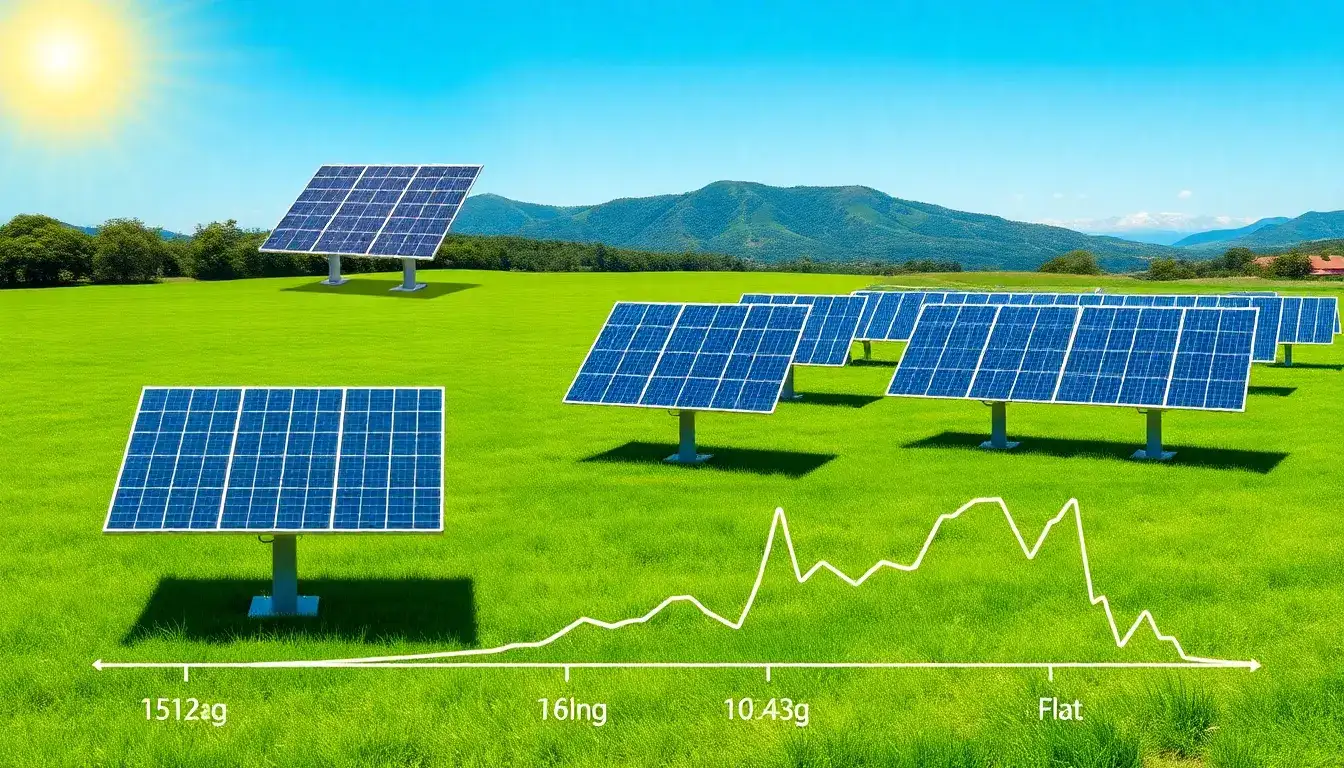
The angle and orientation of solar panels significantly impact their energy production by affecting how efficiently they capture sunlight. Here’s a breakdown of how these factors influence solar panel performance:
Angle of Solar Panels
- Optimal Tilt: The optimal tilt for solar panels typically corresponds to the geographical latitude of the installation site. This approach maximizes energy production over the year by aligning the panels to capture sunlight most effectively. For locations in the continental U.S., optimal tilts range from 30 to 45 degrees.
- Seasonal Adjustments: The tilt can be adjusted seasonally to optimize energy production. Increasing the tilt (by 15 degrees) in winter and decreasing it (by 15 degrees) in summer can enhance efficiency.
- Impact on Energy Output: A tilt between 20 and 30 degrees often results in the highest energy output. Tilting the panels too much can lead to reduced output due to increased shading from other modules, especially on flat roofs.
Orientation of Solar Panels
- Direction Facing: In the Northern Hemisphere, solar panels should ideally face true south to receive direct sunlight throughout the day. In the Southern Hemisphere, they should face true north. If your roof doesn’t face directly south, facing southeast or southwest can still yield high energy production with minimal loss.
- Importance of Orientation Over Angle: While optimizing the tilt angle can improve efficiency by around 5-8%, orienting the panels towards the sun can increase efficiency by up to 30% or more.
- Variability in Energy Production: Even if the direction isn’t perfectly south, solar panels can still be productive, with only a slight reduction in energy output. For example, panels facing slightly off from the ideal direction may lose less than 1% of their annual production.
Additional Considerations
- Tracking Systems: Using solar tracking systems can significantly increase energy output by continuously adjusting the panels to face the sun directly. However, these systems are more expensive and typically used for ground-mounted installations rather than rooftops.
- Climatic Factors: In areas with significant snowfall, steeper tilts can help panels shed snow, reducing energy loss during winter months. In regions with frequent cloud cover, a flatter tilt can optimize energy production.
By understanding and optimizing the angle and orientation of solar panels, homeowners can maximize their energy production and gain the most from their solar investment.
Original article by NenPower, If reposted, please credit the source: https://nenpower.com/blog/how-does-the-angle-and-orientation-of-solar-panels-impact-their-energy-production/

