

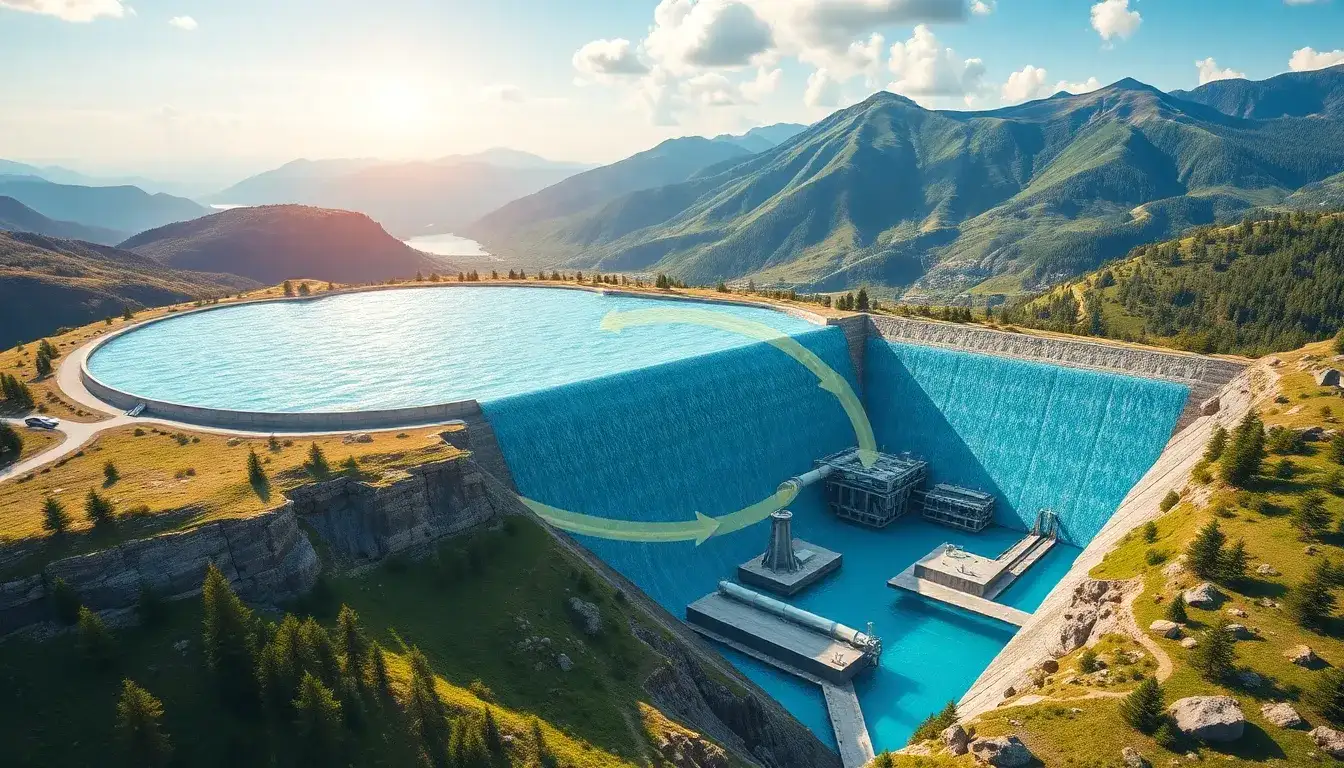
The altitude difference between two water sources in a pumped hydro storage (PHS) system is crucial for its efficiency and potential energy storage capacity. Here’s how it affects the efficiency:
- Energy Storage and Generation:
- Height Difference: The greater the altitude difference (or “head”) between the two reservoirs, the more potential energy is stored when water is pumped to the higher reservoir. This means that a larger height difference allows for more electricity to be generated during the release of water back to the lower reservoir. Typically, PHS systems have an altitude difference of 200 to 900 meters.
- Efficiency Calculation:
- The efficiency of a PHS system is influenced by factors like conversion losses and evaporation. Despite these, PHS systems can achieve a round-trip efficiency of about 70-80%. This efficiency is influenced by the pumping and generating cycles, where about 10% of energy is lost in each cycle. The energy stored is directly proportional to the mass of the water and the gravitational potential energy gained from the altitude difference.
- Optimal Conditions:
- The optimal locations for PHS are in hilly or mountainous areas where significant natural altitude differences exist. These areas can often support both the upper and lower reservoirs without extensive geological modifications. Proximity to renewable energy sources like solar or wind farms can further enhance efficiency by providing power for pumping during off-peak hours.
In summary, a larger altitude difference between the water sources enhances the energy storage and generation capacity of a PHS system, making it a critical factor in optimizing its efficiency and operational effectiveness.
Original article by NenPower, If reposted, please credit the source: https://nenpower.com/blog/how-does-the-altitude-difference-between-two-water-sources-affect-the-efficiency-of-pumped-hydro-storage/

