

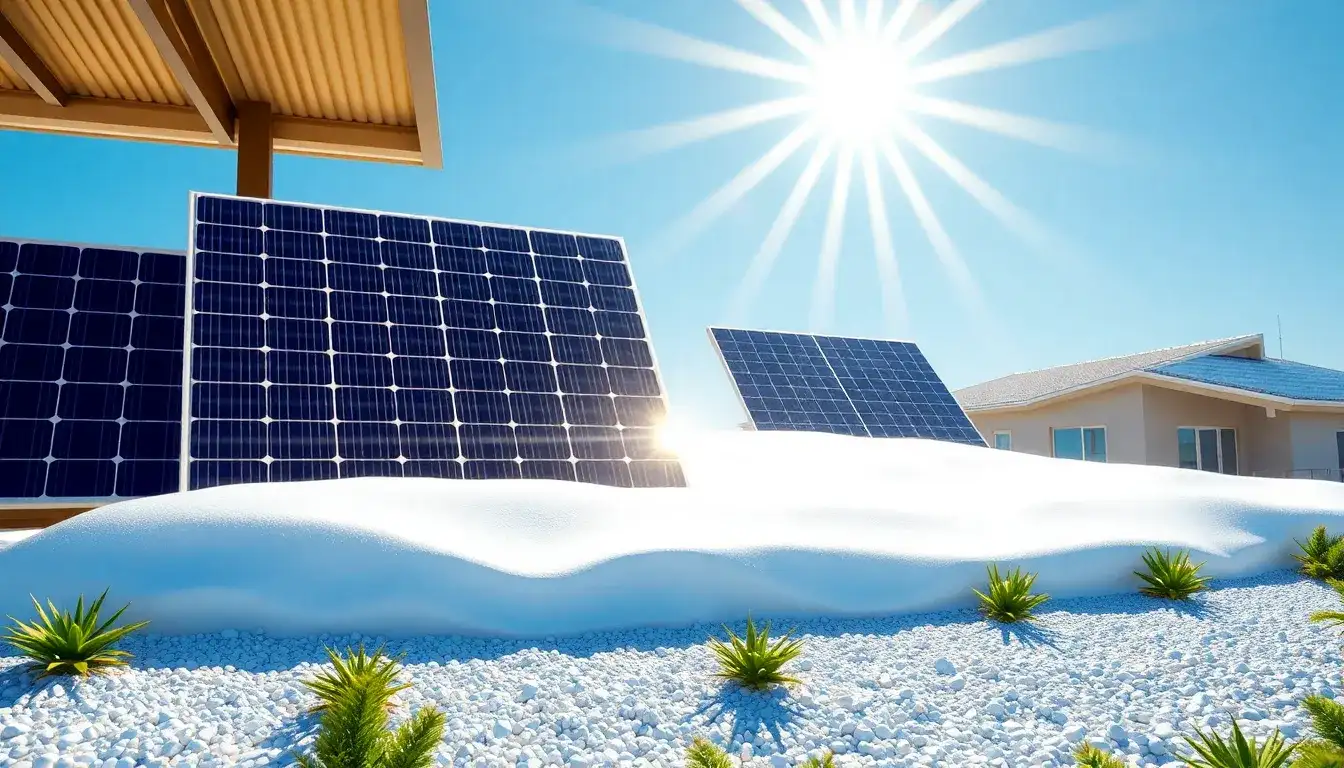
The albedo effect plays a significant role in enhancing the efficiency of bifacial solar panels by reflecting sunlight onto the rear side, thereby increasing energy production. Here’s how albedo impacts these panels:
Impact of Albedo on Bifacial Solar Panels
1. Reflection and Energy Capture
- Albedo Value: The albedo represents the proportion of incoming solar radiation that is reflected by a surface, typically expressed as a value between 0 and 1 or a percentage between 0 and 100.
- Higher Efficiency: Surfaces with high albedo values, such as snow or light-colored rooftops, can significantly boost the energy yield of bifacial solar panels by reflecting more sunlight onto the rear side.
2. Environmental Influence
- Climatic Conditions: The effectiveness of the albedo effect varies with environmental conditions. For instance, in snowy climates, high albedo surfaces can enhance rear-side energy generation, while in hot climates, the overall efficiency might be reduced due to increased temperatures.
- Ground Reflectors: Research indicates that using high-albedo ground reflectors can increase bifacial solar plant yields by up to 4.5%.
3. Installation Considerations
- Installation Orientation: The tilt angle and orientation of bifacial panels influence how much sunlight is captured from both the front and rear sides. A higher tilt angle can increase rear-side exposure to reflected sunlight, enhancing overall efficiency.
- Distance from Ground: The distance between the panels and the ground affects the amount of reflected radiation that reaches the rear side. Optimal distance and tilt can maximize energy yields.
4. Performance Optimization
- Surface Selection: Installing bifacial panels over surfaces with high reflectivity (like snow or sand) can significantly increase energy yields compared to those installed on low reflectivity surfaces (such as dark soil or asphalt).
- Minimizing Shading: While bifacial panels can better compensate for shading by capturing diffused and reflected light, minimizing obstructions remains crucial to maintain optimal performance.
In summary, the albedo effect can enhance the efficiency of bifacial solar panels by increasing the amount of reflected sunlight captured by the rear side. However, optimal performance requires careful consideration of installation conditions, surface reflectivity, and environmental factors.
Original article by NenPower, If reposted, please credit the source: https://nenpower.com/blog/how-does-the-albedo-effect-impact-the-efficiency-of-bifacial-solar-panels/

