

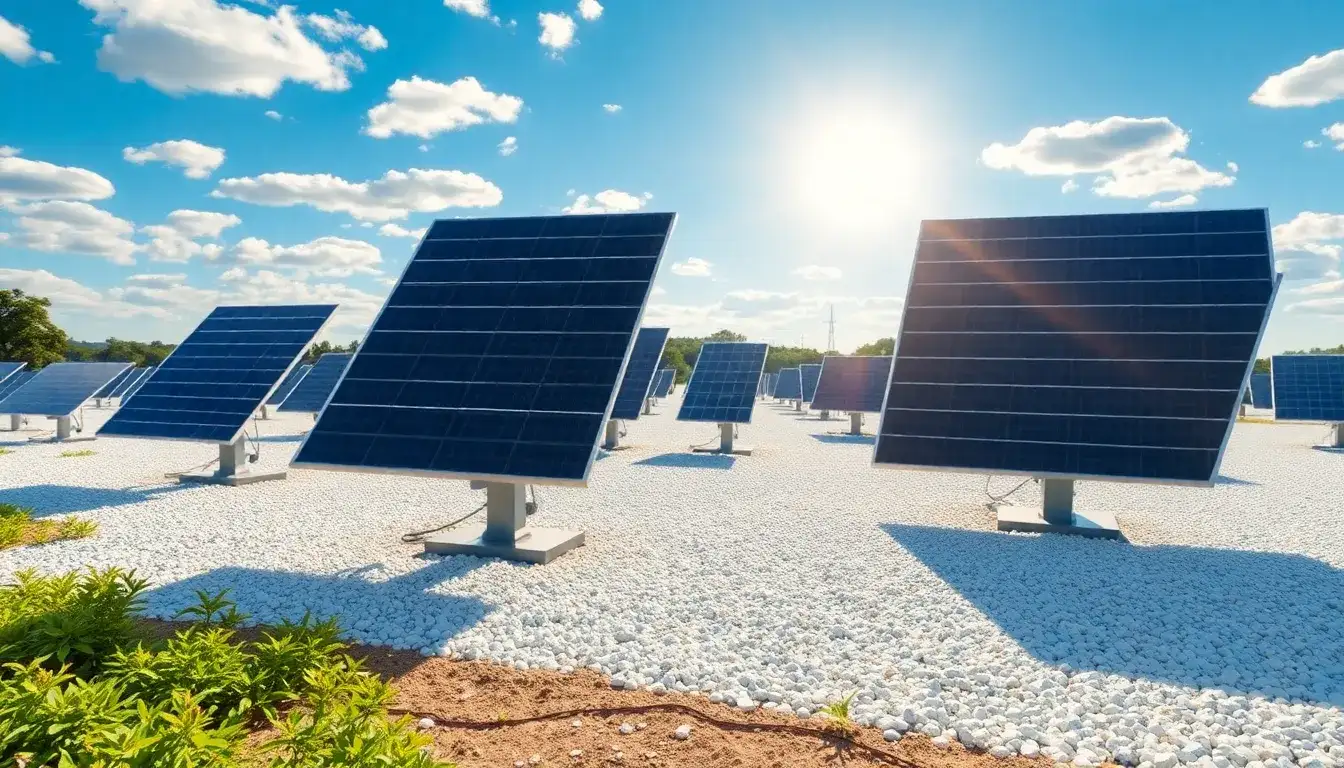
Bifacial solar panels leverage the albedo effect to generate additional energy by capturing reflected sunlight from surfaces beneath and around the panels. Here’s a breakdown of the mechanism and impact:
Albedo’s role in energy yield
Albedo measures a surface’s reflectivity, expressed as a value between 0 (no reflection) and 1 (full reflection). Higher albedo surfaces (e.g., fresh snow: 0.65–0.85, sand: 0.2–0.3) reflect more sunlight to the rear side of bifacial panels. This increases the total irradiance captured, enabling up to 30% higher energy production compared to monofacial panels.
Key influencing factors
- Bifaciality factor: Determines the rear-side efficiency relative to the front (typically 70–95%). A 95% bifaciality means the rear produces 95% of the front’s output under identical conditions.
- Installation parameters:
- Height and tilt: Higher mounting improves rear-side light capture, particularly during low-sun angles (morning/evening).
- Surface reflectivity: Artificial reflectors (e.g., white gravel) can boost albedo, with studies showing 4.5% yield increases from high-albedo ground materials.
- Shading mitigation: Bifacial panels better tolerate shading by utilizing diffuse and reflected light on the rear side.
Optimization strategies
- Site selection: Prioritize locations with naturally high albedo (snow, light-colored surfaces).
- Surface treatment: Use reflective materials like light-colored gravel or specialized coatings to enhance ground reflectivity.
- System design: Adjust mounting height (≥1m recommended) and employ tracking systems to maximize rear-side exposure.
The albedo effect transforms previously unused reflected light into additional energy, making bifacial technology particularly effective in environments with high natural or engineered reflectivity.
Original article by NenPower, If reposted, please credit the source: https://nenpower.com/blog/how-does-the-albedo-effect-enhance-the-performance-of-bifacial-solar-panels/

