

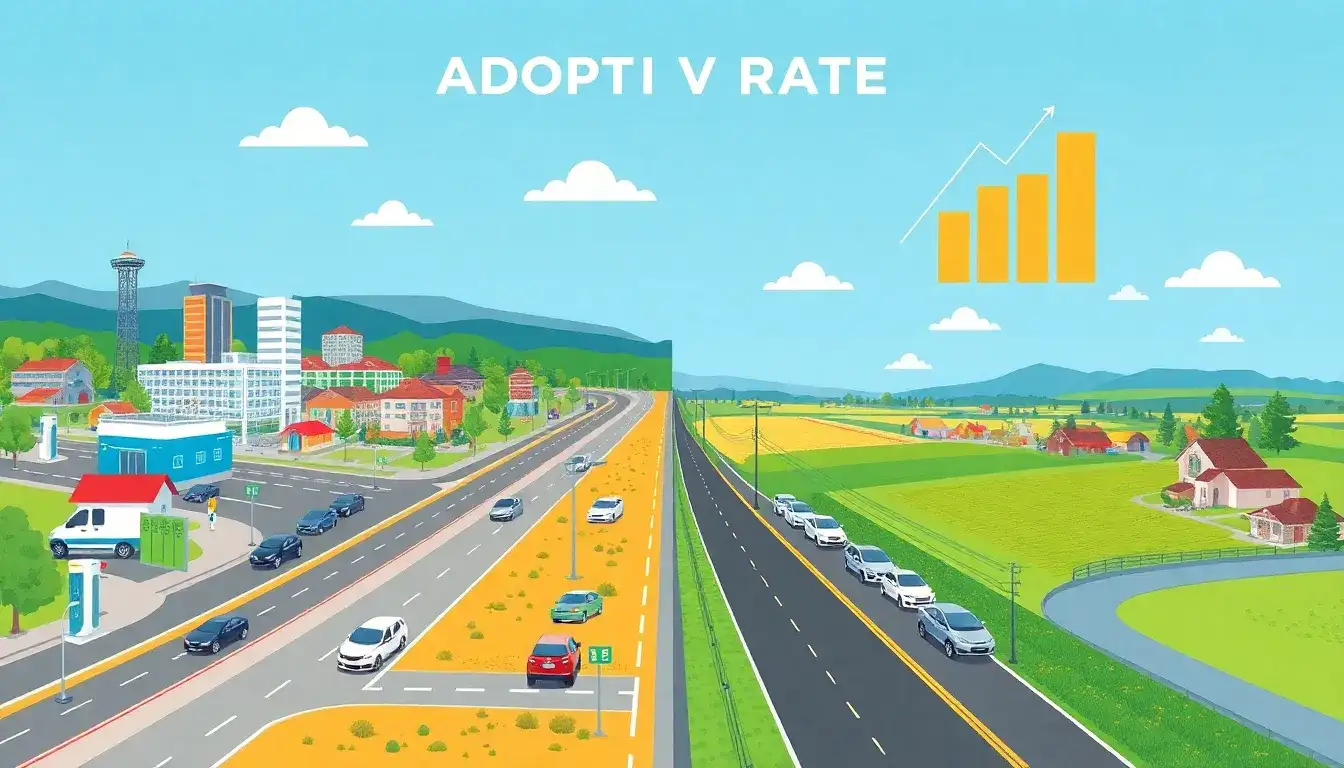
The adoption rate of electric vehicles (EVs) varies significantly between rural and urban regions, primarily due to several key factors:
Key Differences in Adoption Rates
- Urban-Rural Disparity: The rate of EV adoption in rural areas is approximately 40 percent lower than in urban areas. This disparity arises from differences in infrastructure development, charging availability, and economic considerations.
- Charging Infrastructure: Urban areas typically have a dense network of charging stations, facilitating easier adoption and use of EVs. In contrast, rural communities face a scarcity of charging infrastructure, which hinders the practicality of owning an EV.
Factors Contributing to Differences
- Distance and Use Patterns: Rural drivers often cover longer distances, requiring more frequent and accessible charging points, which are less available in these areas.
- Economic Factors: While EVs offer long-term cost savings through reduced maintenance and fuel costs, their higher initial purchase price compared to traditional vehicles acts as a barrier to adoption in rural communities, where budgets may be more limited.
- Misconceptions and Interest: Misinformation about EVs can also affect rural adoption rates. However, interest in EVs is increasing, with surveys indicating that more rural residents are considering a switch to electric.
Challenges and Opportunities
- Infrastructure Expansion: Closing the gap in charging infrastructure is crucial to boost rural EV adoption.
- Educational Efforts: Countering misconceptions with accurate information about EV benefits and capabilities can increase adoption.
Overall, while EV adoption is growing globally, urban regions continue to lead due to better infrastructure and a more supportive environment for electric vehicles.
Original article by NenPower, If reposted, please credit the source: https://nenpower.com/blog/how-does-the-adoption-rate-of-evs-vary-between-rural-and-urban-regions/

