

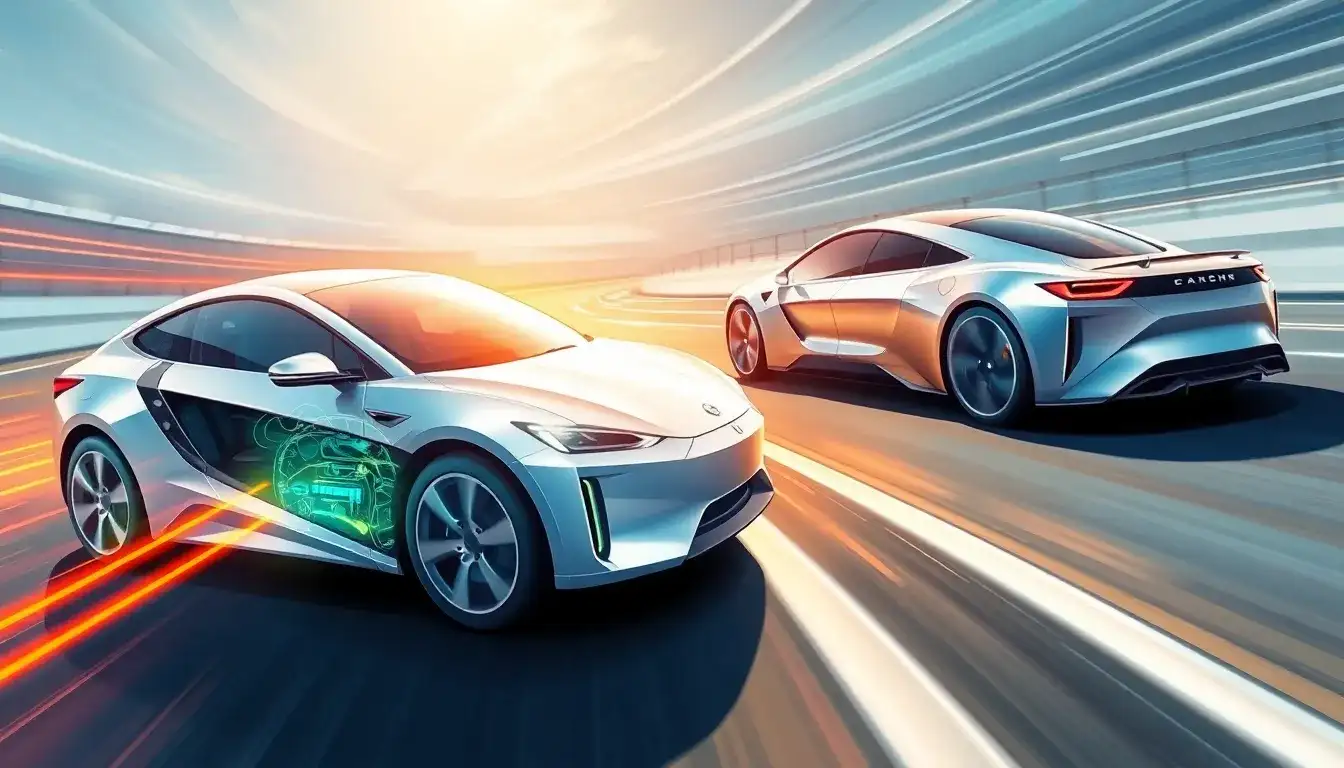
The acceleration of a Plug-in Hybrid Electric Vehicle (PHEV) generally differs from that of a Battery Electric Vehicle (BEV) primarily due to their powertrain design and battery capacity.
- Instant Torque and Acceleration in BEVs: BEVs are equipped with larger electric motors and more substantial battery packs than PHEVs, which allow them to deliver instant torque. This results in quick acceleration and a smooth, responsive driving experience. BEVs do not rely on internal combustion engines (ICE), enabling them to provide immediate power delivery from a standstill without any lag.
- PHEV Acceleration Characteristics: PHEVs combine an electric motor with a conventional gasoline engine. Their electric motor is typically smaller, and their battery capacity is less (around 15 kWh) compared to BEVs (which range from about 40 kWh up to 200 kWh). While PHEVs can accelerate using electric power alone for short distances (about 20 to 30 miles), their acceleration may not be as brisk or instantaneous as BEVs due to the smaller battery and motor size.
Thus, BEVs generally offer superior acceleration compared to PHEVs because of their larger electric motors and bigger batteries that supply more immediate and sustained power. PHEVs provide the flexibility of electric driving combined with a combustion engine backup but typically do not match the pure electric acceleration capability of BEVs.
In summary:
| Aspect | PHEV | BEV |
|---|---|---|
| Electric Motor Size | Smaller motor | Larger motor |
| Battery Capacity | Smaller (approx. 15 kWh) | Larger (40–200+ kWh) |
| Acceleration | Moderate due to smaller motor and battery | Quick, instant torque and smooth acceleration |
| Powertrain | Electric motor + gasoline engine | Fully electric motor |
This makes BEVs more likely to offer faster acceleration, while PHEVs balance electric driving with extended range through gasoline use.
Original article by NenPower, If reposted, please credit the source: https://nenpower.com/blog/how-does-the-acceleration-of-a-phev-compare-to-a-battery-electric-vehicle/

