

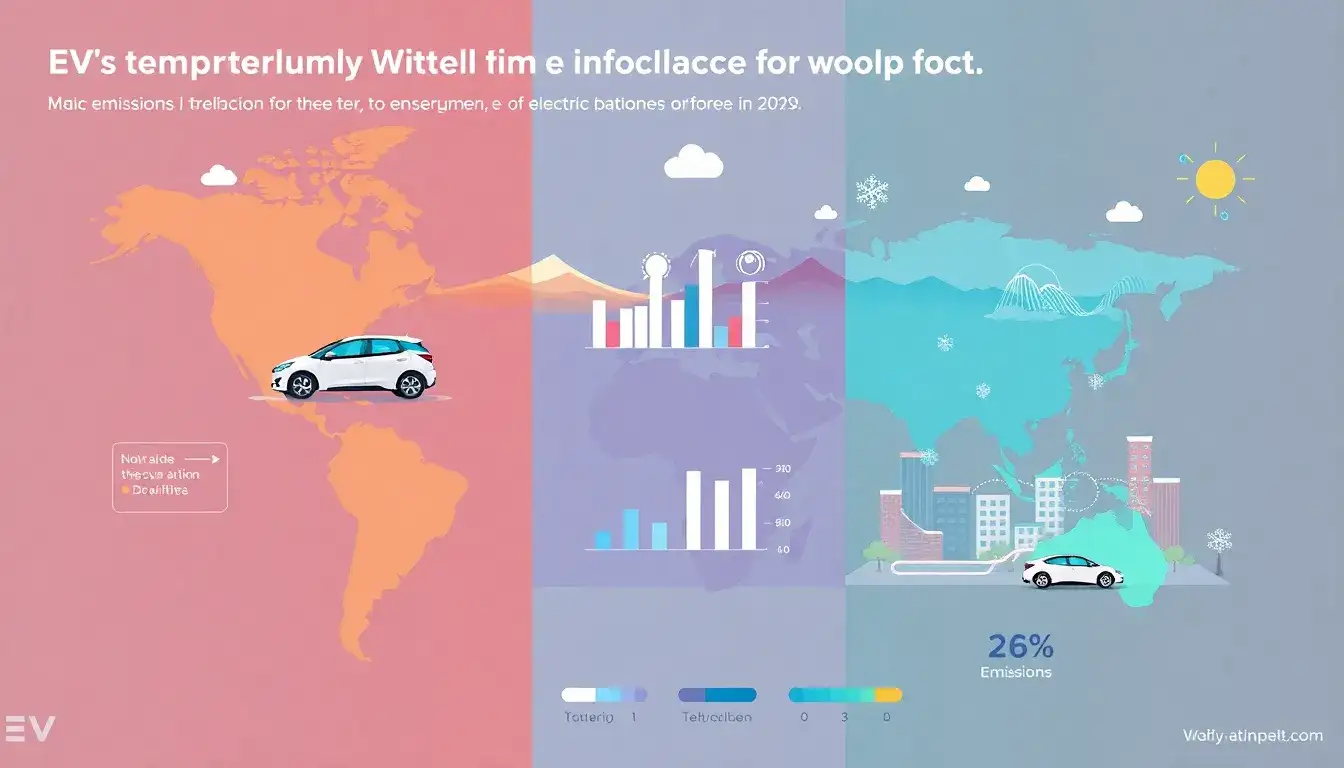
Temperature variation significantly impacts the energy consumption and emissions profile of electric vehicles (EVs) across different regions by affecting battery performance and the demand for climate control systems. Here is a detailed explanation based on recent findings:
Impact of Cold Temperatures
- Reduced Battery Efficiency and Range: Cold ambient temperatures slow down the chemical reactions within EV batteries, leading to less efficient power output and a substantial reduction in usable battery energy. For example, at around 20°F (-6.7°C), EV range can decrease by approximately 41%, while internal combustion engine vehicles (ICEVs) see a much smaller range reduction of about 10% under similar conditions. At extreme cold, such as -4°F (-20°C), EV range can fall to nearly half of the manufacturer’s rated range.
- Increased Energy Use for Cabin Heating: Battery power is also diverted to run heating systems to maintain driver comfort. Unlike ICE vehicles that can use waste engine heat, EVs rely on battery-powered electric heaters, significantly increasing energy consumption. This added load on the battery reduces driving range further.
- Overall Energy Consumption Increase: Studies show that with every 5°C drop below 10°C, energy consumption rises by approximately 2.4 kWh per kilometer, highlighting the extra energy needed to operate efficiently in cold climates. One study reported a 67% increase in energy consumption in low ambient temperatures (-4°C to -10°C) compared to moderate conditions (20°C to 26°C).
Impact of Hot Temperatures
- Battery Stress and Range Reduction: High temperatures also affect EV battery performance, though generally less dramatically than cold. At around 95°F (35°C), EV range can drop by about 17% due largely to the energy required for cabin air conditioning.
- Increased Cooling Demand: To prevent battery overheating, EVs use cooling systems that consume additional energy, impacting overall efficiency and range, particularly in hot regions.
- Energy Consumption Rise: Energy use increases with temperature too; above 28°C, energy consumption rises by roughly 2.3 kWh/km for every 5°C increase. This shows that extreme heat also drives up power requirements, though less than cold does.
Regional Implications
- Cold Regions: In colder climates, EVs face significant range penalties and higher energy consumption due to battery chemistry effects and the necessity for heating. This can lead to increased charging frequency and potentially higher emissions indirectly if the electricity grid is not fully renewable.
- Hot Regions: In hotter areas, while the range loss is less severe than in cold, air conditioning and battery cooling needs still increase power use, slightly reducing efficiency and driving up energy demand.
Summary
Temperature extremes—both cold and hot—negatively impact electric vehicle energy efficiency, range, and consequently emissions associated with electricity generation. Cold temperatures cause a sharper drop in range and increase in energy consumption primarily due to slower battery chemistry and heating demands. Hot temperatures also increase energy consumption due to cooling requirements but to a lesser extent. These variations mean EV performance and environmental benefits fluctuate regionally according to local climate conditions.
Original article by NenPower, If reposted, please credit the source: https://nenpower.com/blog/how-does-temperature-variation-impact-the-energy-consumption-and-emissions-of-electric-vehicles-in-different-regions/

