

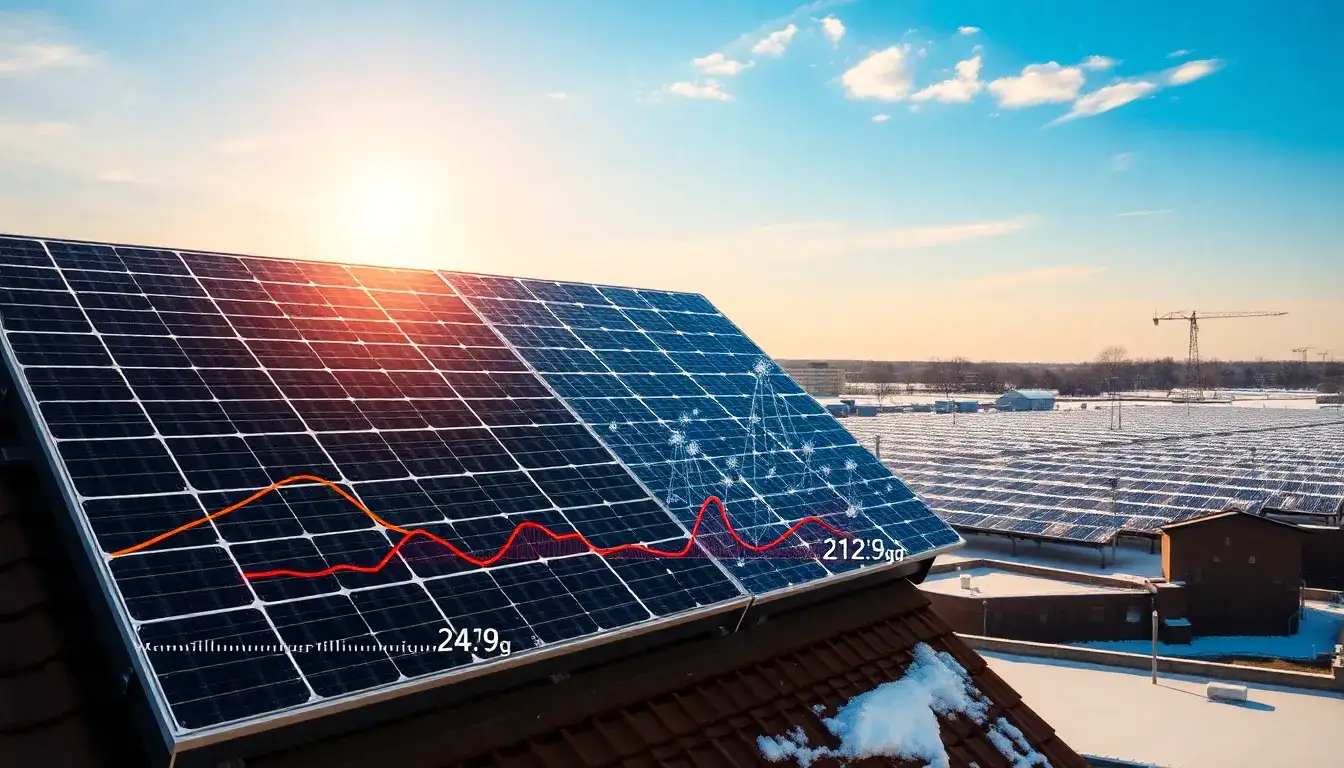
Solar panel performance is significantly influenced by temperature variations, primarily through its impact on voltage and current. Here’s a breakdown of the key effects:
Optimal Performance Temperature
Solar panels operate most efficiently at ~25°C (77°F), the industry-standard testing condition. Performance degrades as temperatures rise above this threshold and improves in cooler conditions.
High-Temperature Effects
- Reduced Voltage: Higher temperatures decrease the open-circuit voltage (Voc) of solar cells, typically by ~2.2 mV/°C for silicon panels.
- Efficiency Loss: Panels lose 0.3–0.5% efficiency per °C above 25°C due to increased resistance and electron recombination.
- Example: A 320W panel at 35°C (95°F) could lose 3.6–5% output (~11–16W).
- Real-World Impact: Panels can reach 60–70°C (140–158°F) in direct sunlight, causing 10–15% power loss compared to rated output.
Low-Temperature Benefits
- Increased Voltage: Colder temperatures boost voltage, improving efficiency.
- Higher Output: At 0°C (32°F), panels often produce 5–7% more power than their rated capacity.
- Limitations: Snow accumulation and shorter daylight hours in winter may offset these gains.
Temperature Coefficient
This metric quantifies efficiency changes per °C deviation from 25°C:
- Typical Coefficient: -0.3% to -0.5%/°C for crystalline silicon panels.
- Voltage vs. Current:
- Voltage coefficient: Negative (output drops with heat).
- Current coefficient: Slightly positive (rises marginally with heat).
Mitigation Strategies
- Cooling Systems: Evaporative cooling or automated cleaning can reduce panel temperatures by 10–15°C, improving output.
- Ventilation: Airflow gaps beneath panels help dissipate heat.
- Panel Selection: Low-temperature-coefficient panels (e.g., -0.35%/°C) minimize losses in hot climates.
Climate Considerations
- Deserts: High irradiance offsets efficiency losses, but cooling systems are often necessary.
- Cold Regions: Enhanced voltage output compensates for reduced sunlight hours in winter.
While temperature impacts efficiency, irradiance (sunlight intensity) remains the dominant factor in overall energy production.
Original article by NenPower, If reposted, please credit the source: https://nenpower.com/blog/how-does-temperature-variation-affect-the-performance-of-solar-panels/

