

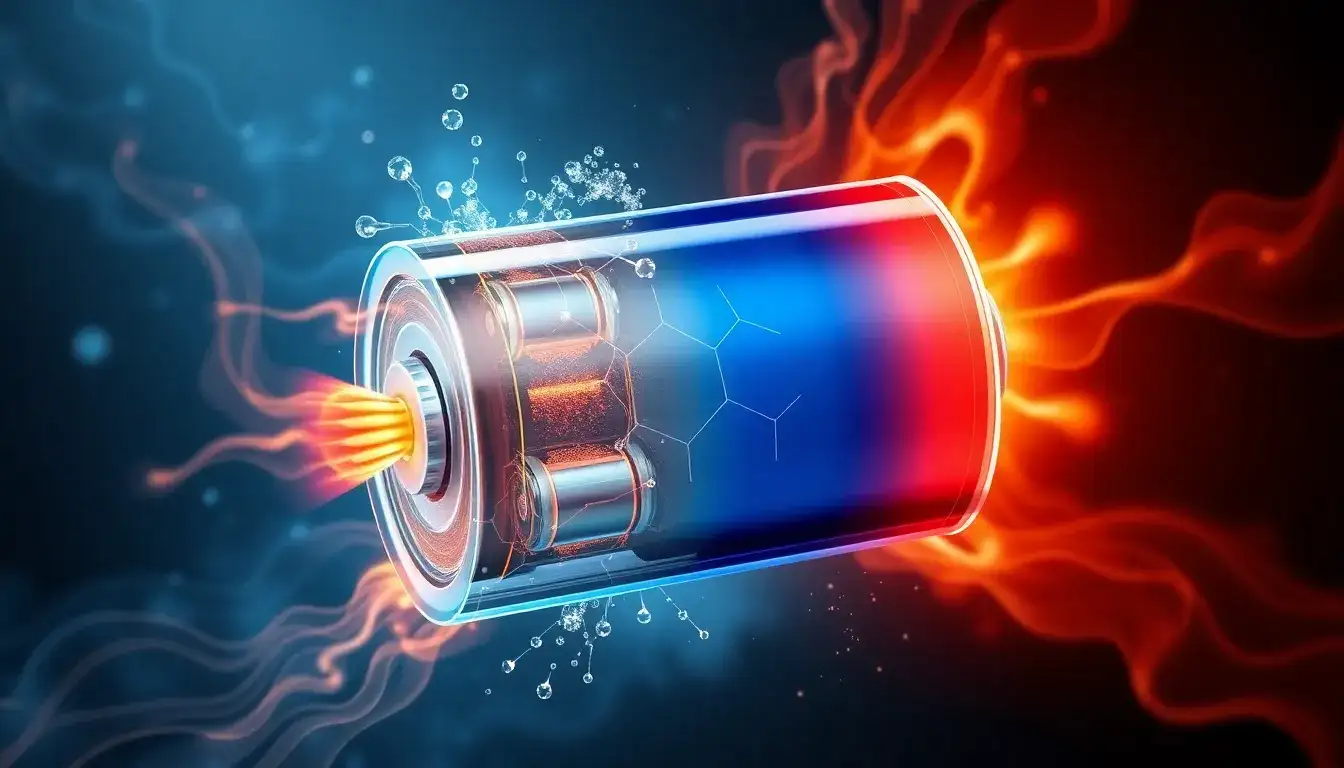
Temperature significantly influences battery degradation at high states of charge, particularly in lithium-ion batteries. Here is a detailed explanation of how temperature affects degradation when batteries are maintained at high state of charge (SOC):
Influence of Temperature on Battery Degradation at High SOC
1. Higher Temperatures Accelerate Chemical Degradation
At elevated temperatures, chemical reactions inside the battery accelerate. This increased reaction rate promotes faster growth of the solid-electrolyte interphase (SEI) layer on the anode and can lead to lithium plating, both of which irreversibly reduce the battery’s capacity and lifespan. For example, at around 45°C (113°F), degradation can be more than twice as fast compared to 25°C (77°F). After 200 cycles, a battery at 45°C may lose about 6.7% of its capacity versus 3.3% at 25°C due to these accelerated processes.
2. Effect of High State of Charge (SOC)
Batteries held at high SOC have a higher electrode potential, which exacerbates degradation mechanisms. At high SOC, the chemical environment promotes electrolyte oxidation and SEI layer growth more rapidly. When combined with high temperature, these effects compound, accelerating overall battery aging.
3. Thermal Stress and Internal Resistance
High temperatures reduce the internal resistance of a battery temporarily, increasing performance during use. However, prolonged exposure to such heat stresses battery materials, leading to mechanical and chemical degradation that shortens battery life.
4. Temperature and Battery Life Reduction
For every 15°F (about 8°C) increase above 77°F (25°C), battery life is roughly halved. High temperatures cause faster capacity fade and shorten cycle life, especially when the battery is frequently kept fully charged.
5. Lower Temperatures and Degradation
While low temperatures reduce capacity and slow chemical reactions, they generally slow degradation mechanisms. However, charging or sustaining a high SOC at low temperatures can cause lithium plating, which also damages the battery.
Summary
- High temperature + high SOC = accelerated degradation due to faster SEI growth, electrolyte oxidation, and lithium plating.
- Battery life is cut in half for every ~8°C increase above room temperature (25°C).
- Thermal management is critical to maintain battery temperature within an optimal range to reduce degradation.
- Managing SOC (avoiding prolonged exposure to 100% charge) combined with temperature control optimizes battery longevity.
In essence, temperature strongly influences battery degradation at high SOC by accelerating harmful chemical reactions and physical changes inside the battery. Optimal battery management involves avoiding excessive heat and prolonged high charge states to maximize battery life.
Original article by NenPower, If reposted, please credit the source: https://nenpower.com/blog/how-does-temperature-influence-battery-degradation-at-high-state-of-charge/

