

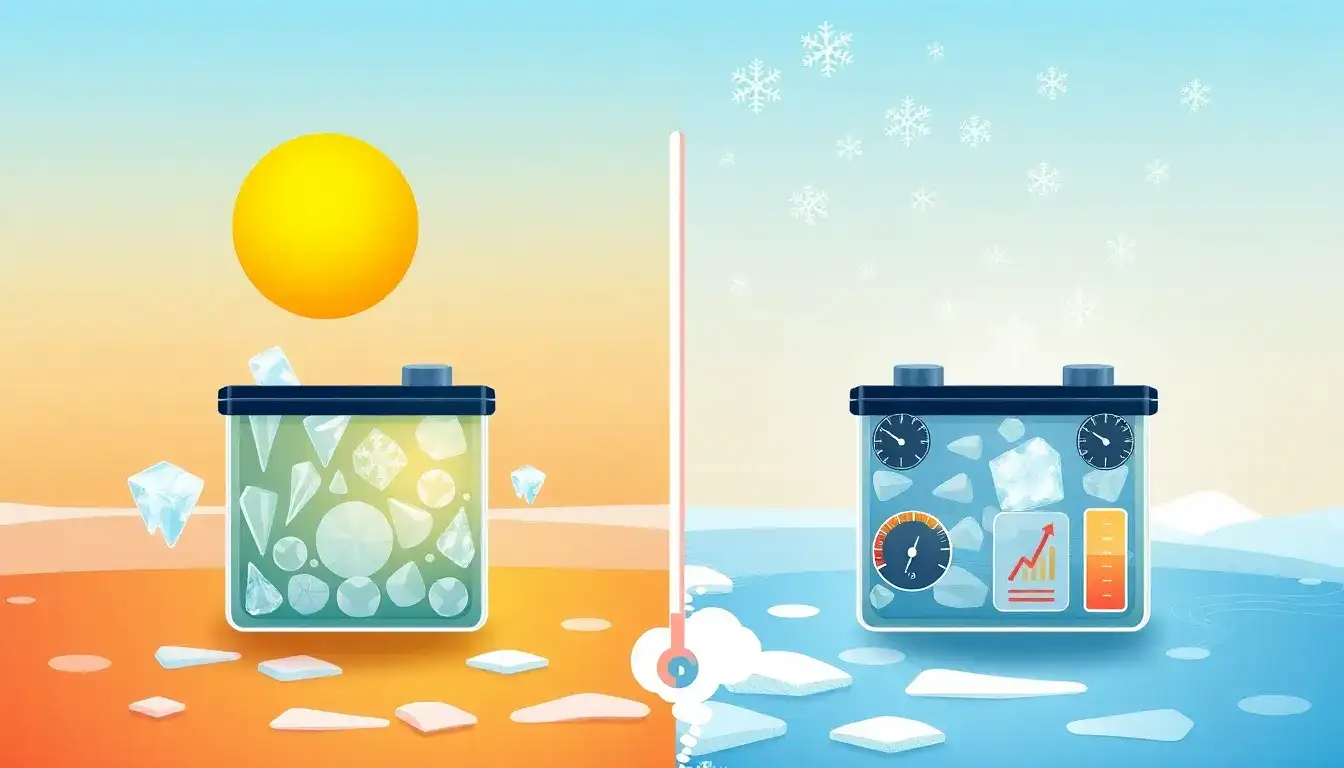
Temperature significantly impacts the lifespan of energy storage batteries by influencing their chemical activity, capacity, and degradation rate. Here’s a breakdown of how temperature affects different types of batteries:
Impact of Temperature on Battery Lifespan
- Lead-Acid Batteries: High temperatures increase the chemical reaction speed, leading to faster degradation and reduced lifespan. For every 10°C (18°F) increase above the optimal temperature (around 20-25°C or 68-77°F), battery life is halved. While cold temperatures slow reactions, they also reduce capacity and increase internal resistance.
- Lithium-Ion Batteries: Similar to lead-acid batteries, lithium-ion batteries experience accelerated aging at high temperatures, which can lead to thermal runaway and safety risks. Cold temperatures slow chemical reactions, reducing capacity and efficiency. Lithium plating can occur in cold conditions, causing permanent capacity loss.
Effects of Temperature Extremes
- High Temperatures: Increase capacity but accelerate aging, self-discharge, and corrosion. Prolonged exposure can lead to premature failure.
- Low Temperatures: Reduce capacity and increase internal resistance. Very low temperatures can cause the electrolyte to freeze if the battery is discharged, leading to irreversible damage.
Managing Temperature for Extended Lifespan
- Optimal Temperature Range: Keeping batteries within the recommended temperature range (usually around 20-25°C or 68-77°F) extends lifespan and maintains efficiency.
- Thermal Management: Implementing thermal management systems can help regulate battery temperatures in extreme environments.
General Guidelines
- High temperatures increase capacity temporarily but reduce lifespan.
- Low temperatures decrease capacity and efficiency.
- Optimal temperature maintenance is crucial for maximizing battery life and performance.
Original article by NenPower, If reposted, please credit the source: https://nenpower.com/blog/how-does-temperature-impact-the-lifespan-of-energy-storage-batteries/

