

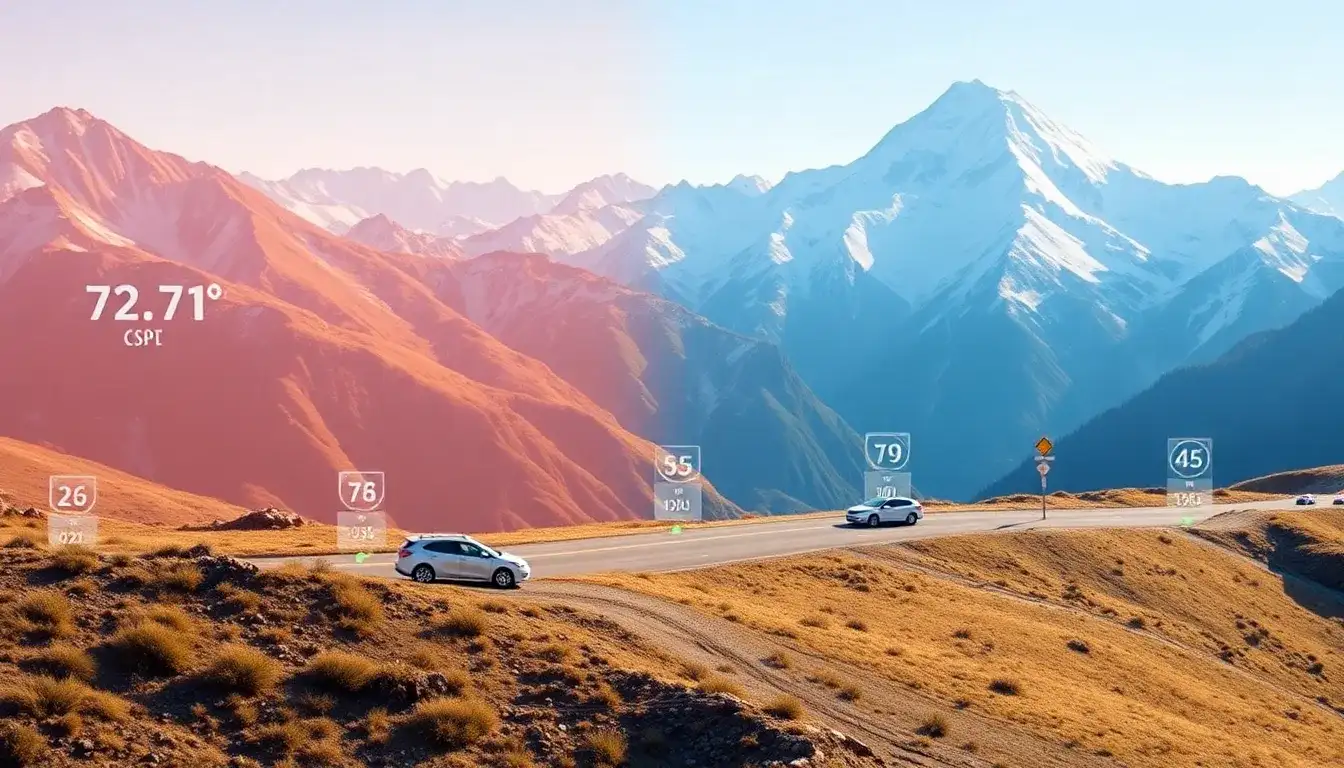
The combination of temperature and altitude influences electric vehicle (EV) range through several interacting factors related to battery performance, air density, and energy consumption for heating or cooling.
Temperature Effects on EV Range
- Cold temperatures reduce EV range significantly, primarily because batteries lose efficiency in the cold and additional energy is needed to heat the cabin and battery systems. Studies show that at around 20°F (-7°C), range can decrease by about 12%, and this drop can be even larger (up to 50%) in extreme cold due to heating demands.
- Hot temperatures also reduce range, though less drastically, because air conditioning systems increase energy consumption. At about 95°F (35°C), EV range may drop by around 4%.
- The optimal temperature for maximizing EV range is about 68°F (20°C), where battery efficiency and energy needs for climate control are balanced.
Altitude Effects on EV Range
- Higher altitudes generally benefit EV range due to lower air density. Thinner air reduces aerodynamic drag, meaning the vehicle requires less energy to overcome air resistance, thus improving efficiency.
- However, altitude effects are intertwined with weather conditions. While states with high altitudes such as Colorado see generally better year-round EV performance due to reduced drag, they also face challenges like snow, which increases rolling resistance and can lower range significantly.
Combined Impact of Temperature and Altitude
- At high altitudes, the lower air density decreases drag, positively affecting EV range.
- Cold temperatures typical at high altitude increase energy demands for heating the battery and cabin, which reduce range. So, while altitude helps by reducing drag, cold weather can offset some of that benefit by increasing energy consumption.
- For example, in high-altitude states with cold winters and snowfall (Colorado, Utah), despite lower temperatures and snow adding to range loss, EVs still tend to perform better than average over the year because the aerodynamic advantage dominates.
Summary
| Factor | Effect on EV Range | Explanation |
|---|---|---|
| Low Temperature | Decreases range (up to 50% loss) | Batteries less efficient, more energy for heating |
| High Temperature | Slight decrease (~4% loss) | Energy used for cooling |
| High Altitude | Increases range | Lower air density reduces aerodynamic drag |
| Snow/Rain (at altitude) | Decreases range | Increased rolling resistance |
Overall, temperature and altitude combine such that high altitude reduces air drag and can improve EV range, but colder temperatures at high altitudes increase energy demands for heating and reduce battery efficiency, partially counteracting altitude benefits. The net effect depends on the balance of these factors and specific weather conditions.
Original article by NenPower, If reposted, please credit the source: https://nenpower.com/blog/how-does-temperature-at-high-altitudes-combine-with-altitude-to-affect-ev-range/

