

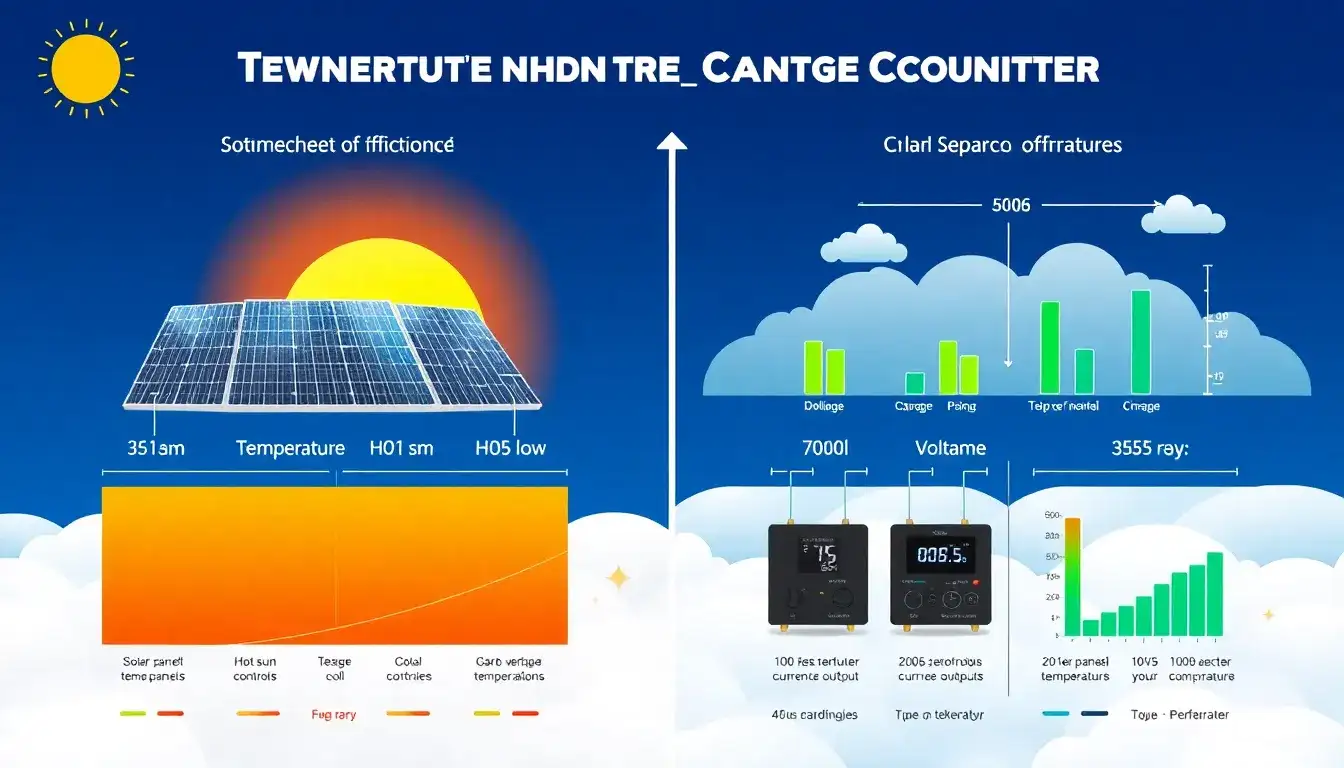
How Temperature Affects the Performance of Solar Panels and Charge Controllers
Temperature plays a significant role in the efficiency and performance of both solar panels and charge controllers. Understanding these effects is crucial for optimizing solar systems.
Solar Panels
- Efficiency Reduction with Increasing Temperature: Solar panels are less efficient at higher temperatures. For every degree Celsius above the optimal operating temperature of about 25°C (77°F), the efficiency of solar panels typically decreases by 0.3% to 0.5%. This is because higher temperatures increase the resistance within the cells, which reduces the voltage output and overall power generation.
- Optimal Temperature Range: The optimal temperature range for solar panels is generally between 15°C (59°F) and 35°C (95°F). While temperatures below this range can increase efficiency, extremely low temperatures may reduce light absorption and charge carrier mobility.
- Maximizing Efficiency: In colder conditions, solar panels can perform above their rated efficiency, producing more power per hour. However, factors like reduced daylight hours in winter affect total energy output.
Charge Controllers
- General Performance: Charge controllers are electronic devices that regulate the flow of energy generated by solar panels into the battery or electrical system. Temperature can affect their performance by altering their electrical properties and efficiency.
- Temperature Impact: High temperatures can increase the internal resistance of electronic components in charge controllers, potentially reducing their efficiency and reliability. Conversely, lower temperatures may improve their performance by reducing thermal stress on components.
- Protection and Cooling: To mitigate temperature effects, charge controllers are often designed with protective circuits like overheat protection and may be installed in well-ventilated areas or with cooling systems to maintain optimal operating temperatures.
Mitigating Temperature Effects
- Cooling Systems: Implementing active or passive cooling for both solar panels and charge controllers can help maintain optimal temperatures and improve efficiency.
- Ventilation: Ensuring good airflow around equipment can reduce heat buildup.
- Optimal Installation: Installing solar panels at an angle that minimizes snow accumulation in cold climates and using shading techniques in hot climates can also enhance system performance.
Overall, understanding and managing temperature impacts are crucial for maximizing the performance and lifespan of solar systems, including both solar panels and charge controllers.
Original article by NenPower, If reposted, please credit the source: https://nenpower.com/blog/how-does-temperature-affect-the-performance-of-solar-panels-and-charge-controllers/

