

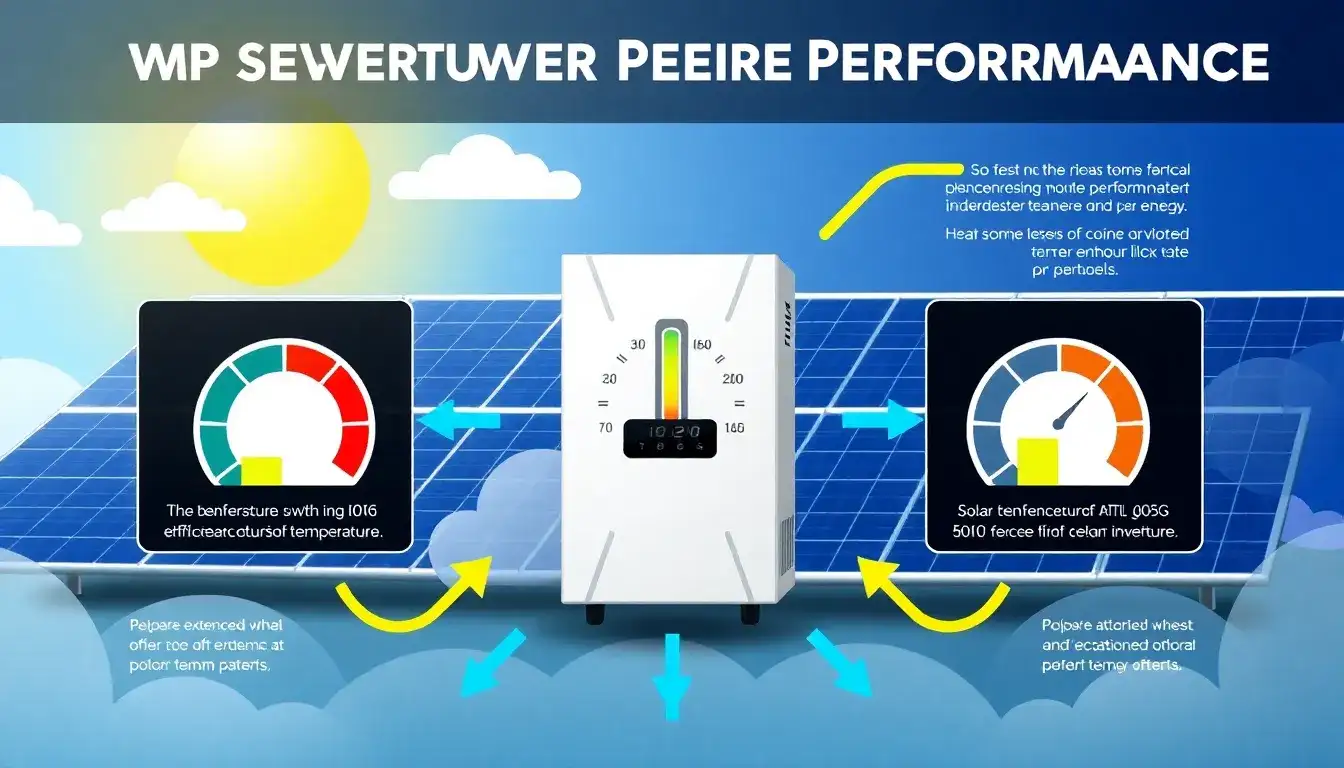
Temperature significantly affects the performance, efficiency, and lifespan of solar inverters in several key ways:
Impact of High Temperature on Solar Inverter Performance
- Efficiency Reduction: Solar inverters typically operate best between 25°C and 40°C. When temperatures rise above this range, inverter efficiency drops by approximately 0.5% to 1% for every 10°C increase due to increased internal resistance in semiconductor components. This results in greater power losses during DC-to-AC conversion and consequently lower overall energy output.
- Temperature Derating: To avoid damage, inverters implement automatic temperature derating mechanisms. When temperatures exceed certain thresholds (around 45–50°C), the inverter reduces its power output to prevent overheating. For example, a 10 kW inverter might reduce output to 8 kW or less during high temperature conditions. This leads to decreased electricity generation especially during peak sunlight hours, increasing reliance on grid power or storage and causing potential revenue losses in commercial systems.
- Component Degradation: Prolonged exposure to heat accelerates wear and tear on critical components such as capacitors and semiconductors. Elevated temperatures halve the lifespan of these components for every 10°C increase, increasing the likelihood of failure and maintenance costs. Heat sinks and cooling fans also experience reduced longevity under constant high-temperature stress.
- Thermal Cycling Effects: Repeated heating and cooling cycles can weaken solder joints and internal connections, eventually causing inverter failure.
Optimal Temperature Range and Mitigation Strategies
- Operating Range: Most solar inverters are designed to work efficiently within a temperature range roughly between -25°C and 60°C. Staying within this range ensures stable performance and longevity.
- Installation Considerations: Proper inverter placement to avoid direct sunlight and ensure adequate ventilation is critical to maintaining manageable operating temperatures. Shaded locations with good airflow minimize heat buildup and reduce the likelihood of derating.
- Cooling Technologies: Advanced heat management features like heat sinks, cooling fans, and smart control algorithms improve inverter resilience to high temperatures and help maintain performance.
- High Altitude Concerns: At elevated altitudes, lower air density reduces cooling efficiency, causing the inverter to overheat more easily. Inverters may require special design considerations or additional cooling in such environments.
Summary Table: Temperature Effects on Solar Inverters
| Effect of Temperature | Description |
|---|---|
| Efficiency Loss | ~0.5–1% drop per 10°C above optimal operating range (25–40°C) |
| Power Derating | Automatic power output reduction above ~45°C to prevent damage |
| Component Lifespan Reduction | Lifespan of capacitors and semiconductors halves for every 10°C increase |
| Thermal Cycling Damage | Repeated heating/cooling cycles weaken internal connections leading to failure |
| Cooling and Installation Needs | Proper ventilation, shaded installation, and cooling systems mitigate overheating effects |
| Altitude Effects | Reduced air density at high altitude decreases cooling efficiency, increasing overheating risk |
In conclusion, high ambient temperatures negatively impact solar inverter efficiency, reduce power output through derating, and accelerate component degradation. To ensure optimal inverter performance and longevity, it is vital to install inverters in shaded, well-ventilated locations, employ effective cooling measures, and select models designed to endure the local climate conditions.
Original article by NenPower, If reposted, please credit the source: https://nenpower.com/blog/how-does-temperature-affect-the-performance-of-solar-inverters/

