

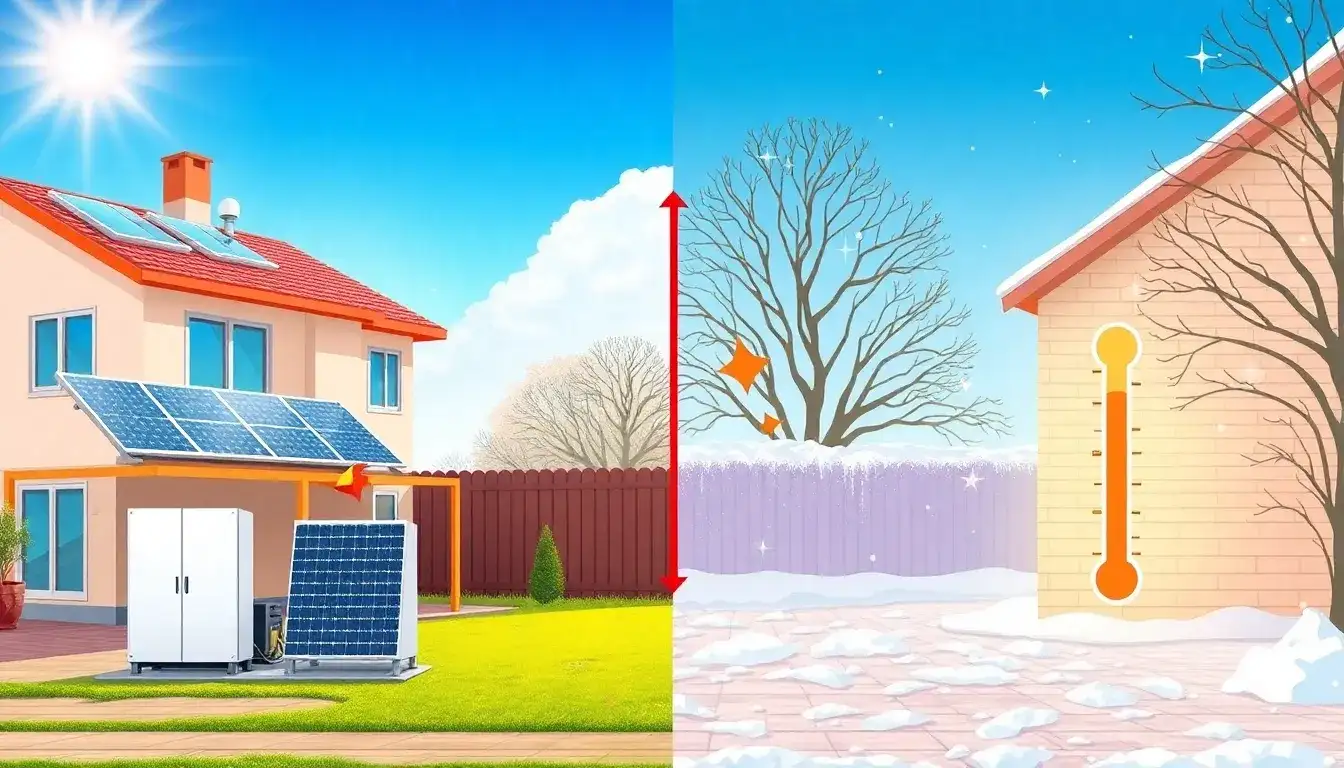
Temperature plays a crucial role in the efficiency of residential energy storage systems, particularly affecting performance, lifespan, and safety.
Effects of Temperature on Battery Efficiency
High Temperatures
- Increased Performance but Reduced Lifespan: Higher temperatures can enhance the chemical reactions inside batteries, leading to increased performance and storage capacity. However, this comes with a cost: higher temperatures can accelerate battery degradation, reducing their lifespan over time. For example, an increase in temperature from 77°F to 113°F can increase maximum storage capacity by 20%, but it also doubles the lifecycle degradation after just 200 cycles.
Low Temperatures
- Reduced Performance: Cold temperatures slow down chemical reactions within batteries, leading to decreased performance and reduced capacity. This can result in slower charging rates and less energy storage during winter months. For instance, lithium-ion batteries may experience significant capacity loss at low temperatures, though proper insulation can mitigate these effects.
Impact on Different Battery Chemistries
- Lithium-Ion Batteries: These batteries typically operate best between 32°F and 113°F for charging and discharging. High temperatures increase their performance but reduce their lifespan, while cold temperatures decrease capacity and charging speed.
- Lead-Acid Batteries: These batteries can operate over a wider temperature range than lithium-ion batteries but suffer from reduced capacity in cold conditions, often providing only half their nominal capacity at 0°F.
Strategies for Managing Temperature Effects
- Optimal Installation Locations: Installing batteries in temperature-stable locations, such as well-insulated garages or climate-controlled rooms, can help maintain efficiency.
- Thermal Management Systems: Advanced systems like the Tesla Powerwall 2 include built-in heating and cooling features to maintain optimal operating temperatures, mitigating the negative impacts of extreme temperatures.
- DIY Solutions: Using protective enclosures to insulate batteries can help regulate temperatures without costly systems.
In summary, managing temperature is key to optimizing the performance and longevity of residential energy storage systems. Both high and low temperatures have significant impacts on battery efficiency, and understanding these effects can help homeowners make informed decisions about their energy systems.
Original article by NenPower, If reposted, please credit the source: https://nenpower.com/blog/how-does-temperature-affect-the-efficiency-of-residential-energy-storage-systems/

