

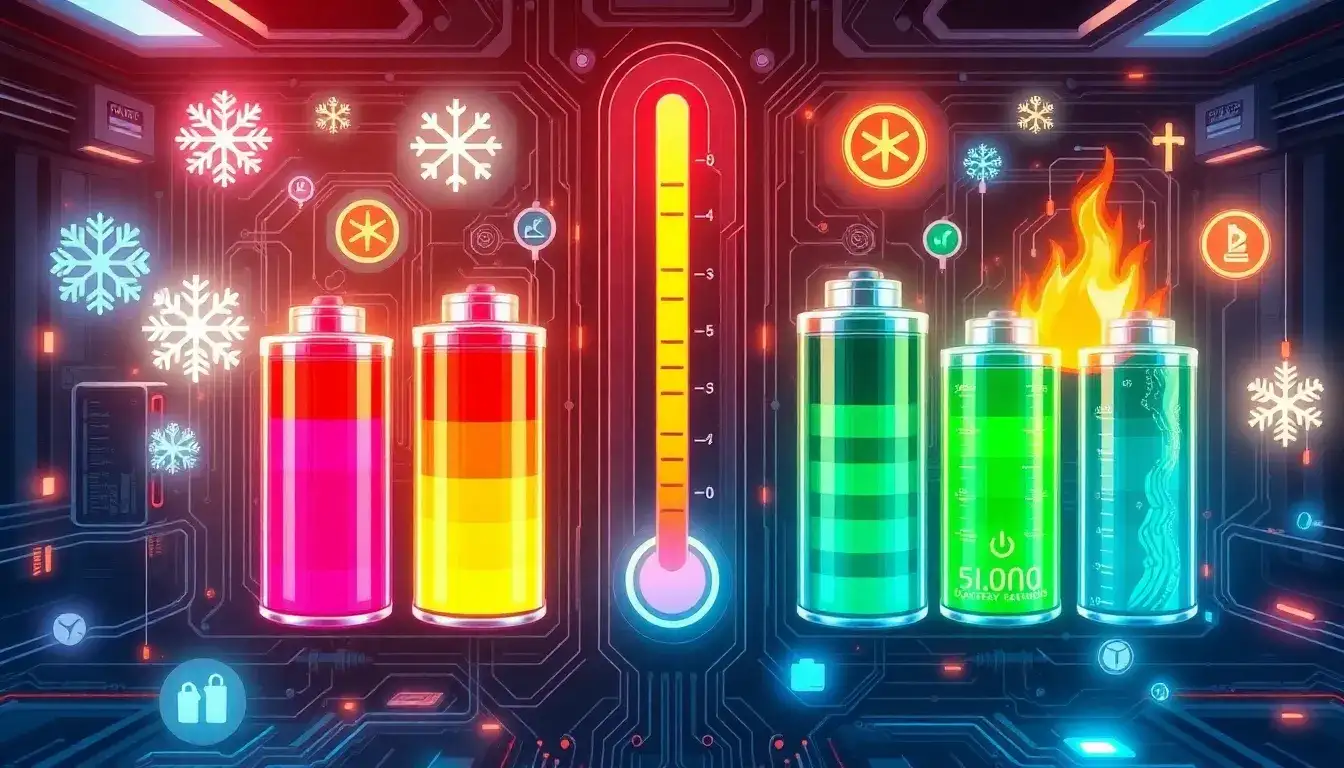
Temperature plays a crucial role in both the charging speed and safety of batteries. Here’s how temperature affects these aspects:
Effects on Battery Charging
Temperature Ranges for Charging
- Optimal Range: For most batteries, especially nickel-based ones, the optimal charging temperature range is between 10°C and 30°C (50°F to 86°F). This range ensures efficient and safe charging.
- Low Temperatures: Charging at temperatures below 5°C (41°F) can lead to reduced charge acceptance and increased pressure within the cell, potentially causing venting. It is recommended to reduce the charge current to 0.1C when charging below freezing.
- High Temperatures: While higher temperatures increase self-discharge rates, charging above 45°C (113°F) is generally not recommended for fast charging due to potential damage and reduced battery life.
Charging Speed and Safety Considerations
- Cold Conditions: In cold conditions, charging to full capacity requires higher voltage, but it is crucial to avoid overcharging to prevent damage.
- Heat and Overheating: High temperatures can accelerate chemical reactions within batteries, potentially leading to overheating, which can compromise safety and reduce battery lifespan.
- Safety Measures: Some batteries and charging systems incorporate temperature sensors and adaptive charging algorithms to ensure safe charging across various temperatures. For example, some industrial batteries use thermal blankets to heat the battery for faster charging at low temperatures.
Key Points Summary
- Optimal Temperature: Best battery performance is at around 78°F (25°C).
- Low Temperature: Reduced capacity and slower charging.
- High Temperature: Increased self-discharge and risk of overheating.
- Safety Measures: Adaptive charging strategies and thermal control help maintain safety across different temperatures.
Original article by NenPower, If reposted, please credit the source: https://nenpower.com/blog/how-does-temperature-affect-the-charging-speed-and-safety-of-batteries/

