

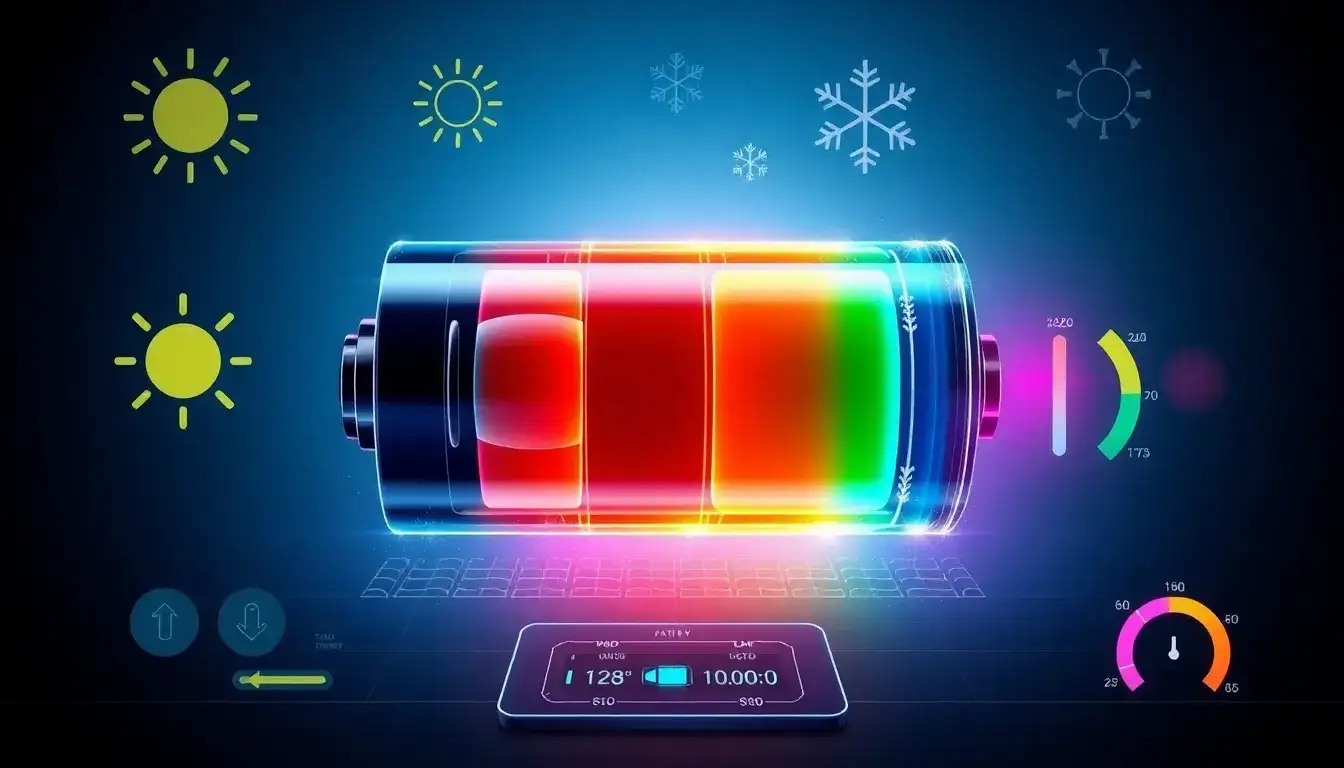
Temperature significantly impacts the charging efficiency and safety of lithium-ion batteries through multiple mechanisms:
Low-Temperature Effects
Reduced efficiency: Below 5°C (41°F), charging currents must be reduced to avoid lithium plating on the anode, which permanently degrades capacity and safety. Charging below 0°C (32°F) is strictly prohibited for most consumer-grade Li-ion batteries due to increased internal resistance and slower ion diffusion.
Capacity loss: Cold temperatures temporarily reduce available capacity during operation, with efficiency decreasing further as temperatures drop.
High-Temperature Effects
Accelerated degradation: While warmer temperatures (up to 45°C/113°F) allow faster charging, they accelerate chemical reactions that degrade battery components, shortening lifespan. A study showed charging at 45°C (113°F) caused double the degradation rate compared to 25°C (77°F) over 200 cycles.
Safety risks: Elevated voltages during high-temperature charging increase risks of thermal runaway, especially if combined with fast charging.
Optimal Charging Ranges
| Condition | Temperature Range | Impact |
|---|---|---|
| Safe charging | 5°C–45°C (41°F–113°F) | Full charging allowed; minimal adverse effects. |
| Restricted | 0°C–5°C (32°F–41°F) | Reduced charging current recommended. |
| Dangerous | <0°C (32°F) or >45°C (113°F) | Lithium plating (cold) or thermal runaway (hot) risks. |
Advanced thermal management systems are critical to maintaining batteries within ideal temperature ranges during charging. Specialty Li-ion batteries (e.g., low-temperature variants) can charge at -10°C (14°F) with reduced currents, but charge times become impractical below -30°C (-22°F).
Original article by NenPower, If reposted, please credit the source: https://nenpower.com/blog/how-does-temperature-affect-the-charging-efficiency-of-lithium-ion-batteries/

