

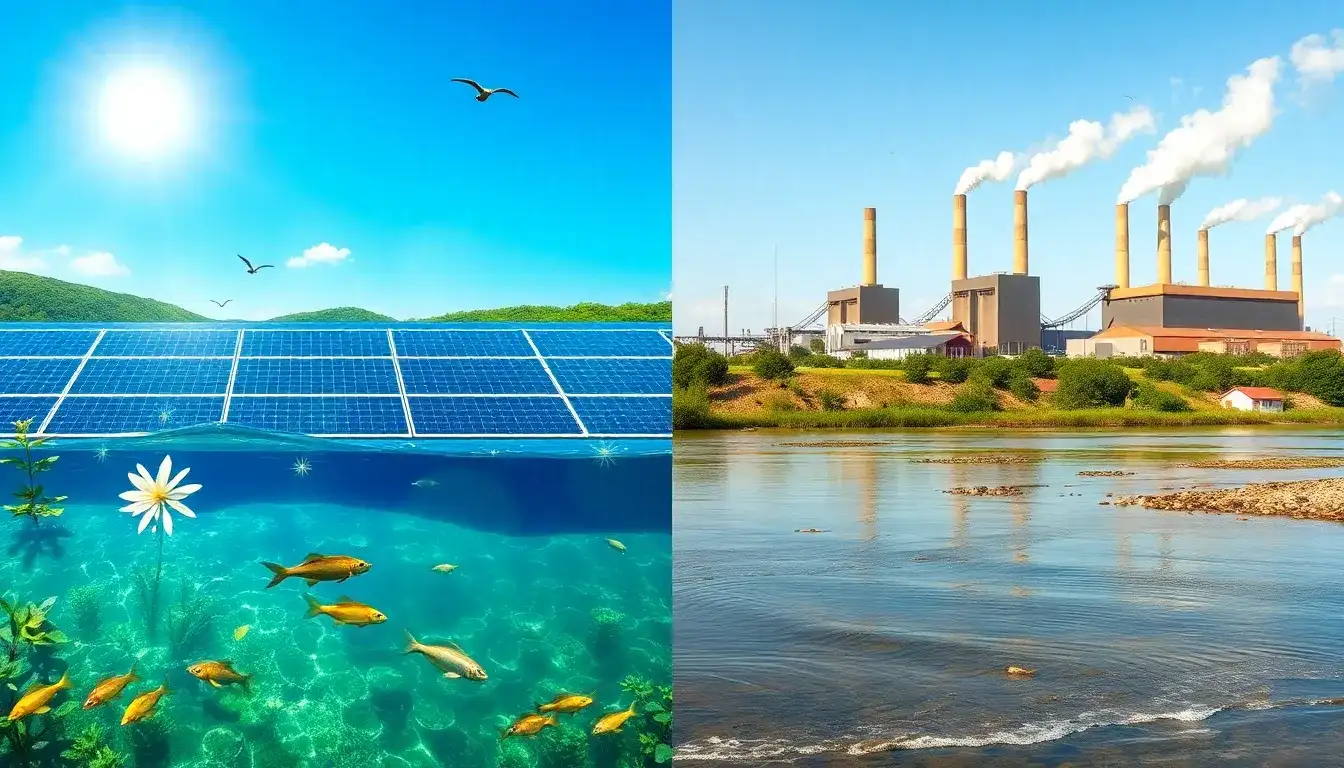
Solar energy and traditional power plants have distinct impacts on water quality and usage:
Solar Energy’s Impact
- Clean and Emissions-Free: Solar energy does not contribute to water pollution. Unlike traditional power plants, solar power does not use water in its generation process, eliminating the risk of thermal pollution or chemical contamination.
- Conservation of Water: Solar energy helps conserve water by not requiring cooling processes that are typical in traditional power plants. This makes it particularly beneficial in water-scarce regions.
- Manufacturing Risks: While the operation of solar panels does not affect water quality, the manufacturing process involves chemicals that could potentially pollute water sources if not handled properly.
Traditional Power Plants’ Impact
- Water Usage and Pollution: Traditional power plants, especially those using fossil fuels or nuclear energy, require large amounts of water for cooling. This can lead to thermal pollution when hot water is discharged into bodies of water, affecting aquatic ecosystems.
- Chemical Contamination: Some traditional power plants may release chemicals into water bodies, either through direct discharge or accidental spills, which can harm water quality.
In summary, solar energy offers a cleaner, water-conserving alternative to traditional power plants, reducing the strain on water resources and minimizing pollution risks. However, the manufacturing process of solar panels presents potential risks that must be managed effectively.
Original article by NenPower, If reposted, please credit the source: https://nenpower.com/blog/how-does-solar-energy-impact-water-quality-compared-to-traditional-power-plants/

