

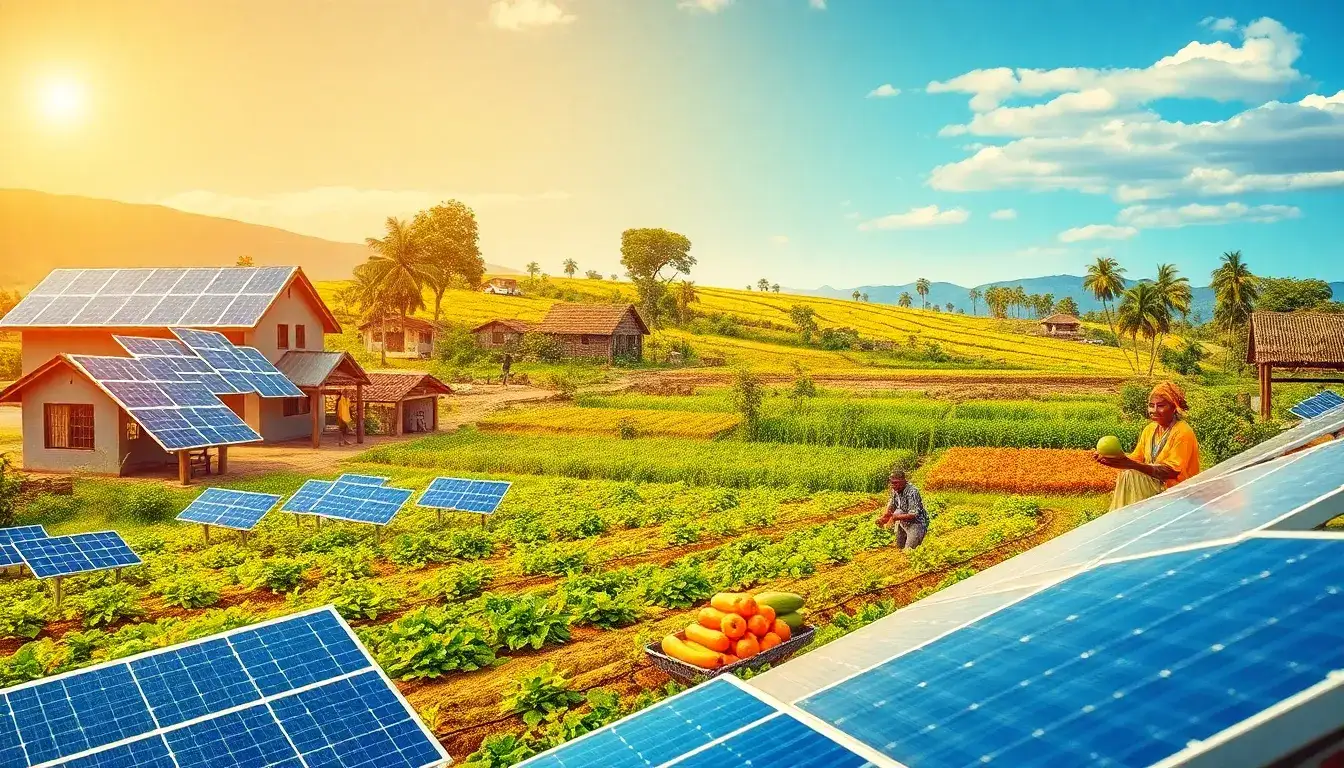
Solar energy has a positive impact on food security in rural areas through several key mechanisms:
Cost Savings and Environmental Sustainability
- Reduced Energy Costs: Solar power reduces reliance on fossil fuels for agricultural activities, lowering energy costs and contributing to a more sustainable agricultural model.
- Environmental Benefits: Solar energy is clean and renewable, reducing greenhouse gas emissions and promoting environmental sustainability, which is crucial for maintaining healthy agricultural ecosystems.
Improved Agricultural Productivity
- Irrigation Systems: Solar-powered irrigation systems enable efficient water distribution, reducing labor and increasing crop yields. This leads to longer growing seasons and diversified crops, contributing to food security.
- Hydroponics: Solar energy supports hydroponics, which allows for more efficient use of water and land, enhancing food production in areas with limited resources.
Enhanced Food Storage and Distribution
- Cold Storage Solutions: Solar-powered cold storage units help preserve perishable goods, reducing post-harvest losses and enabling farmers to sell their products at higher prices, thus improving their incomes and food security.
- Reliable Electricity: Solar energy provides reliable electricity for rural communities, enhancing the storage and distribution of food by powering necessary infrastructure like refrigeration and processing facilities.
Economic and Social Benefits
- Rural Empowerment: Solar energy empowers rural communities economically by providing affordable energy solutions. This contributes to overall development, including improved healthcare, education, and economic opportunities.
- Income Generation: By enhancing agricultural productivity and reducing losses, farmers can increase their income, thereby improving their ability to invest in their farms and support local economies.
Overall, solar energy plays a vital role in enhancing food security in rural areas by addressing challenges across the entire food production chain, from irrigation and processing to storage and distribution.
Original article by NenPower, If reposted, please credit the source: https://nenpower.com/blog/how-does-solar-energy-impact-food-security-in-rural-areas/

