

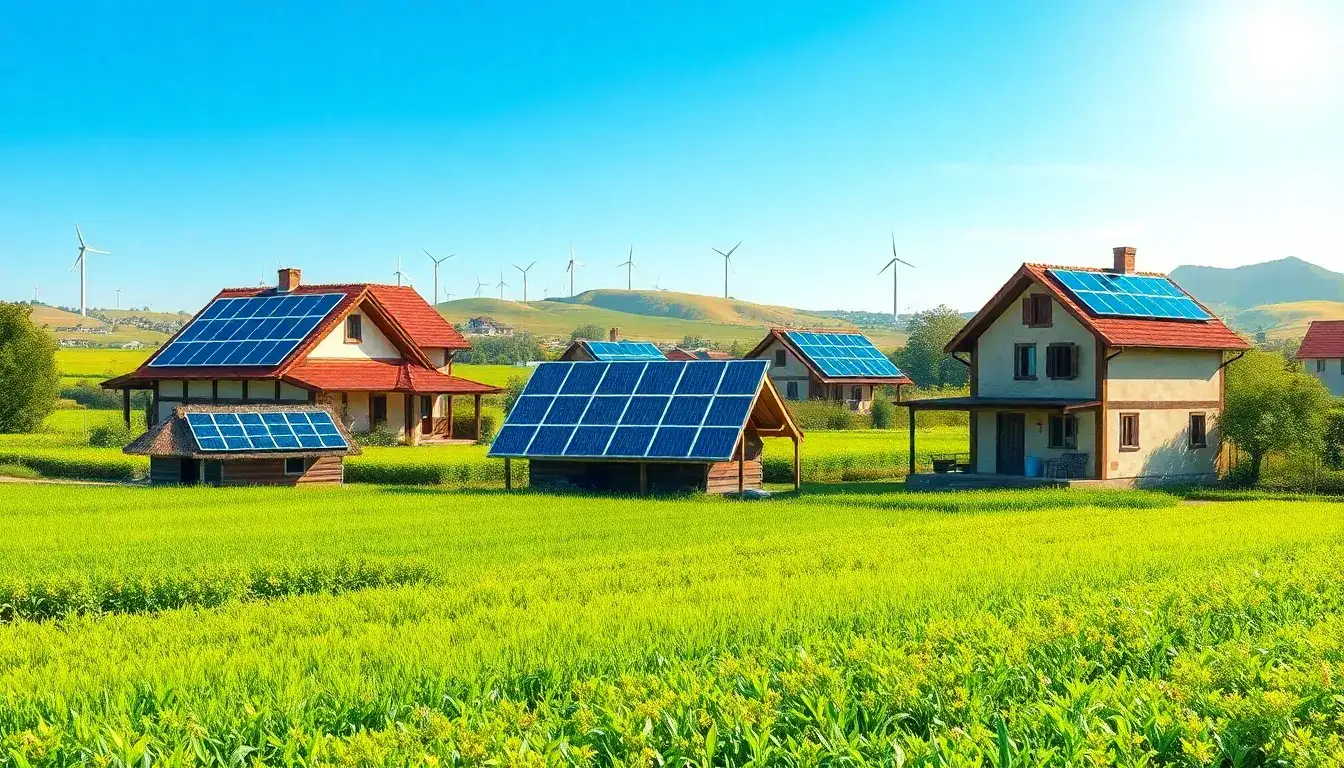
Solar energy contributes to environmental sustainability in rural areas through several key mechanisms:
Environmental Benefits
- Reduction of greenhouse gas emissions: Solar power provides a clean, renewable alternative to fossil fuels, significantly cutting down carbon dioxide and other greenhouse gas emissions that contribute to climate change. This helps rural areas lower their carbon footprints and mitigate environmental degradation.
- Preservation of natural resources: By decreasing reliance on non-renewable energy sources like coal and oil, solar energy helps conserve finite natural resources and protects local ecosystems. This preservation supports biodiversity and maintains the natural landscape important for rural communities.
- Improved air and water quality: Using solar energy instead of burning fossil fuels reduces air pollution and prevents contamination of water resources, which benefits public health and preserves rural environmental quality.
Social and Economic Contributions Supporting Sustainability
- Energy autonomy and reliability: Solar power systems can provide decentralized and reliable electricity, especially in rural areas where grid access is limited or unreliable. This fosters energy independence and reduces vulnerability to fuel price fluctuations.
- Support for sustainable economic development: The adoption of solar technologies can stimulate local economies by creating green jobs, attracting renewable energy companies, and enabling better infrastructure. This economic boost aligns with long-term sustainability goals by reducing poverty and supporting community resilience.
- Reduced environmental impact of rural energy use: Solar energy lessens the environmental footprint of rural households and businesses, promoting cleaner production and consumption patterns consistent with sustainable development.
Challenges and Ongoing Progress
Despite these benefits, rural solar energy expansion sometimes faces challenges like funding limitations and inadequate infrastructure. However, advances in solar technology—for example, more efficient TOPCon solar panels—and supportive government policies are making solar power increasingly accessible and affordable for rural communities.
In summary, solar energy enhances environmental sustainability in rural areas by lowering emissions, conserving resources, improving public health, and promoting local economic growth through clean, reliable energy. This clean energy transition supports healthier ecosystems and more resilient rural livelihoods, forging a path toward sustainable rural development.
Original article by NenPower, If reposted, please credit the source: https://nenpower.com/blog/how-does-solar-energy-contribute-to-environmental-sustainability-in-rural-areas/

