

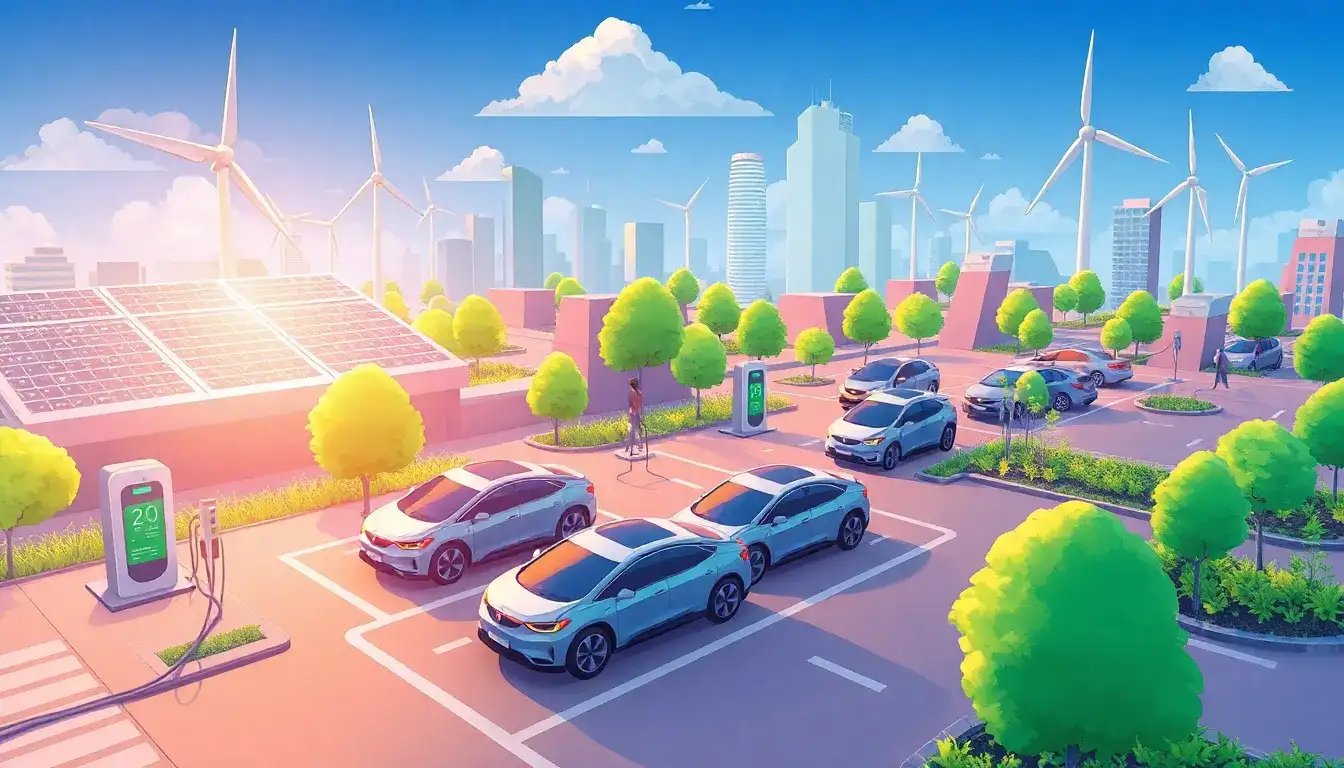
Smart charging plays a significant role in reducing the carbon footprint of electric vehicles (EVs) by optimizing when and how EVs are charged. Here are some ways smart charging achieves this:
Shifting Charging to Low-Carbon Periods
- Renewable Alignment: Smart charging shifts EV charging to periods when the grid is predominantly powered by renewable energy sources, such as solar or wind power. This is particularly effective in regions like California, where the “duck curve” phenomenon shows an abundance of solar energy during midday hours.
- Peak Demand Avoidance: By avoiding peak demand periods, smart charging reduces the strain on the power grid, minimizing the need to activate high-carbon backup power sources.
Using Real-Time Emissions Data
- Emissions Signal Integration: Smart charging systems can use real-time emissions data to adjust charging times, ensuring that EVs are charged when the grid emissions are lowest. This approach can lead to significant reductions in CO₂ emissions per vehicle annually.
Economic and Convenience Benefits
- Financial Incentives: Offering financial incentives for charging during off-peak hours can encourage more widespread adoption of EVs, making them a more appealing option for consumers while reducing the carbon footprint.
- Improved Charging Experience: Smart charging makes EV ownership more convenient by providing optimized and flexible charging solutions tailored to drivers’ needs.
Quantifiable Emissions Reductions
- EV vs. ICE Vehicles: Optimized smart charging can further reduce emissions associated with EVs, making them equivalent to removing additional internal combustion engine (ICE) vehicles from the road. For instance, charging 1 million EVs at optimal times is comparable to taking between 20,000 and 80,000 ICE vehicles off the road.
- Annual and Daily Emissions Reductions: Smart charging can reduce annual emissions by up to 18% compared to baseline charging practices and even up to a 90% reduction on select days.
Overall, smart charging not only supports a sustainable transportation sector but also enhances the environmental benefits of EVs by ensuring they are powered by cleaner energy sources.
Original article by NenPower, If reposted, please credit the source: https://nenpower.com/blog/how-does-smart-charging-reduce-the-carbon-footprint-of-evs/

