

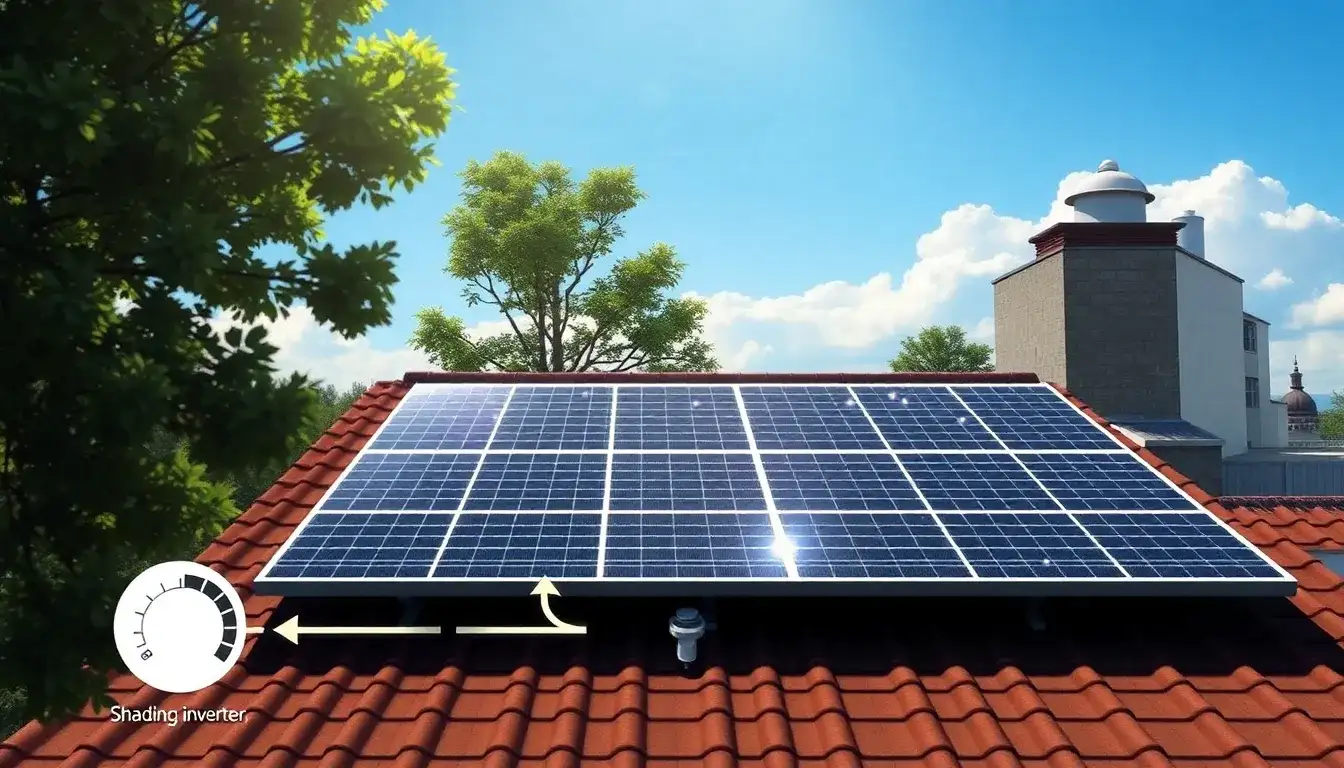
Shading primarily affects solar panels rather than solar inverters directly. However, since solar inverters convert the DC power from the solar panels into AC power, the impact of shading on solar panels indirectly affects the overall system efficiency. Here’s how shading influences solar panel systems and, by extension, inverters:
Impact on Solar Panels
- Efficiency Reduction: Shading can significantly reduce the efficiency of solar panels by limiting the solar energy available for conversion. Even slight shading can cause substantial losses, with potential reductions in power output ranging from 40% to 80% depending on the extent of shading.
- Cell Interconnection: Solar cells within a panel are connected in series. When one cell is shaded, it limits the current through the entire string, reducing the panel’s overall performance.
- Types of Shading: Shading can be categorized as soft (partial obstruction) or hard (complete obstruction). Both can impact system performance, but hard shading tends to have more severe effects.
Impact on Solar Inverters
While shading doesn’t directly affect inverter efficiency, the reduced input power from shaded panels can lead to lower overall system performance:
- Power Input Reduction: Shaded solar panels produce less electricity, resulting in reduced DC power input for the inverter. This means the inverter will convert less power overall, impacting the amount of usable AC power available.
- Mitigation Techniques: To minimize the effects of shading:
- Bypass Diodes: Allow current to bypass shaded cells, reducing the impact on the entire panel but not eliminating it.
- Micro-Inverters: Each panel operates independently, so partial shading on one panel doesn’t affect others.
- Power Optimizers: Can help maximize energy production from each panel despite shading.
Efficient Inverter Systems in Shaded Conditions
Some inverter systems, like the SolarEdge system, are designed to mitigate shading effects better than traditional string inverters by recovering a portion of lost energy due to shading. These technologies optimize output by handling each panel’s performance independently, reducing the overall impact of shading on system efficiency.
In summary, while shading doesn’t directly affect the efficiency of solar inverters, it impacts the solar panels’ output, which in turn reduces the power available for the inverters to convert. Advanced technologies like micro-inverters and power optimizers help mitigate these effects.
Original article by NenPower, If reposted, please credit the source: https://nenpower.com/blog/how-does-shading-impact-the-efficiency-of-solar-inverters/

